*This post may contain affiliate links for which I earn commissions.*
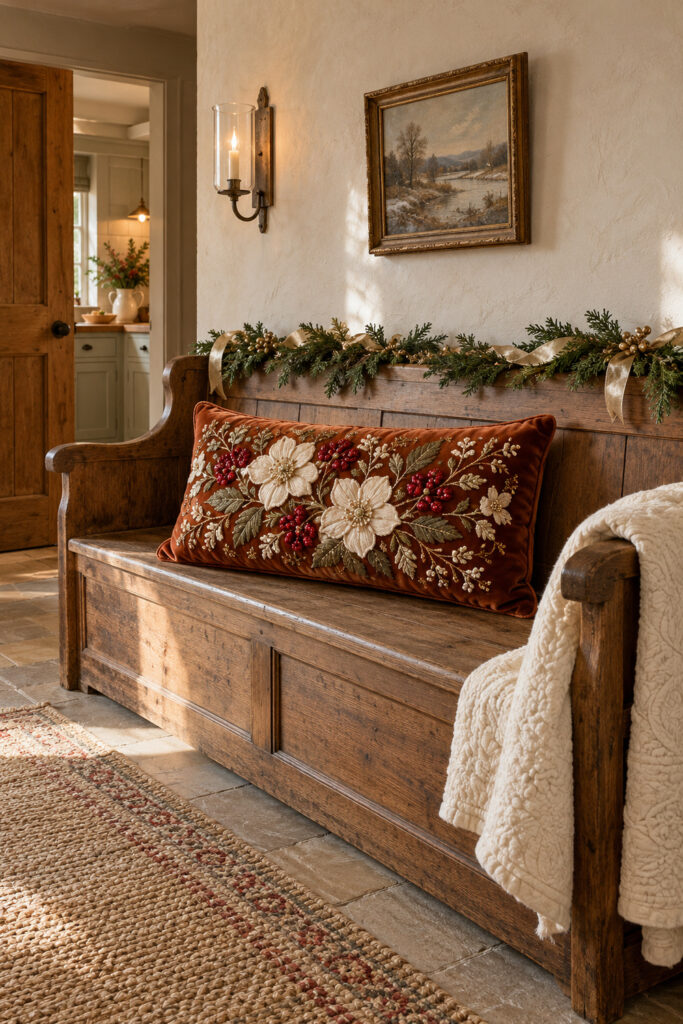
One long floral cushion gives this wooden bench its Christmas character. Ivory flowers spread across cinnamon velvet, with green leaves and ruby bead accents tucked between them. A little greenery follows the back rail, but the cushion remains the piece you notice first.

The image was created with AI and is intended as inspiration for combining similar textiles and decorations.
What Makes This Look Work
The cushion’s long rectangle fits the space between the settle’s arms. That relationship makes the floral pattern feel part of the furniture rather than a small accessory dropped in the middle. The broad wooden seat and back provide a plain setting for the detailed embroidery.
Cinnamon and ivory are the largest fabric colors. Red appears in small beaded details, while green connects the flowers to the Christmas garland above. The palette is festive without requiring every object in the hall to become red or green. The wood still contributes a large share of the room’s warmth.
The cushion also balances soft and hard surfaces. Velvet, stitching, and the cream throw soften the broad panels of the bench. The garland introduces a different texture at a different height. Keeping those materials in separate areas makes each easier to appreciate.
Find Embroidered Velvet Christmas Pillows
Browse current Amazon options that can help you recreate this look.
Browse Embroidered Velvet Christmas Pillows on Amazon →As an Amazon Associate I earn from qualifying purchases.
Key Pieces to Recreate the Look
A Long Velvet Cushion
Choose the shape before the decorative pattern. A lumbar cushion that spans a useful portion of the seat will come closer to this effect than several small squares. Measure between the bench arms, leaving enough room that the cushion doesn’t have to be wedged into place.
Cinnamon, rust, or muted brick velvet can work with warm wood. Try the color beside the bench in daylight and under your hall lighting. Velvet changes appearance as its pile catches the light, so turning a sample can reveal a warmer or darker side than you expected.
Ivory Floral Embroidery
The large flowers give the pattern a clear structure. Smaller leaves and berries fill the spaces between them. Look for a design with a few recognizable blossoms rather than a uniformly busy surface, particularly if the cushion will be seen mainly from the doorway.
You can interpret the idea with an embroidered cover or a plain velvet cushion beside a floral textile. The exact beaded design isn’t essential to the room arrangement. Preserve the contrast between pale flowers and a warm dark background, which is what gives the original its visual clarity.
Ruby Colored Accents
The red beads supply little highlights among the stitching. They are most effective because they occupy a small amount of space. A few ruby details can look deliberate; a broad shiny border could pull attention away from the flower shapes.
Consider how the bench is used before choosing embellishments. Raised beadwork is better suited to a decorative cushion than a frequently compressed seat pad. In a busy household, embroidered berries or woven red details can offer a more comfortable substitute. Check care instructions before buying a cover with mixed materials.
A Simple Cedar Garland
The greenery runs along the bench rail without hiding the wood. Its fine texture contrasts with the large cushion flowers, and a pale ribbon adds a small soft accent. Keep the garland light enough that the furniture’s outline stays clear.
Secure it without driving fasteners into a valued bench or leaving ties where someone will sit. If the rail is used for leaning, move the greenery to a nearby shelf or wall instead. The seasonal connection can remain without making the bench awkward to use.
An Ivory Quilt or Throw
The cream throw repeats the flower color in a larger, plainer area. Draping it over one end gives the arrangement an easy asymmetry. It also interrupts the hard line of the bench arm without covering the floral center.
Use a quilt, knitted throw, or textured blanket you already own. Fold it narrowly enough that it doesn’t puddle into the walking route. A little visible texture is useful; a large contrasting print is less helpful beside embroidery that already contains plenty of detail.
How to Style It at Home
Set the cushion on the empty bench first and check its height against the back. You want enough wooden rail visible to frame the fabric. If the cushion is too tall, a smaller insert or a different proportion may work better than pushing it down until the pattern buckles.
Center the main flowers within the seating area, but let the throw sit at one side. This keeps the focal textile easy to read while preventing the entire bench from looking rigidly arranged. Turn the cushion slightly if the velvet appears too shiny under a nearby lamp.
Add the greenery after the soft pieces are in place. Keep its lowest branches above the cushion rather than resting across the embroidery. This protects the decorative surface and avoids merging the real or faux leaves with the stitched ones. The two layers should remain visibly separate.
The hallway background can stay ordinary. A landscape picture and a modest wall light are enough to support the farmhouse setting. Resist the urge to replace every existing accessory with a seasonal object. Familiar pieces help the decorated bench feel like part of your home.
Leave a practical place to sit. If this is the bench where people put on shoes, allow room to move the cushion easily and keep its decorative front away from buckles or bags. A display that can be shifted without untangling garland is much more likely to stay pleasant through December.
For a shorter bench, use one smaller lumbar cushion and keep the flowers large. On a chair, the same palette can work with a square cover and a narrow cream throw. Keep the underlying idea of one detailed textile supported by simpler materials, rather than copying the exact furniture arrangement.
Shop Similar Pieces
Shop Similar Embroidered Velvet Cushion Covers
Check the cover dimensions and whether an insert is included. Look closely at the embroidery scale as well as the colors. A photograph can make tiny flowers appear much larger than they will look on the bench, so compare the stated size with your seating area.
Look for Warm Ivory Throws
A soft cream that relates to the embroidery will connect the two textiles. Consider the weave, fringe, and care requirements. A washable throw is useful on everyday seating, while a more delicate quilt can be reserved for a bench used mainly for display.
Look for Light Cedar Garlands
Choose a flexible strand that can follow a rail without forming a thick roll. Fine tips and a restrained amount of ribbon will support the cushion. The greenery is the seasonal frame here, so it doesn’t need to become a second showpiece.
Photograph the bench from its usual approach rather than directly in front of it. The arm can hide part of a long cushion from an angle. Moving the throw to the farther end may reveal more embroidery without changing the cushion or adding anything new.
Final Styling Tip
Let the floral cushion occupy the clearest part of the bench. Pull the throw and greenery back just enough to reveal its edges, and the embroidery will carry the decoration without requiring a pile of extra pillows.