*This post may contain affiliate links for which I earn commissions.*
A long basket of golden biscuits sits at the center of this Thanksgiving table, flanked by copper pitchers of rust colored flowers. Cream plates, woven mats, and dusty blue napkins keep the individual settings simple. The checked runner connects the warm food, wood, and flowers without covering the whole tabletop.
The barn room provides an appealing backdrop, but the table idea can work in an ordinary kitchen or dining space. Begin with a low food basket and give it room. Then use the flowers and place settings to support that center rather than compete with it.
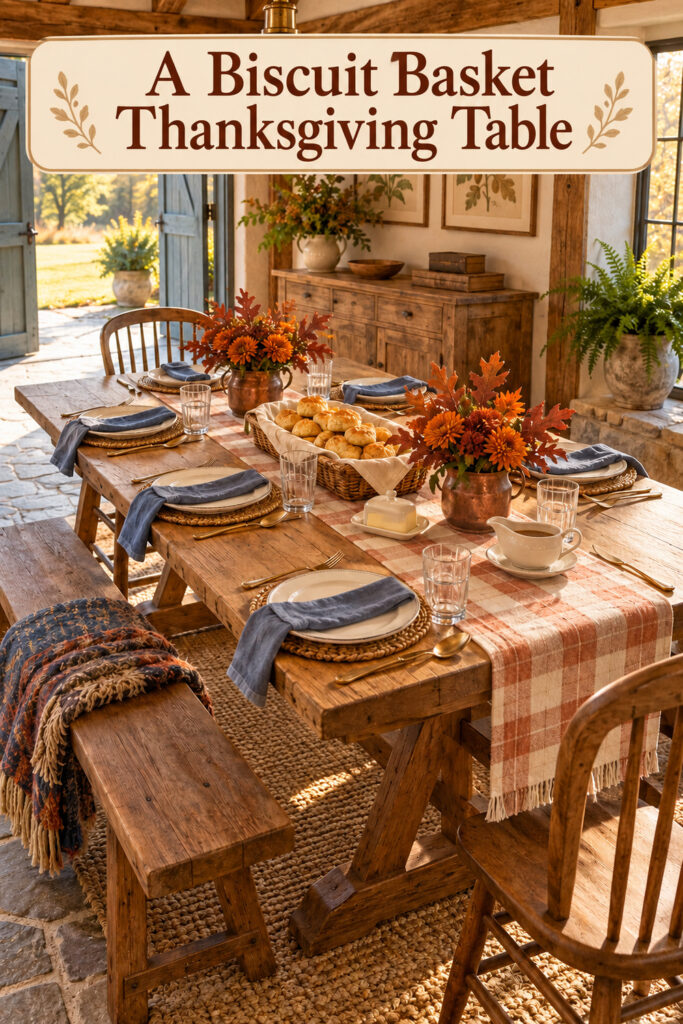
The inspiration image was created with AI and presents a table decorating concept rather than a photographed gathering.
The Basket Makes the Table Feel Ready to Share
The centerpiece isn’t a tall arrangement that guests have to look around. Its low shape leaves a broad view across the table and gives the biscuits a natural place in the meal. A rectangular basket follows the length of the table, which helps it sit comfortably between the flower vessels.
The copper pitchers repeat the golden color of the biscuits but have darker surfaces. That difference separates the three central shapes. The cream basket liner connects to the plates, while the blue napkins interrupt the warm colors at each setting. You can recognize all of those relationships without matching the exact dishes.
The runner sits under the center group and falls over the near end. Its checks introduce pattern at a larger scale than the woven mats. This keeps the table from looking flat, but most of the wood is still visible. If your table has an interesting surface, let it remain part of the arrangement.
Find Bread Serving Baskets
Browse current Amazon options that can help you recreate this look.
Browse Bread Serving Baskets on Amazon →As an Amazon Associate I earn from qualifying purchases.
Choose a Basket That Works With Food
A Low Rectangular Bread Basket
Measure the space remaining after you set out plates and glasses. The basket should fit within that center area without pushing anyone’s place setting toward the edge. On a smaller table, a short oval basket may be more useful than a long rectangular one, even though the outline changes.
Use a clean basket suitable for serving food, with an appropriate liner between the weave and the biscuits. If a decorative basket has an unknown finish or rough interior, put a suitable food safe container inside it instead of resting bread directly on the material.
A Washable Cream Liner
The pale cloth softens the basket rim and makes the biscuits easier to see. Fold it to fit rather than leaving a thick bundle under the food. Let a modest edge turn over the rim, keeping the rest contained so it doesn’t drape into a neighboring flower arrangement or serving dish.
For a meal, bring the bread out when it is ready to serve. The inspiration’s open basket is a moment in a setting, not a reason to leave food exposed all day. Keep refills nearby and avoid piling the basket so high that biscuits slide onto the runner when someone reaches for one.
Serving Utensils and Reach
Place a suitable utensil within easy reach if that suits the food you serve. Check that people at both sides can use it without reaching across a glass or bouquet. If the table is long, two smaller baskets may be easier to share than one generous centerpiece in the middle.
Plan where the basket will move when larger dishes arrive. A food centerpiece earns its place by being useful, and that can mean passing it around or shifting it to a sideboard. Leave enough flexibility that the carefully styled table doesn’t become a puzzle during the meal.
Keep the Flowers Below the Conversation Line
Copper Toned Pitchers
The two flower vessels have rounded bodies and modest height. Their warm metal surfaces link the flowers to the wood without introducing another large color area. Use a watertight liner if your decorative vessel isn’t suitable for fresh flowers, and protect the runner from moisture underneath it.
You can mix two related pitchers rather than buying a matching pair. Similar height and finish will connect them. If your table is narrow, use only one low arrangement near an end, leaving the center basket and serving space as the main priority.
Rust Flowers and Oak Shaped Leaves
Use a few broad flower heads with finer autumn leaves around them. Trim the arrangement from a seated position so you can see the person opposite you. A bouquet that looks short from above may still sit directly at eye level once everyone is in their chairs.
Keep leaves and petals away from the food basket. If stems spread sideways, turn them along the table rather than toward plates. Faux flowers are a possible substitute, but they need the same clear separation from food and enough space that sleeves won’t catch on projecting pieces.
Build the Individual Settings Simply
Cream Plates and Woven Mats
The plates provide a clean pale shape against the textured mats. You can use plain everyday dishes here. The surrounding materials supply the interest, so elaborate plate borders aren’t essential. Start with the plate size you actually need for the meal and choose the mat around it.
Check that mats sit flat and don’t overlap their neighbors. If they are very thick or uneven, glasses may be steadier directly on the table. A decorative layer should never make the setting harder to use. Leaving out a mat is better than balancing a stemmed glass on an unstable edge.
Dusty Blue Napkins
The blue fabric cools the copper and rust without making the table feel disconnected from autumn. Fold each napkin loosely across a plate or beside it, with a similar amount showing at each setting. Perfectly identical folds aren’t necessary, but a repeated placement helps the table feel settled.
If you have blue napkins in different shades, choose those that are close enough to read as a group. Plain cream works too, particularly in a room that already contains blue textiles. The purpose is to give each place a soft layer, not to introduce a strict color matching project.
Clear Glasses and Warm Flatware
Simple clear glasses keep the center arrangement visible. The warm flatware in the image picks up the copper, but ordinary stainless pieces will still work. Use your own service rather than replacing it just for a seasonal finish. The basket and flowers establish the Thanksgiving idea on their own.
Shop Similar Pieces for the Table
Look for Low Bread Serving Baskets
Compare the actual interior size, liner options, and care instructions. A broad shallow basket is easier to use than a deep decorative one that hides the bread. Choose a size you can also use for rolls or sliced bread at other meals.
Shop Similar Rust Check Runners
Check the table length and intended overhang before choosing one. Keep the hanging ends clear of chair seats and walking routes. A shorter runner that stops on the tabletop can be a sensible choice in a compact room or where children may pull hanging fabric.
Add Low Copper Flower Vessels
Use the height of your seated sightline as the guide. The vessels should leave room for the basket and meal dishes rather than forcing the settings outward. One good low jug is enough when the table can’t comfortably hold a pair.
Final Styling Tip
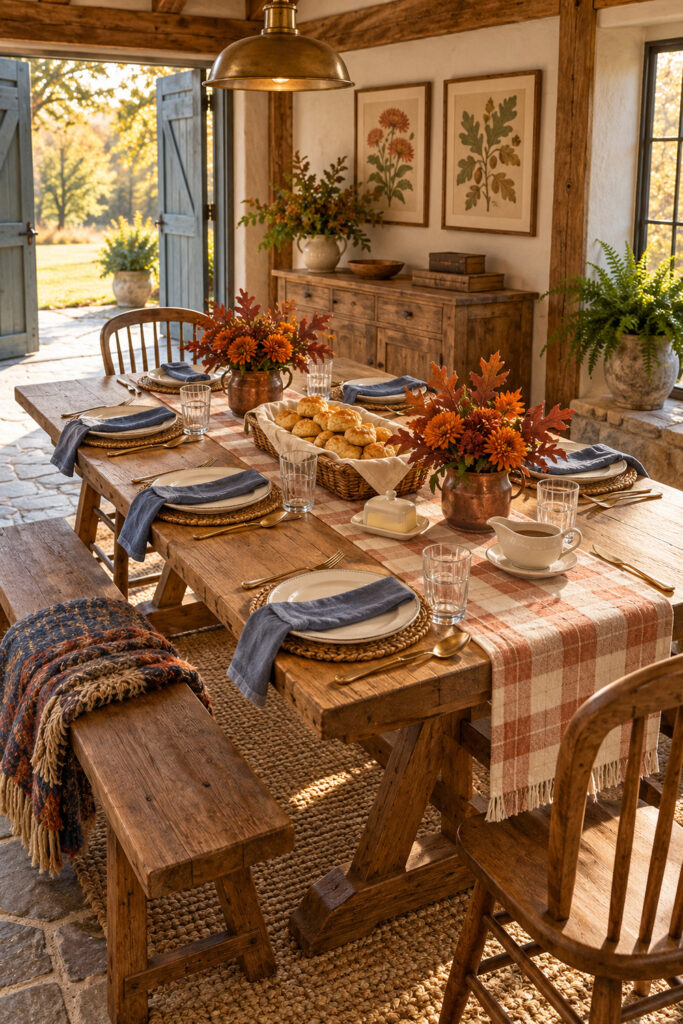
Set out an empty serving dish before you finish decorating. If there is nowhere for it to go, reduce the flowers or basket size. A Thanksgiving table should have room for the food and the people who will share it.