*This post may contain affiliate links for which I earn commissions.*
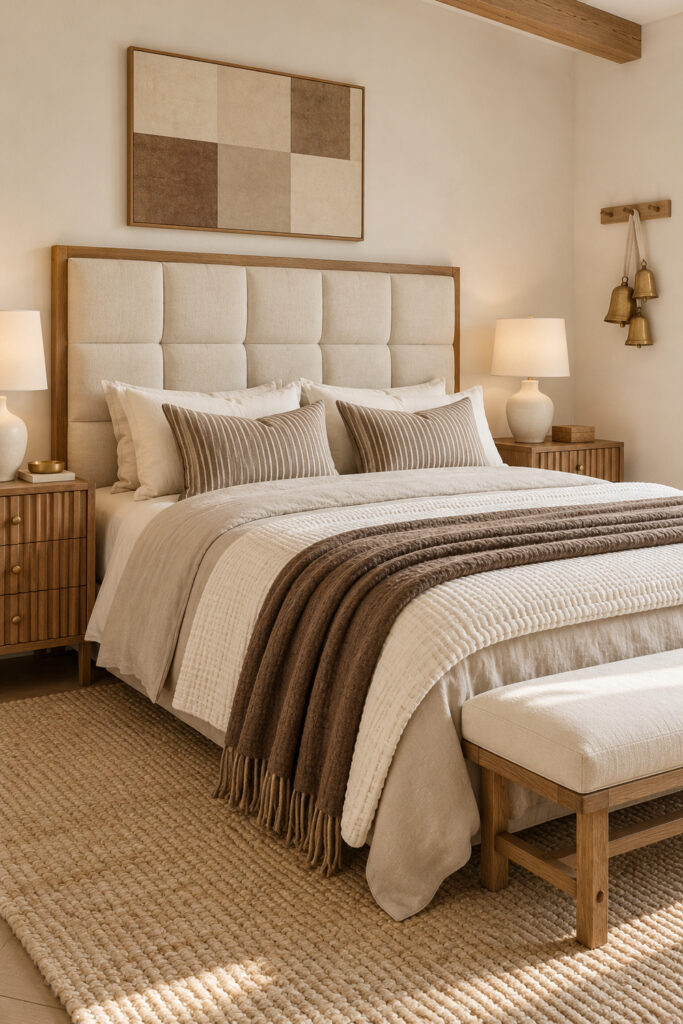
Deep padded squares make the headboard the first thing you notice in this farmhouse Christmas bedroom. Ivory upholstery sits inside a warm wooden frame, with flax bedding, a textured cream coverlet, and a cocoa throw layered below. A small cluster of brass bells beside the bed supplies the holiday detail.
The room is quiet, but it has plenty to look at. Its interest comes from changes in texture and the repeated square shapes, rather than a strong Christmas color scheme. If you prefer your bedroom to stay restful during the holidays, this gives you a useful place to start.

This inspiration image was created with AI and does not depict a verified room or collection of purchasable furnishings.
Why the Neutral Layers Have Definition
The headboard has enough depth for each upholstered section to catch light differently. Those gentle shadows keep pale fabric from looking flat against the cream wall. The wooden border draws a clear outline around the padding and connects it to the nightstands and bench.
A geometric picture above the bed repeats the headboard’s divided surface on a larger scale. The arrangement works because the artwork is simple. A very detailed picture could draw attention away from the upholstery, especially in a room where most of the decoration depends on quiet changes in surface.
The bedding gets darker toward the foot. Flax linen sits below the ivory pillows, a pale textured coverlet crosses the bed, and a cocoa throw finishes the layers. Brown striped cushions repeat that darker shade nearer the headboard, giving the deeper color more than one place to appear.
Find cream textured coverlets
Browse current Amazon options that can help you recreate this look.
Browse cream textured coverlets on Amazon →As an Amazon Associate I earn from qualifying purchases.
The Pieces That Shape This Bedroom
A Padded Panel Headboard
Look for broad upholstered sections with visible seams and a plain outline. The biscuit tufting in the inspiration has square cushions without an obvious field of deep button holes. A similar panel headboard could give you the same soft geometry even if its seam spacing differs.
Check bed compatibility, overall width, and mounting instructions before choosing a frame or headboard. A photograph does not tell you how an imagined piece attaches. If you already have a wood bed, keep it and borrow the square shapes through a simple quilt or geometric wall art instead.
The color should work with your existing wall and bedding. Bring fabric samples together in the room if possible. Two pale materials can look quite different when one leans gray and the other leans yellow. A warm ivory near natural flax is closer to this particular inspiration.
Flax Bedding and a Textured Cream Coverlet
Use your everyday duvet or comforter as the foundation. A plain surface lets the headboard remain the main feature. Linen-like texture can give a related visual effect if real linen does not suit your budget or care routine.
Fold a cream coverlet across the lower part of the bed so its texture stays visible. The inspiration has a pronounced raised surface that contrasts with the smoother duvet beneath it. You do not need several thick blankets to get that difference; a single textured layer can be enough.
Think about how the bed will feel at night. Decorative layers can be folded onto the bench before sleeping, but there should be a practical place for them. A beautiful stack becomes an irritation if you have to put it on the floor every evening.
Cocoa Throws and Ticking Stripe Cushions
The dark throw gives the lower half of the bed some weight. Its folds show more clearly against the ivory coverlet than they would against another brown blanket. Let part of the cream layer remain exposed so the materials do not merge together.
A pair of striped cushion covers can repeat that cocoa color without adding another large area of brown. If you have only one decorative cushion, center it or set it to one side deliberately. There is no need to add pillows until the bed becomes difficult to use.
Brass Bells and Plain Linen Tape
The bells are the clearest Christmas detail, and their placement away from the headboard is useful. They give the eye a small seasonal discovery after the larger bed arrangement. Their muted metal finish also relates to the warm wood without becoming a shiny focal point.
Use a secure wall hook or an existing peg rail suitable for the weight. Keep the cluster out of the way of lamps, switches, and anyone moving around the bed. A smaller group can preserve the idea if your side wall has less space.
Build the Layers in a Useful Order
Make the bed with its usual foundation first. Pull the duvet into a smooth overall shape, then allow the natural fabric texture to remain. The appeal here comes from visible material, not a surface pressed so rigidly that it loses its softness.
Stand the sleeping pillows against the headboard without covering all the padded sections. Add the striped cushions in front and check whether the square seams are still easy to see. If the pillows swallow most of the upholstery, reduce their number or use a lower arrangement.
Place the cream coverlet across the foot and fold the cocoa throw over part of it. Let the folds run in a clear direction. A deliberately arranged drape will look more considered than several unrelated corners falling over different sides of the bed.
Balance the nightstands with lamps of similar visual weight. They do not have to be identical, but large differences in shade height may distract from the headboard. Keep the surfaces useful for bedtime essentials rather than filling them with extra holiday ornaments.
Add the bells last. Step back and decide whether that single detail is enough. In this room, adding greenery, printed signs, and several more metallic objects would change the idea considerably. The restrained seasonal accent lets the bedding remain useful after Christmas.
Make the Idea Fit a Smaller Bedroom
If there is no room for a bench, use a basket or a clear shelf for the extra throw. Keep the walkway around the bed open. The bench contributes another warm wooden shape in the picture, but it is not necessary to understand the room’s decorating idea.
For a smaller bed, scale down the cushions before reducing the visible area of the headboard. You want to see both the fabric squares and the plain sleeping pillows. A large cushion can hide the very detail that attracted you to the image.
You can also use your existing artwork. Look for a simple arrangement of cream and brown shapes elsewhere in the room rather than buying a new picture. Repeating the palette through bedding often makes the connection clear enough without replacing what is already on the wall.
Shop Similar Pieces
Look for Ivory Upholstered Panel Headboards
Compare the shape of the padded sections, the frame finish, and the installation requirements. The broad square pattern matters more here than a precise duplicate of the imagined bed.
Shop Similar Cream Coverlets and Cocoa Throws
Choose visibly different surfaces so each layer can be seen. Check care instructions and decide where the extra bedding will go when you use the bed.
Add Brown Striped Cushion Covers and Brass Bells
Covers can update existing inserts, and a compact bell cluster can supply the Christmas reference. Start with these smaller changes if your current bed already has a strong shape.
Final Styling Tip
Leave a band of headboard visible above the pillows and a band of cream coverlet visible below the brown throw. Those two small gaps let the pale layers and square upholstery do their work.