*This post may contain affiliate links for which I earn commissions.*
Cranberry ribbon turns three cream kitchen cabinet doors into wrapped-gift shapes in this Christmas inspiration. Each door has its own crossed bands, bow, and small evergreen accent. The counter underneath stays almost completely clear.
That’s the useful part of the idea for a smaller kitchen. Holiday detail moves onto an existing vertical surface instead of taking the place where you chop vegetables or set down groceries. The arrangement still needs to respect how the doors work, so appearance and access have to be considered together.
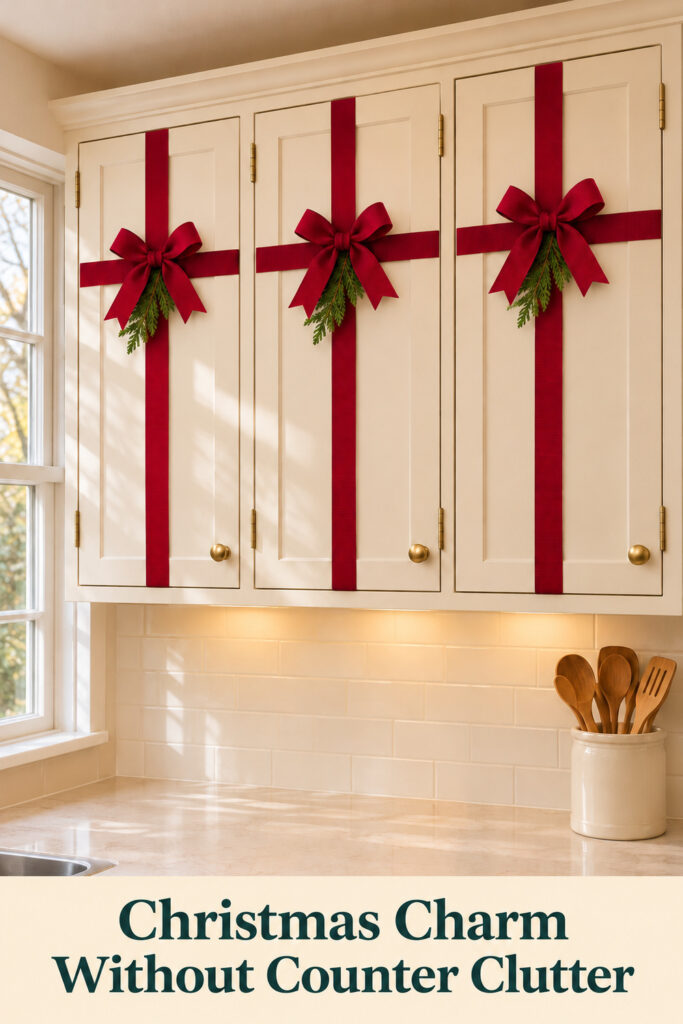
This image was created with AI as decorating inspiration.
What Makes the Cabinet Ribbon Panels Work
The ribbon contrasts strongly with the pale cabinet fronts. Its straight bands follow the doors’ upright proportions, while the bows soften the grid. Repeating the treatment across three neighboring doors gives the decoration a clear rhythm without involving every cabinet in the kitchen.
Small cedar-like sprigs introduce green and make the wrapped-gift effect more clearly Christmas. They are concentrated beneath the bows rather than spread across the entire door. That keeps the ribbon lines visible.
The brass knobs remain separate from the decoration. You can still identify each door, its seams, and its handle. Those ordinary details matter because this is meant to suggest a working kitchen, not a decorative wall pretending to be one.
Find Wide wired Christmas ribbon
Browse current Amazon options that can help you recreate this look.
Browse Wide wired Christmas ribbon on Amazon →As an Amazon Associate I earn from qualifying purchases.
Key Pieces for Counter-Saving Christmas Decor
Existing Cabinet Doors With Clear Fronts
Choose a short run of doors that can accommodate decoration without interference. Look at the hinges, pulls, door gaps, and nearby appliances before deciding. Some doors may be poor candidates because of their finish, hardware, or frequent use. Leaving those undecorated is a sensible part of the plan.
Flat Ribbon Bands
The inspiration has a ribbed ribbon texture that sits close to the surface. Flat bands work better across the door than bulky folded fabric. Choose a ribbon width that reads clearly against the panel while leaving the handle area free. A very wide band can overwhelm a narrow door.
Small Structured Bows
A bow adds dimension where the bands meet. Lightly wired ribbon can hold a tidy loop, while a soft ribbon will create a looser shape. Keep the bow shallow enough that the door can open fully without striking another cabinet or wall.
Short Faux Evergreen Accents
Use a small, lightweight sprig rather than a heavy bundle. Faux greenery avoids drying needles near a working counter, though its attachment and material still need to suit the location. Keep it away from cooking heat, appliance vents, and places where fabric or foliage could touch a hot surface.
Finish-Compatible Removable Fixings
There is no single attachment method that suits every cabinet. Follow the cabinet finish and fixing manufacturer’s guidance, and test a discreet area before decorating visible surfaces. Avoid assuming that a product described as removable cannot mark paint, veneer, or a delicate coating.
A Clear Counter Below
The plain counter is part of the effect. You don’t need to add matching jars, a miniature tree, and a holiday tray underneath. The utensil crock in the image suggests an ordinary working kitchen, while the upper doors carry the seasonal detail.
Plan One Door Before Repeating the Treatment
Start with the least awkward door in the group. Measure its visible face and note the position of the handle, hinges, and recessed panel edges. A ribbon line may need to move slightly away from the center to preserve an easy grip. Function is a better guide than perfect symmetry.
Try the ribbon placement without fixing it permanently. Check the vertical and horizontal bands together, then decide where the bow should sit. The upper portion of the door often leaves the lower handle area free, but your cabinet proportions may suggest another position.
Choose a low-bulk fixing approach that works with the finish and hardware. Do not force thick ribbon through a tight hinge gap or close a door against material that prevents it from seating properly. A front-only arrangement with suitable removable fixings may be more appropriate than wrapping the ribbon around the entire door.
Open and close the trial door fully before decorating the rest. Check its edge against neighboring doors, look behind it, and try the handle as you normally would. If anything catches, loosen or remove the decoration and revise the arrangement.
Only repeat the treatment after that first door works. Keep each door’s ribbons independent. A horizontal band must stop at that door’s boundary rather than joining several doors into one festive but inconvenient package. The kitchen should still let you reach a mug without unwrapping a gift.
Keep the Repetition Intentional
Use the same ribbon family across the selected doors, but adjust the length to fit each one. Position bows at a consistent visual height where the cabinetry permits. If the doors vary greatly in size, decorating a matching pair may look calmer than forcing every panel into the same arrangement.
Keep bow tails short enough that they don’t cover knobs or hang toward the worktop. The evergreen accents should stay within the same compact area. Check the full shape of the decoration with the door open, not only closed.
For dark cabinets, a cream or muted gold ribbon could provide a similar contrast. For pale cabinets, cranberry is a useful way to create visible lines without changing the room’s overall palette. Preserve the crossed-band structure if that is the part you want to borrow.
In a very small kitchen, decorate only two upper doors and leave the rest alone. The repeated bows can still establish the theme. Avoid extending the same treatment onto drawers, appliance fronts, or handles simply to increase the amount of decoration.
Shop Similar Pieces
Look for Flat Woven Christmas Ribbon
Check the ribbon’s thickness and how neatly it lies against a flat surface. Grosgrain or a similar woven finish can provide visible texture without large folds. Confirm the width against your own cabinet proportions rather than copying a photographed scale.
Shop Similar Wired Bow Ribbon
A lightly structured ribbon can help small loops retain their shape. Choose one that coordinates with the flat bands, even if the construction differs. Keep exposed wire ends enclosed and the finished bow clear of moving hardware.
Add Small Faux Cedar Sprigs
Look for lightweight pieces with flexible stems and modest spread. You may need only a short section for each bow. A large floral pick can introduce unnecessary depth and weight near doors that will be opened repeatedly.
Look for Suitable Removable Fixings
Match the fixing to the actual cabinet finish and the light decoration it will hold. Read the application and removal instructions before using it. If the finish or location is unsuitable, choose another decorating surface rather than relying on stronger adhesive.
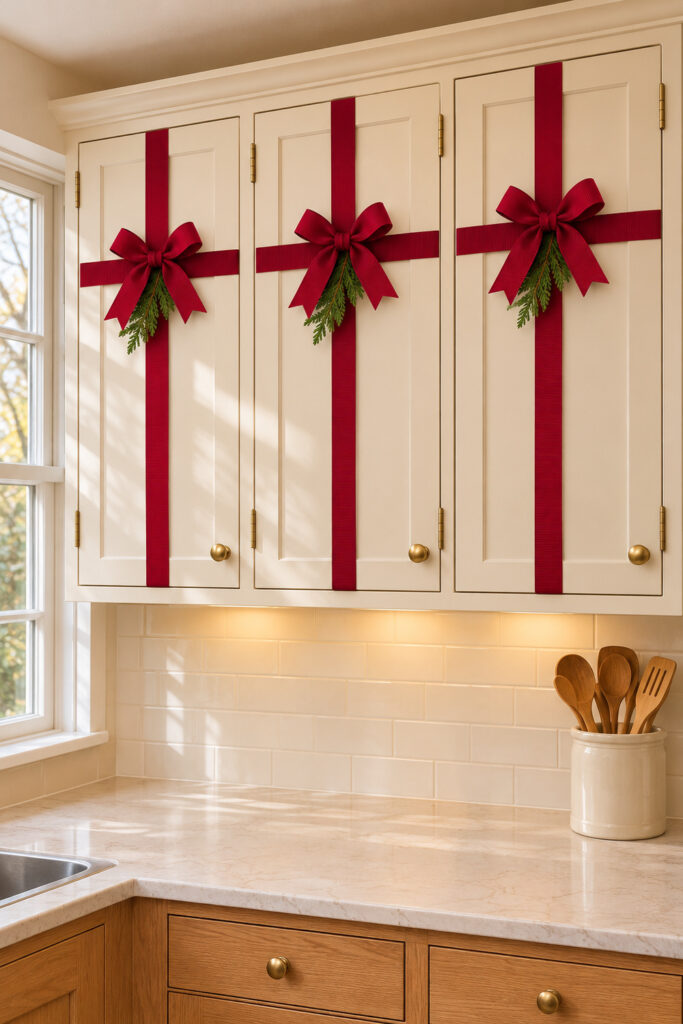
Final Styling Tip
Once the ribbons are in place, prepare a drink or put away a few dishes. That ordinary movement is a useful final check. Keep the arrangement only if the doors open freely, the handles stay easy to grip, and the counter remains ready for work.