*This post may contain affiliate links for which I earn commissions.*
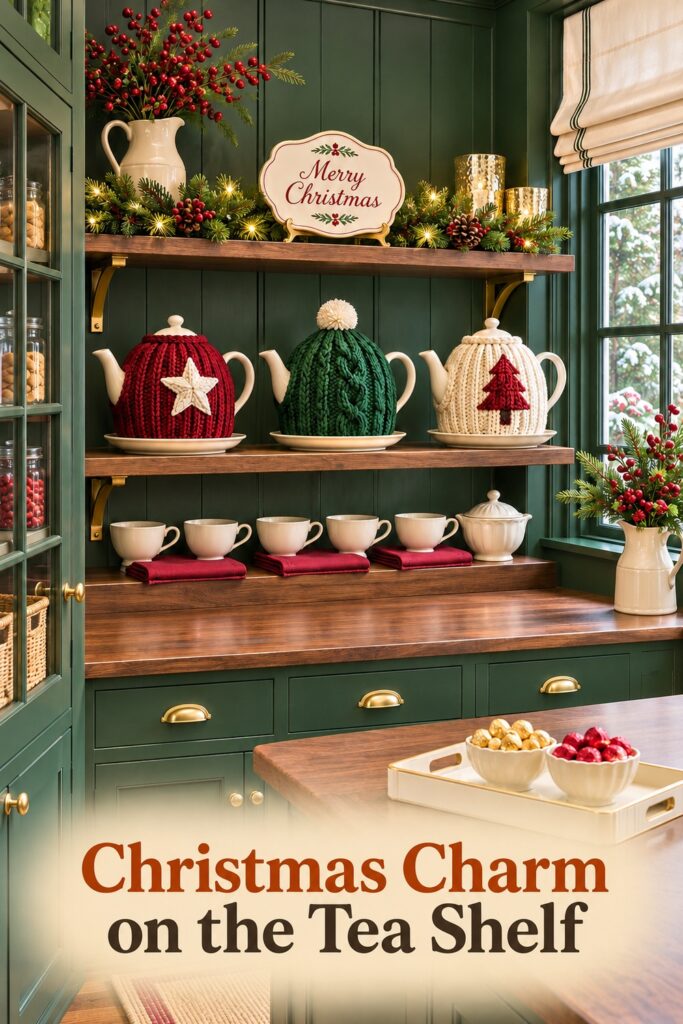
Three knitted covers turn ordinary cream teapots into a full Christmas pantry display. Cranberry, forest green, and ivory repeat across the rounded shapes, with a star, cable texture, and tree motif giving each cover its own detail.
The spouts and handles remain visible, and a lower row of cups makes the shelf feel useful. Fir and a Christmas greeting finish the scene above without hiding the teapots.
This image was created with AI as decorating inspiration. It cannot verify a cover’s fiber, fit, heat performance, or compatibility with a real teapot. Choose similar pieces using their actual measurements and instructions.
Start with the Teapots You Intend to Use
The covers follow the rounded bodies while leaving openings for the spouts and handles. That fitted shape is the main visual idea. The pots sit side by side on individual pale saucers, giving the soft knitting a steady lower edge against the dark walnut shelf.
Measure your teapot according to the cover maker’s guidance, including any relevant width, height, handle, and spout positions. A general cup-capacity label may not describe the shape accurately enough. Two pots with the same capacity can have different bodies or lid heights, changing the way a knitted cover sits.
Check the Side Openings
The handle needs room for a comfortable grip, and the spout should remain completely usable. Try the cover on an empty, cool pot first. Check the maker’s directions about whether it stays in place while pouring or is removed before handling the pot.
Do not assume a knitted cover is safe to leave on every kind of vessel during heating. This is a shelf-styling plan, and the picture does not establish cooking or insulation performance. Follow the real teapot and cover instructions together, including guidance about heat, washing, and removal.
Let the Three Covers Differ in One Controlled Way
The left cover carries a pale star on cranberry knit, the center uses green cable texture, and the right has a red tree on ivory. Their similar rounded outlines hold the group together. Repeating a different motif on every inch of every cover would make the display harder to read from the pantry entrance.
You can use fewer pots if your shelf is short. A red and ivory pair can preserve the seasonal palette, with green supplied by the fir above. Choose the number from the space and the pieces you own rather than buying three teapots solely to fill a photograph.
Build a Useful Tea Shelf Below the Display
Cream cups sit along the lower level with folded cranberry napkins. Their repeated handles make a tidy line beneath the larger covered pots. A lidded sugar bowl finishes one side, creating a practical group without filling the whole counter in front of it.
Place cups where you can lift them without brushing the shelf above. Check the available hand clearance, especially if the covers make the upper pots wider than usual. Keeping the daily serving pieces lower also reduces how often you need to reach past the decorative greenery.
Repeat Cream in the Small Pieces
The cups, sugar bowl, saucers, and pitcher create quiet intervals against the dark cabinetry. Their shared color connects the shelves without requiring identical shapes. Existing cream or white ceramics can work well here, especially when the covers already provide the main pattern.
Line the cup handles in a consistent direction while keeping them easy to grasp. Use only a manageable number on display and store extras in their normal cabinet. A shelf that looks full but remains accessible feels more settled than one packed with every piece of a tea set.
Keep a Clear Counter Interval
The walnut counter has open space below the shelves. That area matters when preparing a tray or setting a pot down. The small cream pitcher near the window and separate wrapped-chocolate tray add layers without occupying every useful part of the work surface.
Decide where the real tea preparation will happen before placing the accents. Keep decorative greenery and fabric away from hot equipment and follow the appliance’s clearance guidance. The display can sit nearby without becoming a place where active preparation has to weave around knitted pieces and glass ornaments.
Give the Upper Shelf a Christmas Finish
A readable Merry Christmas plaque sits above the pots, surrounded by fir, berries, and warm lights. This larger seasonal layer makes the pantry feel decorated even when the covers have been removed for use or washing. It also ties the pot motifs to the room rather than treating them as isolated novelty items.
Use a short garland that fits within the shelf. Keep the support and any light components appropriate for their location, following the instructions. Leave the shelf brackets and access points clear rather than allowing a dense garland to droop over the covered pots.
Balance the Dark Cabinetry with Daylight
The window and cream blind keep the green pantry from feeling too dark. Bright side light reveals the cable stitches and the red-and-ivory motifs. The warm upper lights add a festive glow, but they do not replace enough general light to see the working counter.
If your pantry has no window, use the existing suitable room lighting to inspect the covers’ colors. A dark green pot cover needs enough separation from dark cabinetry to show its shape. A pale saucer or a slightly lighter green cover may create that distinction without changing the whole room.
Arrange the Shelf in Five Stages
- Check shelf depth, support, and access. Measure the actual teapots and compare the cover dimensions before choosing a group.
- Fit each cover to a cool, empty pot according to its directions. Confirm handle and spout clearance and decide where covers will go when removed for use.
- Set the pots on stable individual bases with gaps between them. Keep every saucer fully on the shelf and the front edges within easy reach.
- Arrange the cups and folded napkins below, then leave a useful counter interval. Put treats on a separate tray so food and knitted display pieces stay distinct.
- Add the upper greeting and contained greenery. Check the lighting and remove anything that hides a pot silhouette or interferes with normal tea preparation.
Choose Similar Pieces for Fit and Texture
Look for Knitted Tea Cozies
Compare fit measurements, opening positions, fiber information, and care directions. The star or tree motif can vary as long as the palette remains coordinated. Choose useful covers rather than assuming the generated patterns correspond to exact items for sale.
Shop Similar Cream Teapot Saucers
A suitable stable base gives each pot a clear place on the shelf. Check its diameter against the actual teapot, and follow surface-protection guidance. A decorative plate is only a substitute when it provides the support the real piece needs.
Look for Compact Christmas Shelf Signs
Choose readable words and dimensions that leave room for the surrounding fir. Cream and red connect naturally to this group. Keep the sign on a supported stand or appropriate fixing rather than wedging it loosely between branches.
Keep a convenient clean place for covers when they are removed from the pots. Store them according to their care guidance after the season, with decorative motifs protected from snagging. The cream cups and walnut shelves can remain the everyday base, making the next seasonal change a smaller task.
Final Styling Tip
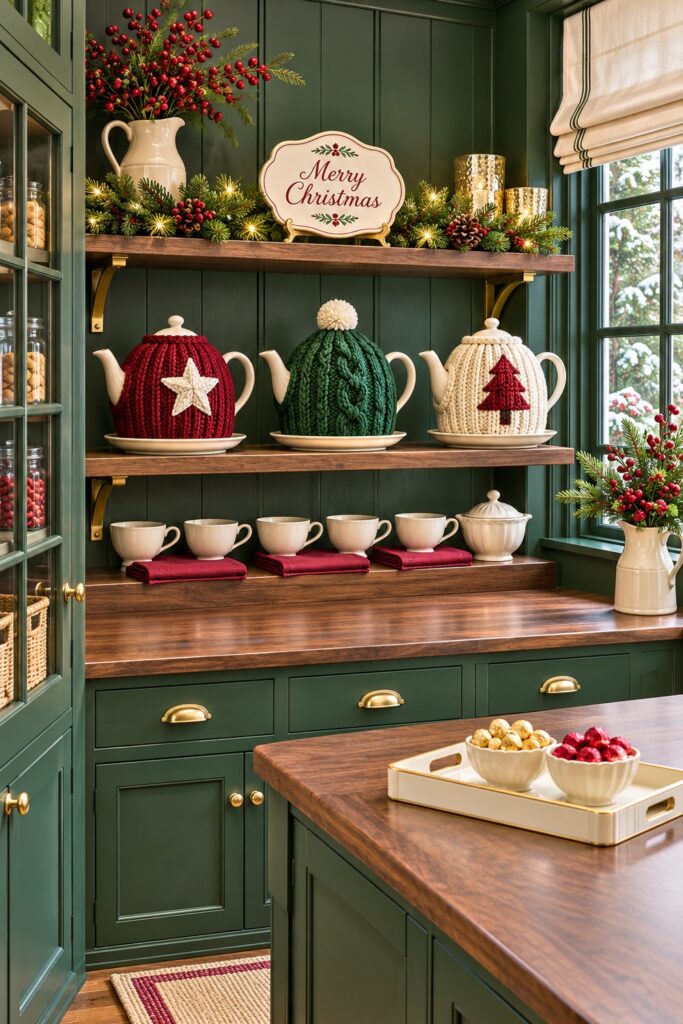
Turn the teapots so their handles and spouts read clearly between the covers. A small adjustment to each pot can make the whole shelf look orderly without adding another accessory.