*This post may contain affiliate links for which I earn commissions.*
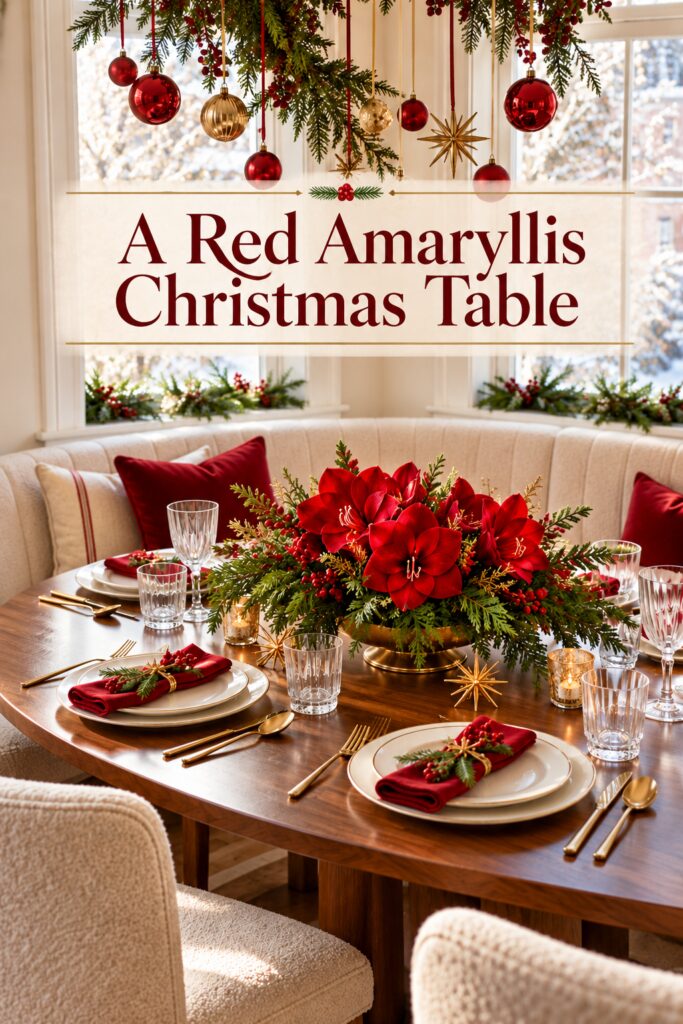
The image imagines curved breakfast nook where a low cluster of red amaryllis and greenery on an oval wooden table. It is a specific seasonal scene, yet its appeal comes from decisions that can be adapted to a room of almost any size. The combination of amaryllis red, evergreen, ivory and warm gold creates its mood without asking every object to be an exact match.
Look past the number of objects and notice the roles they play. One dominant feature invites the eye in; supporting pieces connect it to a pale upholstered banquette, snowy windows and ornaments suspended above the table. You can start with what you own and add only the pieces that fill a clear gap.
This inspiration image was created with AI. Use it as a decorating idea rather than a photograph of specific items for sale.
What Makes This Look Work
The first decision is where the eye should land. Here it is a low cluster of red amaryllis and greenery on an oval wooden table. The overhead ornaments echo the red centerpiece without using up any serving space on the table. That strong central idea keeps the surrounding details from competing for attention. In your own space, choose the equivalent focal point before arranging accessories. A different room size or furniture shape can still carry the same visual rhythm.
The palette moves between amaryllis red, evergreen, ivory and warm gold. Use the strongest color on the focal feature, repeat it in two or three smaller spots, and let quieter tones separate those repetitions. This gives the eye a route through the scene. Resist spreading each color evenly across every surface; uneven emphasis is what gives this composition personality.
Find red amaryllis stems
Browse current Amazon options that can help you recreate this look.
Browse red amaryllis stems on Amazon →As an Amazon Associate I earn from qualifying purchases.
There is also a useful change of scale. Red amaryllis stems provides one recognizable starting point, while red cloth napkins and gold flatware change the size and texture of the supporting shapes. Keep a little open space around the main feature. That breathing room makes the details easier to appreciate in person and in photographs.
Finally, daylight through large windows and glints from hanging ornaments helps define the scene. Study your own natural light before choosing a position for reflective, translucent or dark pieces. A small lamp or a modest strand of lights can emphasize the display without making it difficult to see the shapes or use the room.
Key Pieces to Recreate the Look
Red amaryllis stems
Check whether the stems are fresh or faux and select a low, stable vessel that will not tip when people pass plates. Similar pieces can carry the idea even if their silhouette or finish differs from the image. Think about the scale of the surface that will hold them before you browse.
Red cloth napkins
Use red cloth napkins to repeat the most memorable secondary color or texture. It should frame the focal piece rather than hide it. Try the arrangement from the doorway and from the place where you will normally sit or stand.
Gold flatware
Gold flatware brings another recognizable layer without requiring a full-room change. Begin with one or two and add more only if the composition still has a clear focal point.
Lighting and finishing details
The image uses daylight through large windows and glints from hanging ornaments. Recreate that effect with the light already available where possible. Choose a few accents that catch it, and check how the display reads both during the day and in the evening.
How to Style a Similar Scene at Home
Start by clearing the surface or zone that will carry the display. Keep the arrangement low and centered so guests can converse and reach the dishes without moving flowers. Temporarily place the largest element first and step back. From several feet away, you should be able to name the main idea without having to study each smaller item.
Next, create a loose relationship among red amaryllis stems, red cloth napkins and gold flatware. Repeat one color or material at a different height, then stop and look again. If every piece sits at the same level, lift one group on a suitable stable stand or move one accent to a nearby surface. Keep access, sightlines and everyday use in mind.
Allow the architecture and furnishings to do some of the work. The pictured a pale upholstered banquette, snowy windows and ornaments suspended above the table gives context, but you need not reproduce that setting. A window, cabinet, wall or existing chair in your own home can supply a boundary for the arrangement. Borrow the proportions rather than the floor plan.
Consider the textures next. Contrast a smooth or reflective accent against something softer or more matte. That difference often matters more than finding an exact color. If the scene feels busy, remove the smallest pieces for a day. You can put one back if it adds a distinct shape or useful color repeat.
Photograph the display from the angle a visitor first sees it. In a picture, distracting gaps and overlaps become obvious. Move the pieces until the focal feature remains visible and the smaller accents support it. This quick check is especially useful if the room has strong daylight at one time of day and artificial light at another.
Shop Similar Pieces
Look for Red amaryllis stems
When comparing red amaryllis stems, pay attention to dimensions, materials and how each piece would sit in your actual space. The image is a concept, so a close visual substitute can be more useful than an awkward search for an identical item.
Add Red cloth napkins to Recreate the Palette
Choose a version of red cloth napkins that repeats the image’s color story and suits your existing furnishings. Try one piece before committing to a matching set. A small, well-placed repeat often does more than several scattered additions.
Find Gold flatware for a Finishing Layer
Treat gold flatware as a finishing category. Check size and placement, especially if the display is close to seating, food, a doorway or a walking route. Existing items with the right shape may work just as well.
Final Styling Tip
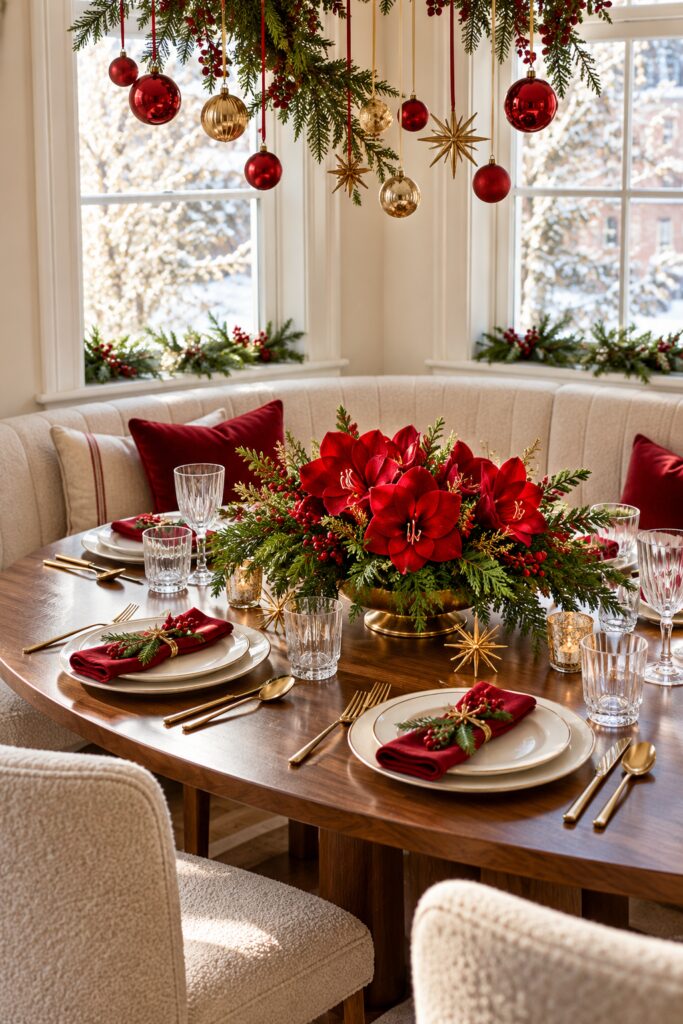
Build around a low cluster of red amaryllis and greenery on an oval wooden table, then repeat one color in a few supporting places. The result can feel like this image even when the individual pieces and the room are entirely your own.