*This post may contain affiliate links for which I earn commissions.*
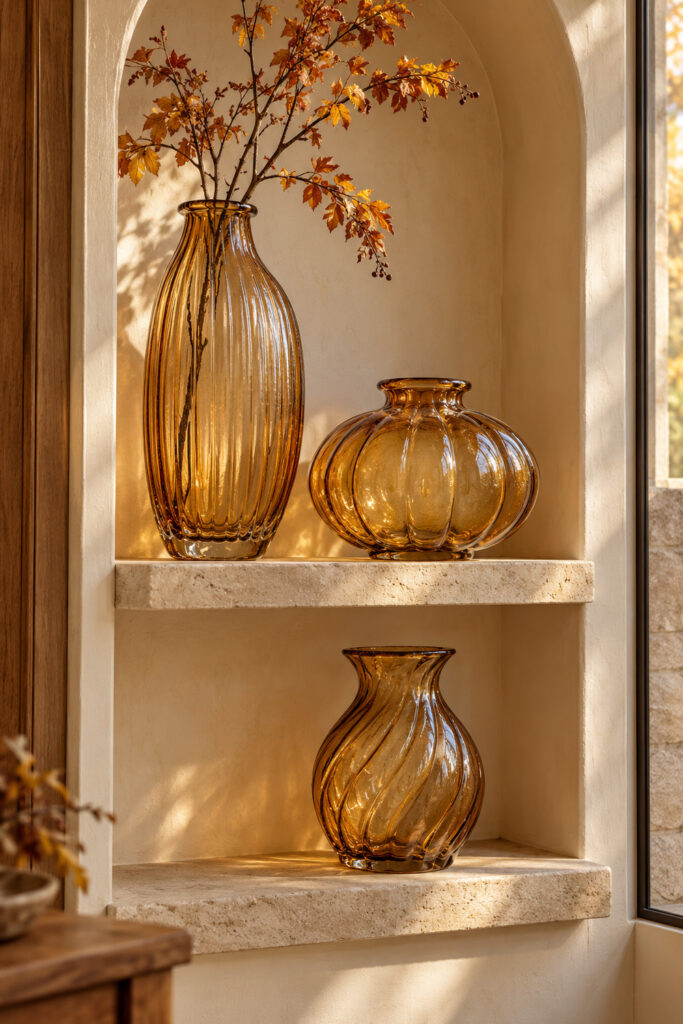
A tall fluted vase, a squat round one, and a smaller twisted vessel give this autumn niche a clear focus. All three share amber glass, but their changing outlines keep the shelves interesting. A few branching stems rise from the tallest vase, leaving the other openings empty so the glass can hold its own.
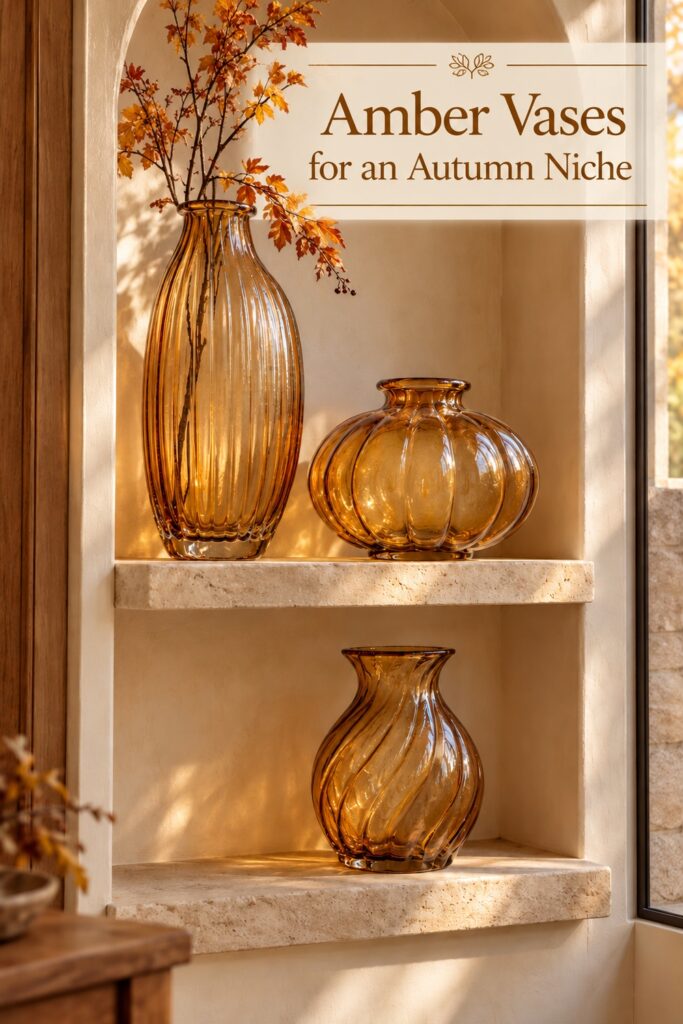
The inspiration image was created with AI and illustrates a styling concept rather than a photographed room or verified products.
What Makes the Amber Collection Work
The color repeats while the proportions change. That’s the useful starting point here. The tall vessel stretches up into the arch, the rounded one spreads across the upper shelf, and the smaller vase settles below. Each has a different job, so none feels like an unnecessary duplicate.
Vertical fluting gives the tall vase a fairly straight rhythm. The round vase bends that rhythm around a wider body, and the lower vessel introduces a twist. Those surface changes catch the side light differently. Even with a single color, the collection has enough variation to reward a closer look.
The pale niche and shelves are just as helpful as the glass. Their quieter surfaces keep the amber outlines clear, while the arch frames the branch without enclosing every leaf tightly. You can borrow this relationship on ordinary shelving by leaving open wall space above and beside the tallest object.
Key Pieces for an Autumn Niche
Find amber glass vases
Browse current Amazon options that can help you recreate this look.
Browse amber glass vases on Amazon →As an Amazon Associate I earn from qualifying purchases.
Three Amber Vases with Different Proportions
Look for a tall narrow vessel, a broad low one, and a smaller piece with a different curve. They don’t need to be a matched set. In fact, slight differences can give the group the collected quality shown in the inspiration, provided the glass colors sit comfortably together.
Check the depth of the broad vase before choosing it for a niche. Its widest point may extend beyond the base, which makes a photograph a poor guide to shelf fit. Measure the actual usable shelf and leave room around the vase rather than choosing a piece that only just squeezes into the recess.
Fluted or Ribbed Glass
The grooves are what make a simple amber palette interesting here. If all your vases are smooth, try adding just one ribbed piece. Place it where side light can reach the surface, then use the smoother vessels as quieter companions. The effect comes from contrast, not from making every object equally detailed.
Glass thickness and tint can vary noticeably between pieces. Set your options together in the intended location before committing to an arrangement. A brownish vase may look closely related to a golden one in a shop photograph but feel much darker on a lower shelf at home.
Sparse Autumn Branches
Choose a stem with a few side branches so it spreads above the tall vase without becoming a solid bunch. The inspiration shows warm leaves and fine branching lines, which connect naturally with the amber. A faux stem is useful when you want predictable placement and don’t want water near a delicate shelf finish.
If you use fresh material, confirm that the vase holds water and protect the shelf from moisture. Don’t assume a decorative vessel is watertight. Trim the branch to suit the space and check that its weight doesn’t pull the vase off balance. The branches should look airy, not make the whole piece feel top-heavy.
How to Arrange the Vases on Shelves
Start with the tall vase on the upper shelf. Place it slightly to one side rather than directly under the arch’s highest point. That leaves room for the branch to spread across the opening. Add the broad vase beside it and compare the gap between them with the empty wall area above.
Put the smaller vase below, roughly beneath the space between the upper pieces. It doesn’t need to sit exactly on a central line. The lower shelf gives it its own background, which makes its twisted profile easier to appreciate. Resist adding another tall stem there, since that would compete with the main branch.
Turn each vase a little before settling on its position. A ribbed or twisted vessel can look surprisingly different from another angle. Watch where the brightest reflection falls and choose an orientation that shows the curves without producing one large patch of glare. This is a good reason to arrange the collection in daylight.
Next, add the branch loosely and assess its outline. If every twig reaches the top of the recess, shorten it or remove a side shoot. You want the arch to remain visible around the foliage. A branch that fits comfortably will look more intentional than one pressed against the plaster.
Use the empty vases deliberately. Their open rims and changing shapes are part of the subject. Filling every vessel would shift attention toward the flowers and make the collection harder to read. If the bare round vase feels unfinished to you, try turning it or moving it closer to the tall one before putting anything inside.
For a single shelf, arrange the same three shapes with the tallest at the back and the smaller twisted piece slightly forward. Keep the round vase to the opposite side so its width balances the tall branch. Make sure every base rests fully on the shelf, even if the view encourages a little overlap.
In a darker niche, use fewer objects and choose lighter amber tints. A deep brown vessel can disappear against a dark backing, while pale honey glass keeps more of its outline. Avoid compensating with lots of reflective accessories. The point is to see the vase shapes, so clearing space may help more than adding light-catching pieces.
Shop Similar Pieces
Shop Similar Fluted Amber Glass Vases
Use the dimensions to compare height and width across possible pieces. A collection with three clearly different proportions is more useful here than three sizes of the same bottle. Prioritize a stable base and an appealing outline, especially for the vessel that will support branches.
Look for Rounded Ribbed Accent Vessels
The low round shape gives the upper shelf a resting point. It can be a vase or another suitable decorative vessel with a similar profile. Choose an opening and rim that look finished when empty, since this piece will be seen as an object in its own right.
Add Airy Autumn Stems
Look for branching structure and a restrained number of leaves. A thick floral spray would hide the tall vase’s narrow neck. If you already have a fuller stem, separate the branches visually by bending them apart and removing excess pieces where the material allows it.
Clean the glass before setting the arrangement in its final position. Fluting can catch dust along the lower curves, and side light will make it noticeable. Handle one vase at a time rather than shifting a full shelf of glass around the branch. That also lets you check whether each base sits level on the shelf.
Final Styling Tip
Leave two vessels empty and let one branch connect the collection to autumn. The different vase profiles will stay visible, and the niche will have room to frame them.