*This post may contain affiliate links for which I earn commissions.*
The dry fountain becomes a generous Thanksgiving display in this front courtyard. Ivory and pale peach pumpkins fill the broad lower basin, with rust mums tucked between them in their own pots. The smaller upper level stays quieter, leaving the stone finial easy to see above a low green layer.
The sage door, warm lanterns, and holiday greeting make the arrangement part of the arrival route. You can borrow the idea with a suitable fountain that is already out of service for the season, or with a decorative tiered basin. The important details are the supported harvest grouping, the clear path beside it, and the visible stone around the display.
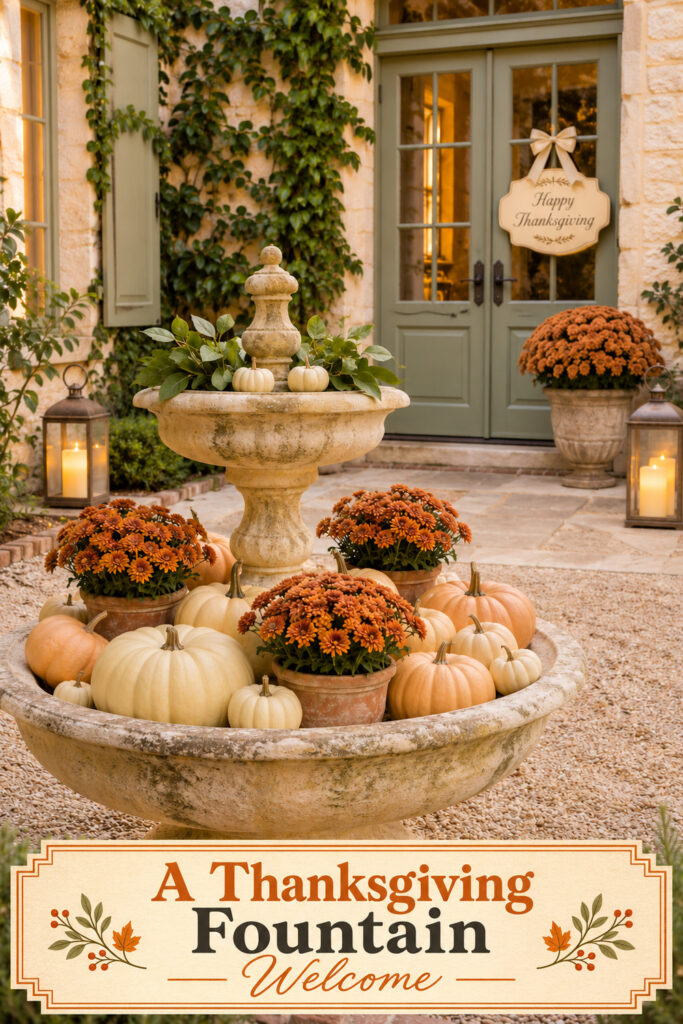
This image was generated with AI as decorating inspiration. Similar pieces can recreate its effect where the structure and location suit a dry display.
Keep the Fountain’s Shape Visible
The stone is more than a container here. Its two levels give the pumpkins a clear setting and lift the smaller gourds above the fuller lower group. The pale surface also connects the display to the house behind it.
Keep the lower basin as the generous layer and the upper one as a smaller repeat. Filling both to the same depth would hide the fountain’s outline. Leave the center stem and finial visible so the arrangement still reads as a seasonal use of the structure.
This idea belongs to a dry, nonoperating display. Follow the actual fountain’s seasonal shutdown and care directions before considering decoration, and don’t use pumpkins or pots to block drains, covers, or parts that need access. A decorative fountain-shaped planter can be a better choice when an operating water feature should remain untouched.
Check the Basin Before Choosing the Fill
Look at the usable depth, the rim, and the support beneath the fountain. The photograph cannot establish how much weight a real basin can hold. Choose contents within the structure’s actual limits, and avoid stacking heavy objects above a fragile or damaged edge.
A broad lower bowl works because the pumpkins can sit inside it rather than balance on the rim. Set the largest shapes down first and leave room around the central stem. Their bases should rest steadily without relying on a smaller pumpkin to stop them rolling.
Lightweight decorative pumpkins may suit a display where real ones would add too much weight or require more attention. Check their intended outdoor use and their finish before placing them in the courtyard. The pale color mix can stay the same even when the actual material changes.
Do not add improvised packing that holds water against stone or hides an unstable base. If the basin is too deep for a supported arrangement, use another display surface or a suitable insert designed for that structure. The goal is a clear, stable harvest group, not a mound balanced over empty space.
Arrange the Pumpkins in a Low, Nested Group
Ivory pumpkins make the largest pale shapes, while peach ones warm the gaps between them. Their different sizes give the lower basin a natural rhythm. Keep the stems visible where possible so each piece remains distinct from the next.
Start near the center support and work outward. Turn the pumpkins until their sides sit comfortably together, then check the group from the main path. Leave a visible strip of stone at the rim rather than packing objects over it.
Avoid building a second row directly on top of the first unless the pieces have a secure, suitable support. A low grouping can look abundant through width rather than height. The upper basin already supplies the raised layer, so the lower display doesn’t need a pumpkin tower as well.
Keep loose gourds out of the walking route. If you want the color to continue toward the door, repeat it in a stable planter or a contained arrangement instead. Guests should be able to admire the fountain without watching every step around it.
Let the Mum Pots Remain Separate
The three pots of rust mums break up the pale pumpkins with dense flowers. Their rounded tops repeat the larger harvest shapes, while the visible pots make the plants look deliberately placed rather than pushed into an unknown filling material.
Use containers suited to the plants and the location. Keep any watering or drainage routine separate from the fountain’s mechanical parts, and remove pots when that is needed to protect the stone. Artificial flowers are an option when the site or seasonal care makes live plants unsuitable.
Leave enough space around each pot to lift it out. A tightly wedged arrangement may look full on the first day but become awkward to care for. You should be able to remove one plant without dismantling the whole pumpkin group.
The upper basin needs less foliage. A low sweep of green and a few miniature ivory shapes can repeat the lower colors while keeping the finial clear. Check the material’s outdoor suitability and secure it in a way appropriate to the actual structure, without covering access points.
Connect the Fountain to the Door
The Thanksgiving greeting gives the courtyard a clear hosting context. A separate mum planter by the sage doors repeats the flower color without making another large harvest pile. That second group helps the eye move from the fountain toward the entrance.
The lanterns sit at the edges of the paved approach. Choose lights and enclosures suited to the location, and keep them on stable surfaces outside the normal route. Suitable battery pillars can provide the warm glow without open flames among plants and seasonal decorations.
Walk the approach carrying something similar to a guest’s bag or covered dish. Check the width beside the fountain, the step at the door, and the reach to the handle. The best arrangement leaves these ordinary movements easy even after the courtyard is fully dressed.
A smaller entry can use one broad decorative basin on a stable low stand. Keep the pale pumpkin group, one mum pot, and the nearby greeting. Preserve the contained shape instead of spreading the same quantity of pieces over a narrower path.
Choose for the Structure and the Season
Begin with a suitable dry basin or decorative stand. Select the harvest pieces only after you know the available support, exposure, and care needs.
Look for Lightweight Outdoor Pumpkins
Check the actual material and intended display conditions. Choose several sizes that can rest inside the basin without balancing on its edge.
Look for Separate Mum Pots
Use containers you can lift out for care. Their size should leave enough room for the pumpkins and visible stone between the groups.
Look for Weather Suitable Lanterns
Choose steady bases and lighting intended for the location. Keep the pair outside the route rather than using them to narrow the path beside the fountain.
Inspect the Arrival in Changing Light
Check the display in daylight and again when the lanterns are on. Look for loose pieces, a hidden edge, or foliage leaning toward the path. Remove or adjust anything that makes the approach less clear, and revisit the arrangement after wet or windy weather.
Final Styling Tip
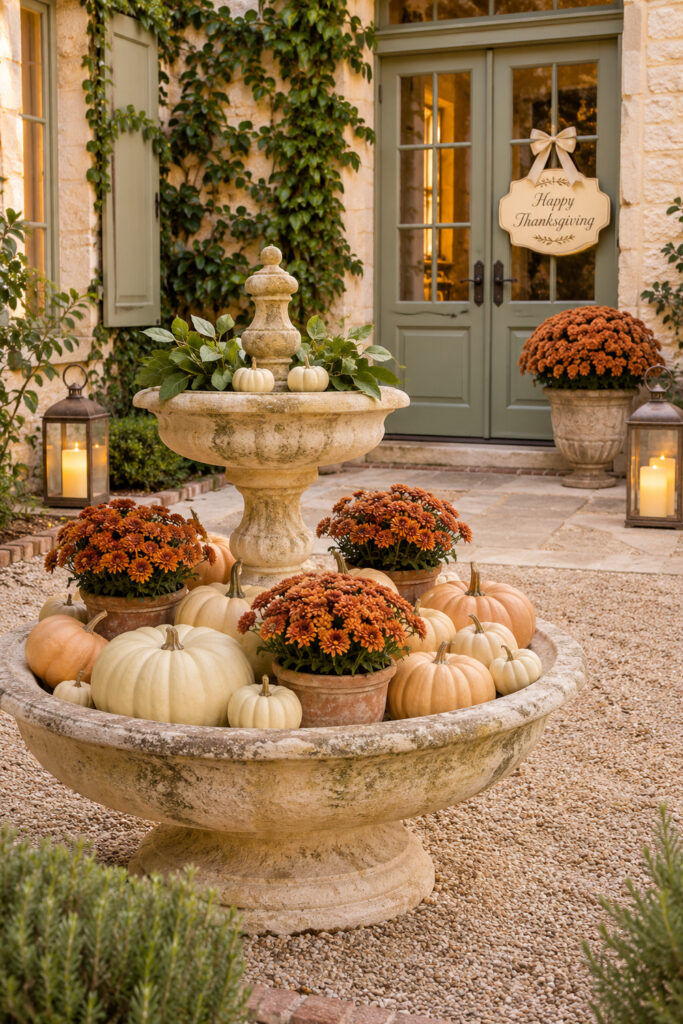
Leave the upper stone finial uncovered. Its clear outline gives the abundant lower basin a graceful stopping point instead of letting the display become one large harvest mound.