*This post may contain affiliate links for which I earn commissions.*
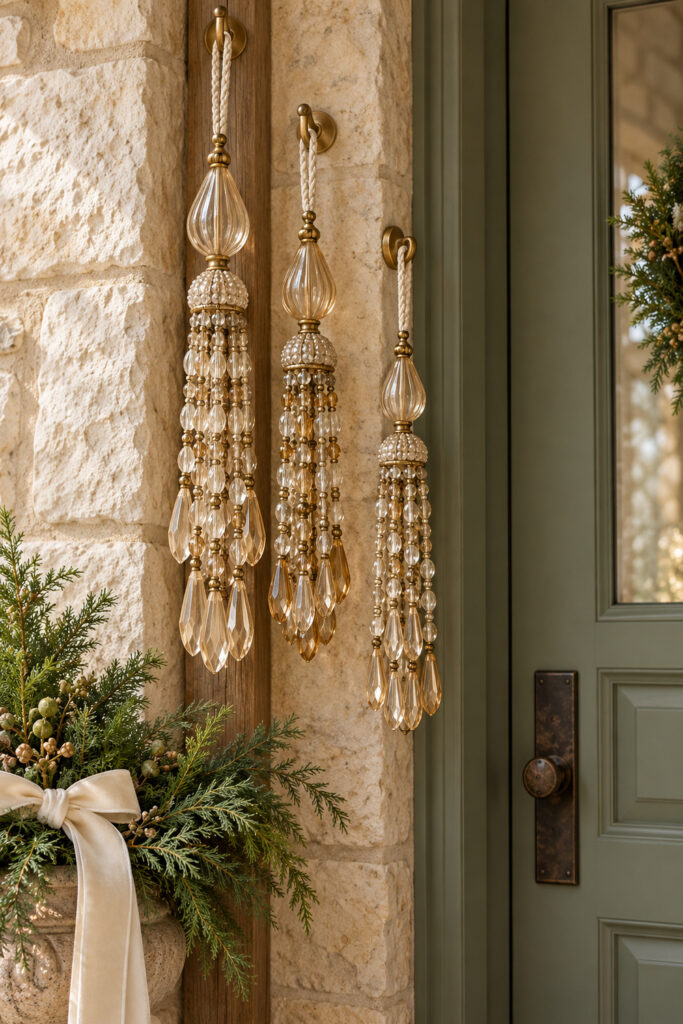
Three beaded tassels hang beside a sage front door in this Christmas inspiration. Large fluted beads lead into small sparkling strands and pointed drops, while cream cords connect them to simple hooks. The different hanging heights create a vertical arrangement that leaves the door itself clear.
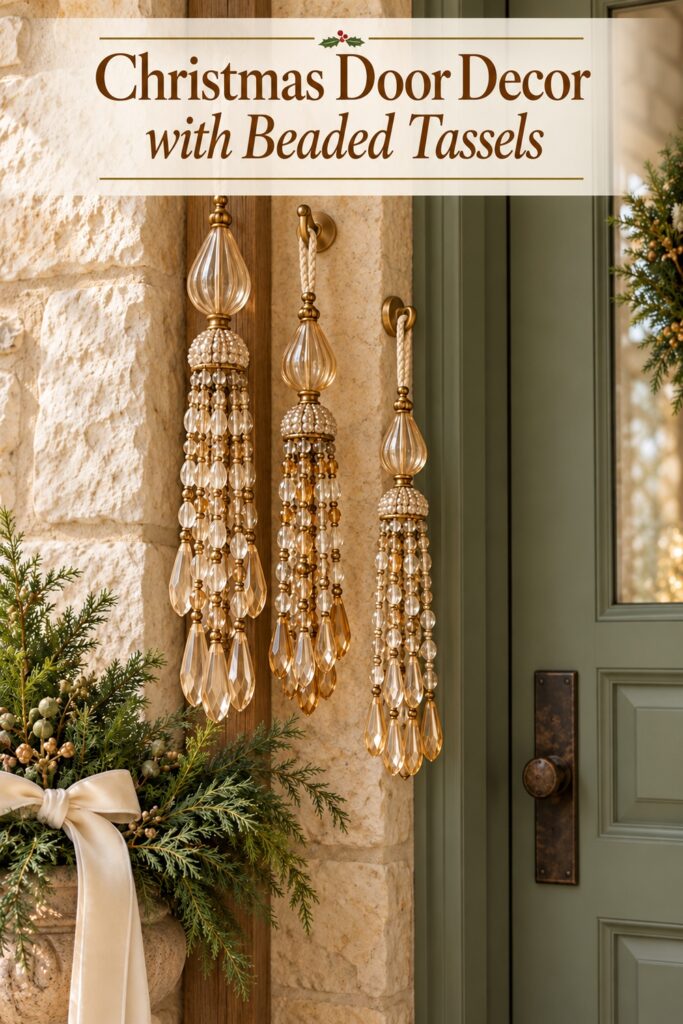
The inspiration image was created with AI and illustrates a decorative idea rather than a verified product or an installed doorway display.
What Makes This Doorway Detail Work
The tassels repeat one recognizable shape at different scales. Each begins with a rounded bead, narrows through a decorative cap, and opens into hanging strands. That clear progression makes the collection readable even against textured stone. The repeated cream and champagne tones help the many small beads feel like one idea.
The arrangement sits beside the door, which is useful when you want a seasonal accent without covering the panels. A narrow wood strip gives the hooks a shared vertical background. Their staggered positions stop the tassels from bunching together at the same height and let the longer drops remain visible.
Greenery below supplies the Christmas connection. Its irregular branches contrast with the precise bead strands, while the cream bow repeats the hanging cords. The sage door stays quiet behind the collection. You could borrow the same balance with a different door color by keeping the tassels and their supporting ribbon closely related.
Key Pieces for the Beaded Door Display
Find beaded decorative tassels
Browse current Amazon options that can help you recreate this look.
Browse beaded decorative tassels on Amazon →As an Amazon Associate I earn from qualifying purchases.
Decorative Beaded Tassels
Look for tassels with a defined upper section and separate hanging strands. Glass or crystal-style beads can provide the reflective effect, but exact matches to the inspiration may not exist. Acrylic beads offer a lighter substitute, which can be helpful when the display is near a working doorway.
Check the intended use carefully. A curtain tieback may be designed to wrap around fabric rather than hang freely from a single point. Its cord, weight, and attachment can behave differently when used as a decoration. Choose a piece suitable for the position you have in mind and don’t assume every decorative tassel is weather resistant.
Secure Hooks on a Suitable Surface
The hooks are a small visual detail with an important practical role. Use fixings appropriate to the wall or wood surface and rated for the actual load. Rough masonry, painted trim, and unfinished timber need different attachment methods. Follow the fixing manufacturer’s directions instead of relying on the inspiration’s clean-looking installation.
Plan the hook positions with paper strips or empty cords before making holes. This lets you judge the descending line without holding fragile tassels against the wall. Keep the hooks and drops outside the door’s swing and away from handles, locks, and any place a bag or sleeve is likely to catch.
Cream Cord and Warm Metal Details
A pale cord keeps the hanging line visible against the wood. If you’re replacing a tassel’s cord, make sure the replacement is suitable for its weight and attachment. Decorative ribbon can disguise a secure connection, but it shouldn’t conceal a weak one. The hanging system needs to work before you worry about the bow.
Warm metal hooks and bead spacers tie the pieces together without making every component identical. If your tassels have silver-colored fittings, use a similarly quiet hook finish rather than trying to change all the hardware. The repeated shape and hanging heights matter more than a precise metallic match.
A Low Evergreen Arrangement
Place greenery below or beside the tassels, leaving the long drops clear. A pot with a cream bow can echo the cords and anchor the lower part of the display. Keep branches out of the walking route and avoid a container so broad that visitors must squeeze past it to reach the door.
How to Arrange the Tassels Beside Your Door
Choose a sheltered location first. Beads can swing in wind, and glass pieces can knock against each other or the wall. An interior entryway or enclosed porch may be more practical than an exposed exterior. Even under cover, use only products suitable for the conditions they will encounter.
Hold up the longest tassel and identify its lowest point. That point should remain well clear of the floor, planter, and anything that moves. Then place the next tassel slightly lower at the top but shorter overall, so the hanging strands form a gentle progression instead of overlapping into one dense column.
Space the groups far enough apart that individual drops can move a little without touching. The inspiration compresses the display into a narrow strip, but your real pieces may need more clearance. Test the arrangement with the door opening fully and with someone passing through carrying a shopping bag or coat.
Check the view from the approach to the house. The large upper beads should lead your eye down into the strands. If the tassels disappear against a busy stone wall, a plain wood backing or an interior painted section can help separate them. Don’t add more beads to solve a background problem.
Add the evergreen container after the hanging positions are settled. Let its branches reach sideways rather than upward into the strands. This keeps the tassels’ lower shapes visible and gives the foliage a separate role. A single cream bow on the pot is enough to repeat the cord color without competing with the bead caps.
If your available space is very narrow, use one substantial tassel instead of three. Hang it beside the door at a height where its details are visible, then repeat its cream tone in the planter ribbon. One clear vertical feature can carry the idea more effectively than a crowded group of smaller pieces.
Keep the display out of reach of children and pets. Loose beads and long cords don’t belong where they can be pulled or played with. Inspect the strands periodically and remove any piece with a failing connection. Treat the collection as decorative hanging objects, never as a handle or a functional curtain pull.
Shop Similar Pieces
Look for Beaded Decorative Tassels
Compare length, weight, strand construction, and hanging-loop strength. A photo may emphasize sparkle while hiding how the strands attach to the cap. Look for clear construction information and avoid choosing solely by color when the display will hang near a busy entrance.
Shop Similar Hooks and Hanging Hardware
Choose the fixing for the surface and load first, then select a finish that suits the room. A discreet secure hook is more useful than an ornate one installed incorrectly. If drilling or mounting isn’t practical, move the idea indoors to an existing suitable hanging point.
Add a Cream Ribbon Accent
A broad ribbon on the planter can echo the narrow hanging cords without copying their texture. Choose a material appropriate to its location and keep the tails short enough to stay clear of the ground. Reuse an existing pot and greenery if their scale fits beneath the tassels.
Final Styling Tip
Set the hanging heights with empty cords before installing the tassels. You’ll see the overall line clearly and can make adjustments without repeatedly handling the beaded strands.