*This post may contain affiliate links for which I earn commissions.*
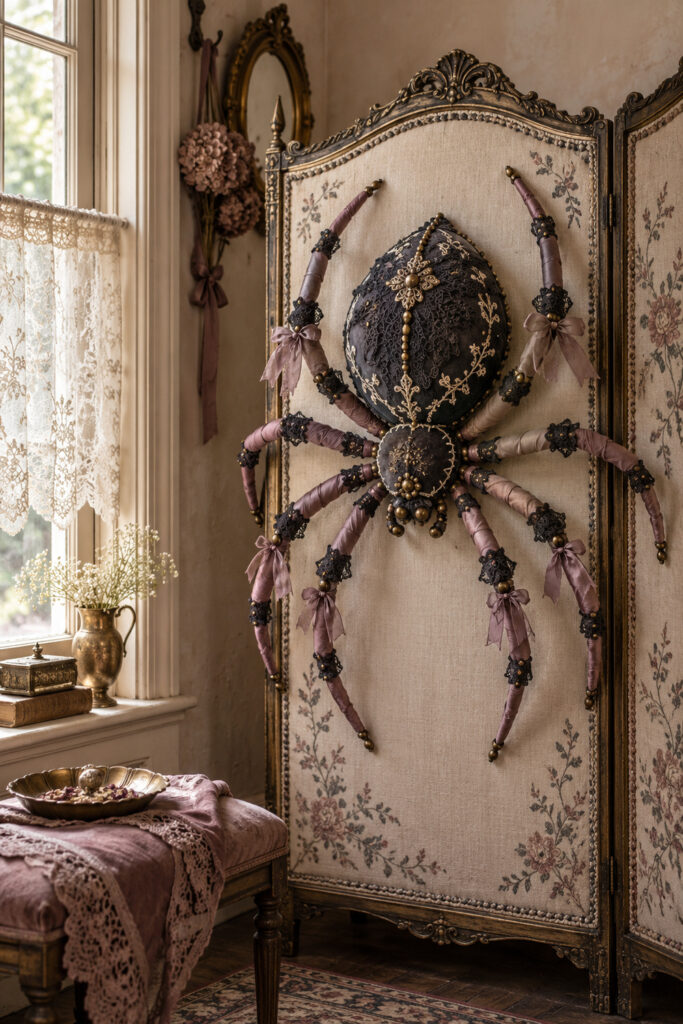
A large spider made from lace, dark fabric, mauve ribbon, and old gold accents gives this Halloween screen its identity. You notice the eight legs first, then the embroidery and little bows. That order matters. The shape reads from across the room, while the smaller details reward a closer look.
The surrounding dressing room stays soft and familiar, with an ivory screen, a lace window curtain, and a draped stool. If you like Halloween decorating but prefer textiles to plastic props, this is an interesting direction to borrow. Start with one recognizable spider and let the room’s existing furniture do much of the supporting work.
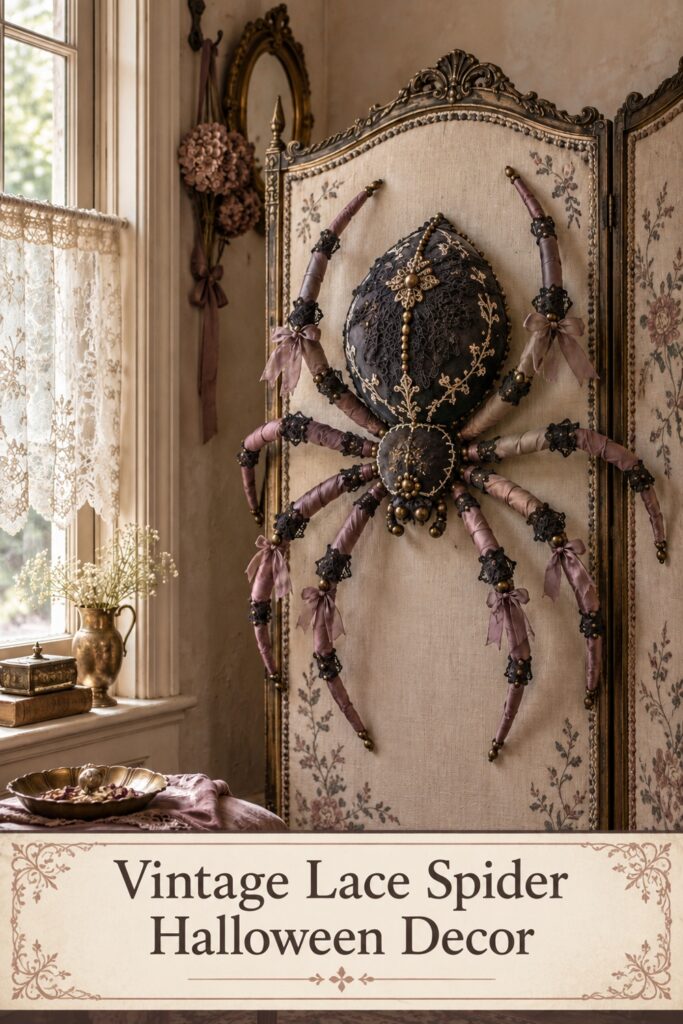
The inspiration image was created with AI. Use it as a decorating reference for a similar arrangement rather than an exact collection of purchasable pieces.
Why the Spider Stands Out Against the Screen
The pale panel gives the dark body a clear outline. A charcoal spider against a busy dark background would lose some of its shape, particularly where the legs bend. Here, the ivory fabric provides breathing room around the subject, even though the panel itself has a fine floral border. That border stays at the edges instead of running directly behind the body.
Find Textile Halloween Spiders
Browse current Amazon options that can help you recreate this look.
Browse Textile Halloween Spiders on Amazon →As an Amazon Associate I earn from qualifying purchases.
The spider also has two distinct body sections. Its larger upper section carries delicate pale embroidery, while the smaller lower section looks almost like a decorative medallion. Antiqued gold details connect the two. You can borrow that contrast with a dark textile spider and one restrained metallic accent, without reproducing every bead or stitch in the image.
Mauve ribbon softens the long legs, but their bent shape keeps the subject unmistakable. The bows sit at selected joints rather than filling every available spot. When choosing a substitute, check the silhouette before considering embellishments. Eight visible legs with room between them will do more for this idea than a heavily decorated body with crowded or hidden legs.
Pieces That Carry the Vintage Halloween Look
A Lightweight Textile Spider
Look for a fabric Halloween spider with a defined body and poseable legs, or use a plain lightweight decorative spider as the starting point for a textile treatment. Its surface can be simplified. Dark velvet, a lace overlay, and a small stitched or pinned accent can suggest the same layered character. An exact embroidered replica isn’t necessary to make the idea recognizable.
Choose the scale in relation to the panel you actually have. As a proposed starting point, the spider could occupy much of the middle area while leaving a visible margin on all sides. Lay out a paper outline before attaching anything. If the legs touch the frame everywhere, try a smaller body or bring their bends inward slightly.
An Ivory Folding Screen or Fabric Panel
An upholstered folding screen is especially useful because it provides both a backdrop and height. Existing pale panels, a freestanding fabric display, or a framed textile can serve a similar purpose. The important feature is a quiet surface that contrasts with the spider. Keep the support stable, and choose a position where it doesn’t narrow the walkway or interfere with a door.
The ornate dark frame in the inspiration adds age and definition, but a plain frame can work too. If your screen has a pattern across the whole panel, place a removable plain fabric layer behind the spider. Keep attachments reversible on furniture you value. Avoid sticking strong adhesive directly to delicate upholstery, painted finishes, or antique trim.
Mauve Ribbon and Dark Lace
Muted purple ribbon is the main soft accent here. Select a ribbon wide enough to register around the legs, but narrow enough that it won’t turn them into a solid mass. Try one wrapped section and one small bow before decorating the whole piece. If the ribbon dominates, reduce its width or use fewer bows so the bends remain visible.
Black lace can add depth over a plain dark body. Look for an open pattern that shows against the base fabric, rather than a thick layer that hides the spider’s outline. For a simpler adaptation, use lace only on the large body section. Leave the legs cleaner, with the ribbon supplying their detail. Different textures are more useful here than several additional colors.
Small Antiqued Gold Accents
The metallic details act like jewelry for the textile subject. One old gold button, a small decorative clasp, or a restrained trim can create that effect. Keep pieces light and attach them securely to the decoration. You don’t need a row of dangling elements, especially if the display will be moved or could be reached by children or pets.
Arrange the Screen Without Crowding the Room
Position the screen so the decorated panel faces the main view into the room. In the inspiration, the angled neighboring panel helps the main surface feel like part of the furniture rather than a flat backdrop. Try a gentle fold that keeps the screen stable. Check the manufacturer’s support requirements instead of opening it almost flat simply to show more fabric.
Stand back and look for the eight legs. If one disappears against the frame, adjust its angle or shift the spider slightly. The body can sit above the panel’s middle, with the lower legs extending into the space below. This gives the subject a purposeful placement while leaving the base of the screen visually open. Balance matters more than exact symmetry.
Use existing furniture nearby at a lower height. The draped stool in the image supports the mauve color without obscuring the spider. A small stool, a low basket, or a folded textile can do the same job in another room. Keep it to one supporting area. Several separate floor displays would compete with the screen and make the arrangement harder to read.
Let Daylight Show the Lace
Side light catches the ribbon folds and embroidery, which is part of the appeal of this textile approach. Place the display where ordinary daylight can reach it, while protecting delicate fabrics from prolonged harsh sun. At night, a nearby lamp can provide enough illumination to show the construction. There’s no need to make the corner so dark that the details disappear.
Shop Similar Pieces for This Arrangement
Look for Textile Halloween Spiders
Compare body shape, leg spacing, weight, and attachment options before decorative detail. A lightweight base that holds its pose is more useful than an elaborate piece that pulls against the panel. Check whether the seller describes a hanging decoration or a tabletop item. That distinction affects how you can mount it and whether the support needs reinforcement.
Shop Similar Mauve Ribbon and Lace Trim
Bring a small sample of your backdrop color when comparing fabrics, or view the choices together before ordering several supplies. Ivory can lean yellow or gray, and dusty mauve changes beside each one. Choose a pairing you like in your room’s light. Soft ribbon and open lace should support the spider’s shape rather than conceal its construction.
Look for Pale Decorative Screens
A screen you already own is worth trying first. If you need a substitute, prioritize stability, usable panel space, and a finish that suits the rest of the room. Decorative scrollwork is optional. A quieter screen can make the lace body even easier to see, particularly in a smaller space with less distance between the viewer and the display.
Final Styling Tip
Take a quick photo from the doorway before adding the last embellishments. If the spider reads clearly at that distance, you’ve kept the most useful part of the inspiration. Add just enough ribbon or lace to make someone want a closer look.