*This post may contain affiliate links for which I earn commissions.*
An oversized textile dahlia fills the wall above a record cabinet, with rust, apricot, oatmeal, and checked petals arranged around a raised center. Its shape is simple to recognize, but the layered fabric gives it plenty of detail. You can see the stitched edges and overlapping petals without needing to stand beside it.
The music corner underneath stays familiar: records, a turntable, warm wood, framed art, and a copper-colored vase. That is a useful balance for fall decorating. One large seasonal subject changes the wall, while the everyday pieces keep the room comfortable and usable. You can borrow the approach with a dimensional fabric flower or a similar textile wall hanging.
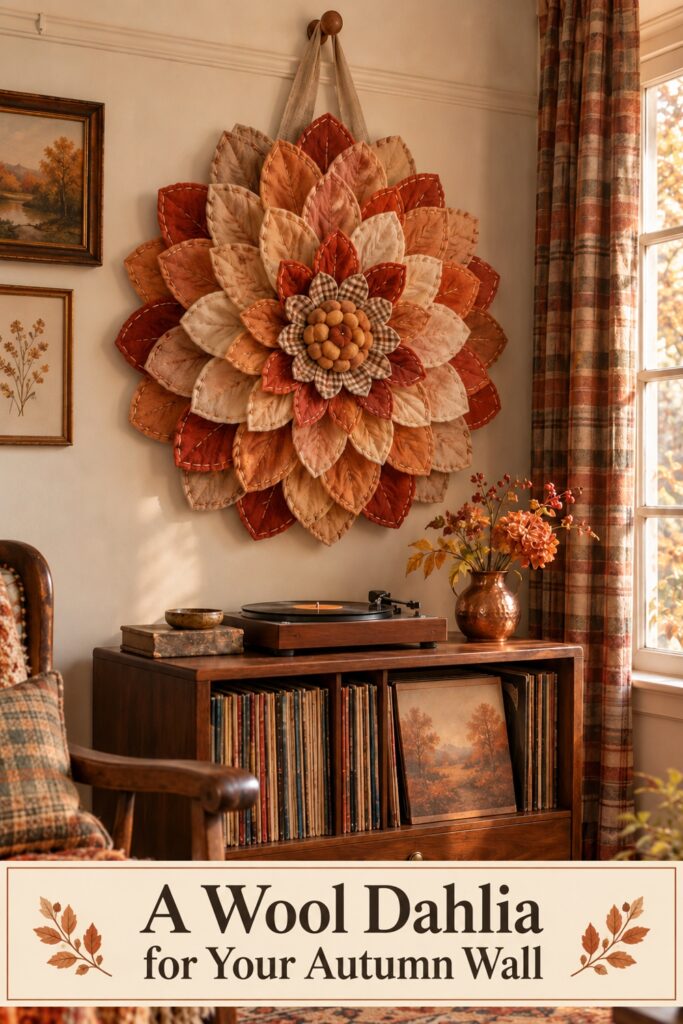
The inspiration image was created with AI. It offers a visual direction for arranging similar pieces rather than documenting a finished handmade object.
Why One Large Flower Is Enough
The petals move from broad outer shapes to smaller inner layers, making the circular flower feel substantial. The warm colors are distributed through those layers rather than placed in separate blocks. Oatmeal petals lighten the arrangement, while rust gives the edge definition. A substitute with a clear layered outline can preserve this effect even if its stitching is simpler.
Find Fabric Flower Wall Decor
Browse current Amazon options that can help you recreate this look.
Browse Fabric Flower Wall Decor on Amazon →As an Amazon Associate I earn from qualifying purchases.
The center provides a second kind of texture. Small rounded pieces sit inside a checked ring, which makes the middle distinct from the longer pointed petals. You can achieve a related visual balance with a gathered fabric center, a padded circle, or a restrained cluster of felt details. The main requirement is a center that reads clearly against the surrounding layers.
A pale wall helps the warm flower stand apart. The cabinet below supplies a horizontal base, so the hanging feels connected to the room instead of floating without context. Notice that the flower isn’t surrounded by several other seasonal wall decorations. The framed pictures stay to one side, leaving the large textile subject enough space to carry the corner.
Key Pieces to Recreate the Autumn Wall Idea
A Dimensional Textile Flower
Search for fabric flower wall decor, wool felt floral hangings, or layered textile wall art. Compare the outline from a distance before looking at the smallest details. Wide overlapping petals are more relevant to this idea than a flat printed flower. A dimensional piece can cast gentle shadows that keep the shape interesting in ordinary room light.
An exact oversized stitched dahlia may be difficult to find, so consider a similar layered flower in the same color family. You can also use a handmade textile piece you already own if its scale fits the wall. The inspiration’s appeal comes from one large tactile subject, not from a particular count of petals or an exact arrangement of stitches.
Wool Felt and Warm Fabric Texture
If you prefer a component approach, wool-blend felt, fabric scraps, and a sturdy backing are useful categories to investigate. Treat that as a separate craft project with a proper construction plan rather than assuming the image reveals how the hanging was made. For styling purposes, the important features are substantial petals, secure layers, and a clearly defined center.
Look for oatmeal, muted apricot, rust, and warm tan. You can reduce the palette to three colors if that makes coordinating easier. Keep a lighter fabric among the darker petals so the layers stay visible. A little checked fabric near the center can add variety, but spreading several prints throughout every layer would change the quieter effect shown here.
A Plain Fabric Hanger
The broad fabric loop is visible above the flower and feels appropriate to its soft construction. A similar ribbon or textile strap can become part of the display, provided the hanging itself is designed to use it. Check the weight and backing before choosing hardware. Decorative ribbon should not replace a suitable supporting hanger on a heavy piece.
Match the visible loop to one of the quieter petal colors. That keeps the top connected without drawing attention away from the flower. If your wall art has hidden hanging hardware, you can leave it hidden. The loop is a lovely detail, but the layered silhouette matters more than duplicating the attachment shown in the inspiration.
A Low Wood Cabinet
The record cabinet grounds the wall hanging with a broad warm surface. An existing sideboard, small bookcase, or music cabinet can work just as well. Choose the wall art around the furniture width and the available wall area. As a planning exercise, use a paper circle to judge scale before deciding on a large textile piece.
Keep the turntable or other everyday equipment easy to use. The display should leave space for lids, controls, and cables. Position the hanging securely and well clear of moving equipment. You can decorate the wall while leaving the surface mostly practical, which is especially helpful in a small room where one cabinet serves several purposes.
Place the Flower in Relation to the Furniture
Start with the cabinet rather than the ceiling. The wall hanging should feel connected to the furniture beneath it, with a visible gap that keeps the petals separate from objects on top. A flower placed too high can lose that relationship. A flower placed too low may look as though it is resting on the turntable or vase.
Check the proportions from the usual seat in the room. The inspiration is viewed close enough that the flower feels large and immediate. If your viewing distance is longer, you may need a larger subject or stronger color contrast. In a smaller corner, a medium flower with fewer surrounding objects can create a similar focal point without overwhelming the wall.
Allow clearance on the window side. A curtain brushing the petals would hide the outline and make the arrangement fussy to maintain. If the wall is narrow, shift the hanging slightly away from the curtain rather than centering it in the entire room. Centering relative to the cabinet can be more useful than centering relative to every architectural feature.
Repeat Autumn Colors in Smaller Places
The plaid curtain and chair cushion echo the fabric theme without repeating the flower itself. That is an easy way to make the hanging feel settled. A small plaid pillow, a folded rust throw, or a checked cloth can offer the same connection. Use something you already like rather than introducing several new textiles for a single seasonal display.
Shop Similar Pieces for the Music Corner
Look for Layered Fabric Flower Wall Art
Check the back as well as the front when product photographs allow it. A substantial layered piece needs a secure backing and a clear mounting method. Dimensions matter too: measure the usable wall space rather than guessing from a styled listing photo. The petals should have room to remain fully visible once the hanging is installed.
Shop Similar Autumn Textiles
Look for a pillow or throw that repeats one flower color and adds a familiar pattern. A small checked item can be enough. If you already have patterned curtains, choose a plain supporting textile so the corner doesn’t become visually busy. You can keep the tactile mood without using the same fabric on every surface.
Look for a Warm Metal or Ceramic Vase
A vase is optional, but it can connect the wall art to the cabinet. Choose a stable base and a size that leaves your equipment usable. A quieter shape gives the large flower room to lead. The best supporting piece is often the one you notice second, after you’ve taken in the layered petals.
Final Styling Tip
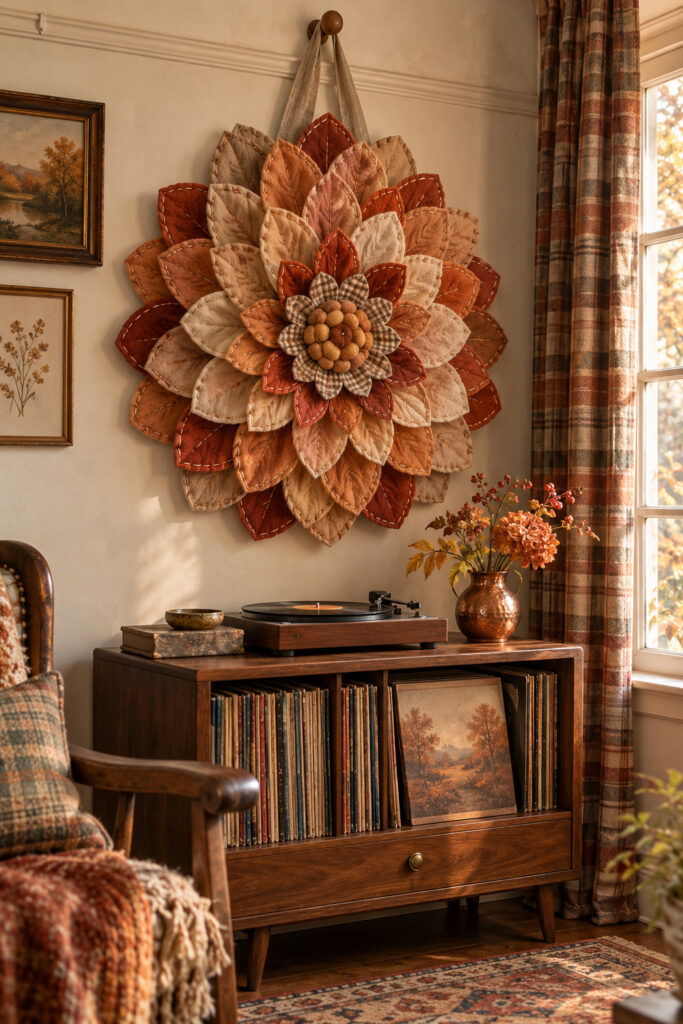
View the hanging in a small phone photo. If the flower’s outer shape and center remain distinct, its materials and scale are doing their job. Keep nearby decorations quieter so that clear textile subject stays the reason to look at the corner.