*This post may contain affiliate links for which I earn commissions.*
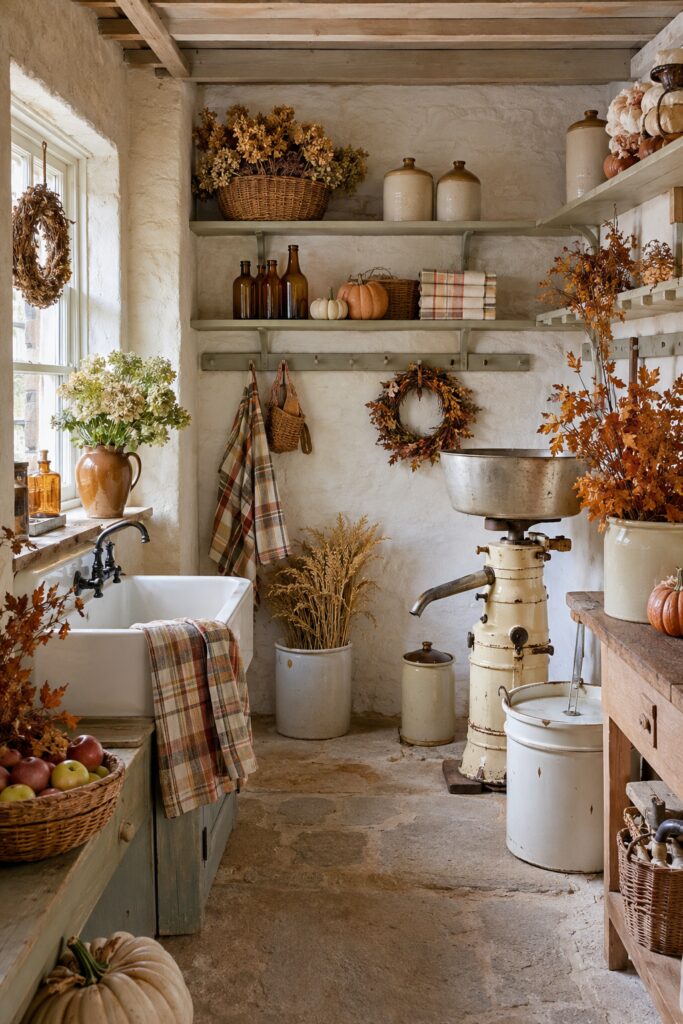
This peaceful milk room captures fall through the textures and practical objects of an earlier farmhouse. Amber bottles, stoneware crocks, woven baskets, plaid linens, autumn branches, and a few softly colored pumpkins warm the pale plaster walls without hiding the room’s original character.
Even the antique cream separator becomes part of the seasonal display. Surrounded by oak leaves, dried grain, pottery, and well-worn textiles, it feels less like unused equipment and more like the room’s sculptural centerpiece.
This decorating approach could work in a farmhouse kitchen, pantry, laundry room, mudroom, potting room, or breakfast nook. The goal is not to duplicate the historic milk room. It is to combine humble, useful-looking pieces with restrained autumn accents so the space feels collected and quietly seasonal.
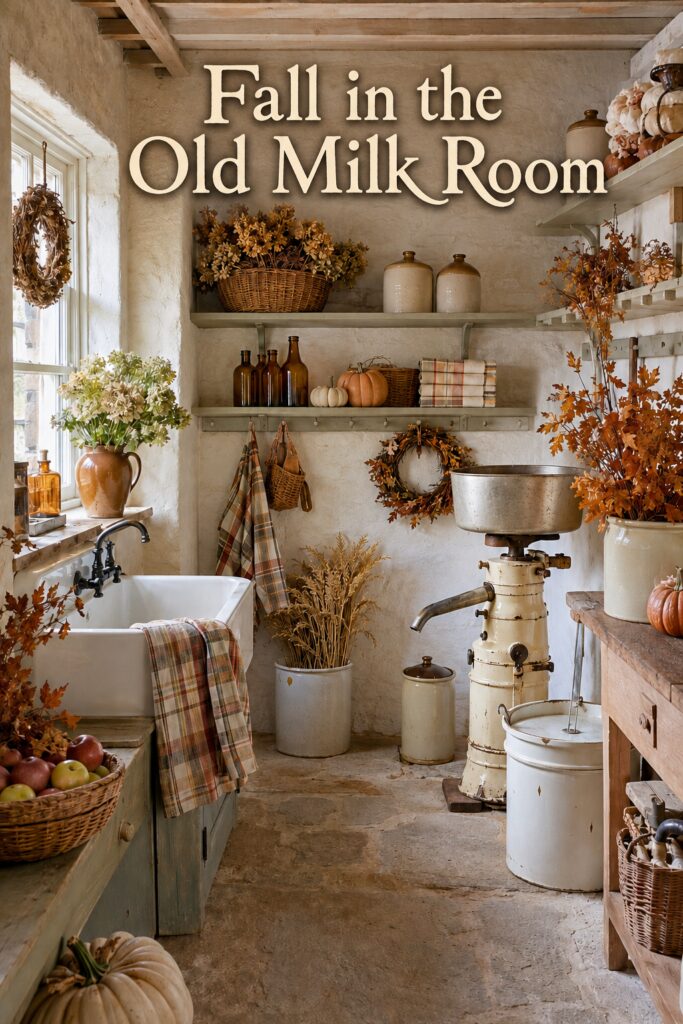
The inspiration image featured in this post was created with AI.
What Gives This Milk Room Its Old-Fashioned Appeal
The appeal begins with contrast. Rough plaster, exposed beams, worn stone floors, and a weathered worktable form a pale architectural backdrop. Against those surfaces, amber glass and rusty foliage have unusual depth.
Most of the room’s everyday pieces stay within a narrow range of cream, oatmeal, brown, and aged metal. Fall color appears in smaller doses through pumpkins, oak branches, dried flowers, apples, and thin stripes in the plaid textiles.
Open shelving is another important feature. Crocks and bottles are arranged with space around them, allowing their silhouettes to show clearly. The shelves remain functional in appearance even though the display has been carefully styled.
Let One Vintage-Style Object Anchor the Room
The antique cream separator is the most distinctive object in the image. Its tall enamel base, metal bowl, curved spout, and timeworn finish immediately establish the milk-room story.
Most homes will not have an old dairy machine, nor is one necessary. A large enamel vessel, vintage-style metal bowl, tall cream can, or substantial stoneware crock can act as the anchor. Look for one piece with enough height and history-inspired character to hold attention from across the room.
Place it where it can be seen easily, then surround it lightly. A bundle of wheat on one side and a smaller lidded crock on the other can soften the transition without competing with the main object.
The lesson is useful in any room: one memorable piece often creates more character than a collection of small seasonal signs.
Layer Cream Stoneware Across the Shelves
Cream crocks connect nearly every part of the milk room. Large lidded vessels sit along the upper shelves, while taller cylindrical crocks hold wheat and rusty branches closer to the floor and worktable.
The pottery is not perfectly matched. Slight differences in shape, glaze, lid color, and scale make the collection feel as though it developed over time.
For a similar arrangement, begin with three pieces in different sizes. Use one large crock as a floor or counter vessel, one medium lidded jar on a shelf, and one small piece to complete a compact grouping.
Warm ivory, oatmeal, putty, and cream glazes will suit the image better than pure white. Brown rims, simple lids, light crazing, or gently distressed finishes can add age without making the display look heavily themed.
Shop Similar Cream Stoneware Crocks
Look for useful shapes that could hold stems, wooden utensils, wrapped treats, or small household items after fall ends.
Introduce Amber Glass in Small Clusters
The row of brown bottles adds a rich translucent note beneath the pale crockery. Sunlight from the nearby window makes the glass glow, giving the shelf warmth without requiring another vivid fall color.
Gather three to five amber bottles with related but not identical profiles. Keep the arrangement simple and place the tallest bottle slightly off-center. Small differences in height will make the grouping look more naturally collected.
Decorative bottles, bud vases, or apothecary-inspired vessels can all provide this effect. Leave some empty and add only one or two dried stems if the shelf begins to look too busy.
Add Amber Bottles to Warm Open Shelves
Choose deep honey, tobacco brown, or amber glass with narrow necks and minimal ornamentation.
Use Muted Plaid as the Unifying Pattern
Plaid appears in several places, including the fabric hanging from the peg rail, the cloth draped over the sink, and the folded linens on the shelf. Repeating the pattern makes the room feel coordinated, but the cloth never takes over the display.
The palette is especially important. Soft olive, oat, brick, rust, and brown stripes reinforce the leaves, apples, pottery, and pumpkins already in the room.
One or two plaid kitchen towels can recreate the idea in a smaller space. Drape one over a farmhouse sink, cabinet handle, stool, or basket. Fold the second neatly on an open shelf to repeat the pattern at another height.
If a towel has an attractive reverse side, allow both sides to show. A slightly rumpled drape will feel more believable here than a tightly folded, untouched display.
Look for Muted Autumn Plaid Towels
Prioritize woven texture and subdued shades over novelty motifs or lettering.
Frame the Room with Dried Wheat and Rusty Branches
The botanical elements are generous but uncomplicated. Dried wheat stands upright in a floor crock, pale flowers fill a pitcher near the window, and long rust-colored branches spread outward from vessels on both sides of the room.
These arrangements work because their shapes vary. The wheat is narrow and vertical, the window flowers are rounded and airy, and the oak branches are loose and reaching.
Use the same principle at home. Pair one controlled bundle with one irregular branch arrangement. Keep stems close to their natural colors and let the leaves retain visible gaps rather than forming a dense artificial mass.
Branches can be cut or bent to fit the room. A few tall stems often look more authentic than a tightly packed bouquet.
Shop Natural Wheat Bundles and Autumn Branches
Select stems with ochre, cinnamon, faded orange, or brown tones that complement aged wood and cream pottery.
Hang a Small Wreath Inside the Room
The modest wreath beneath the shelves adds a distinct fall detail without becoming a formal door decoration. Its open center allows the plaster wall to remain visible, while its small scale fits neatly between the peg rail and antique equipment.
A restrained wreath can decorate a window, pantry door, cabinet front, peg rail, or open section of wall. Look for leaves, fine twigs, seed heads, or dried flowers rather than a heavily embellished design.
For the most natural effect, choose a wreath with an irregular outline and a few stems extending beyond the circular base. A diameter of approximately 10 to 16 inches is often enough for an interior accent.
Add a Petite Rustic Fall Wreath
Avoid oversized bows and dense decorations if you want to preserve the understated milk-room mood.
Bring in Woven Baskets for Useful Texture
The image uses baskets as both storage and decoration. A large shallow basket holds apples, another contains dried flowers, and smaller woven pieces hang from pegs or rest beneath the worktable.
This is one of the easiest elements to adapt because baskets can remain useful throughout the year. Fill a shallow one with apples, pears, small pumpkins, folded napkins, or frequently used kitchen items.
Mix basket shapes instead of buying a matching storage suite. One flat fruit basket, one deeper rectangular basket, and one little hanging basket will create more visual interest.
Look for Shallow Wicker Fruit Baskets
Natural honey-brown wicker with visible handmade texture will reinforce the room’s old-fashioned character.
Add Pumpkins Without Turning the Room into a Pumpkin Display
The pumpkins are small supporting accents rather than the main theme. A warm terracotta pumpkin sits between amber bottles and folded linens, while ivory and blush pumpkins appear near the shelves, worktable, and floor.
Limit each grouping to one or two pumpkins. Mix warm cream with dusty orange, pale peach, or faded clay. Several different shapes will feel more garden-inspired than a uniform set.
A few real pumpkins can work beautifully in a cool room. Faux versions offer more flexibility when the display is near heat, moisture, food preparation areas, or delicate shelving.
Style the Look in a Modern Home
Begin with the shelves, table, or counter you already have. Remove unrelated items temporarily so you can see the available space.
Place the tallest crock or vintage-style vessel first. Add amber bottles in a small cluster, then distribute cream pottery across two or three levels. Introduce one plaid textile and repeat a related pattern or color elsewhere.
Add the wreath, wheat, and branches after the practical objects are in place. Finish with a shallow basket of apples and only a few pumpkins. Step back and remove anything that makes the room feel more like a store display than a working farmhouse space.
Leave portions of the shelves and walls visible. The calm plaster background and open spaces are essential parts of this look.
Final Styling Thought
Treat fall as a layer added to the room rather than a complete transformation. A few dried branches, timeworn vessels, plaid cloths, and garden produce can make an everyday space feel connected to the harvest season.