*This post may contain affiliate links for which I earn commissions.*
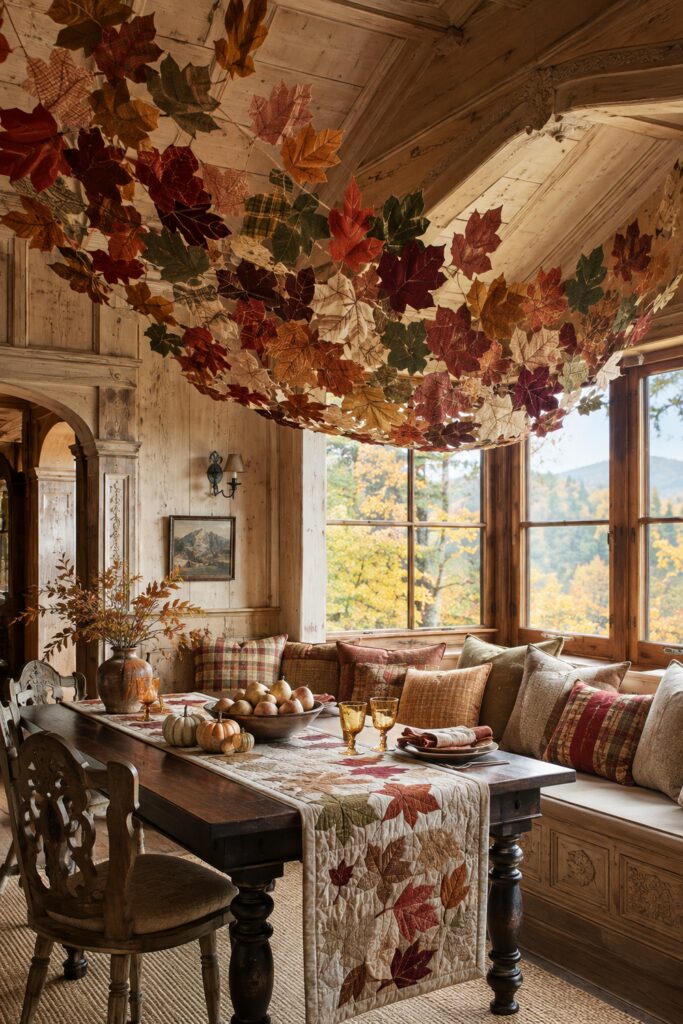
This chalet breakfast room turns autumn leaves into something far more imaginative than a traditional garland. A sweeping canopy of maple-shaped leaves floats above the table, filling the carved wood ceiling with rust, burgundy, olive, ochre, cream, and touches of plaid.
The canopy is echoed below by a quilted leaf table runner, layered pillows, amber goblets, pumpkins, and branches gathered in a substantial pottery vase. Together, they create a warm breakfast room that feels part alpine retreat and part handmade harvest celebration.
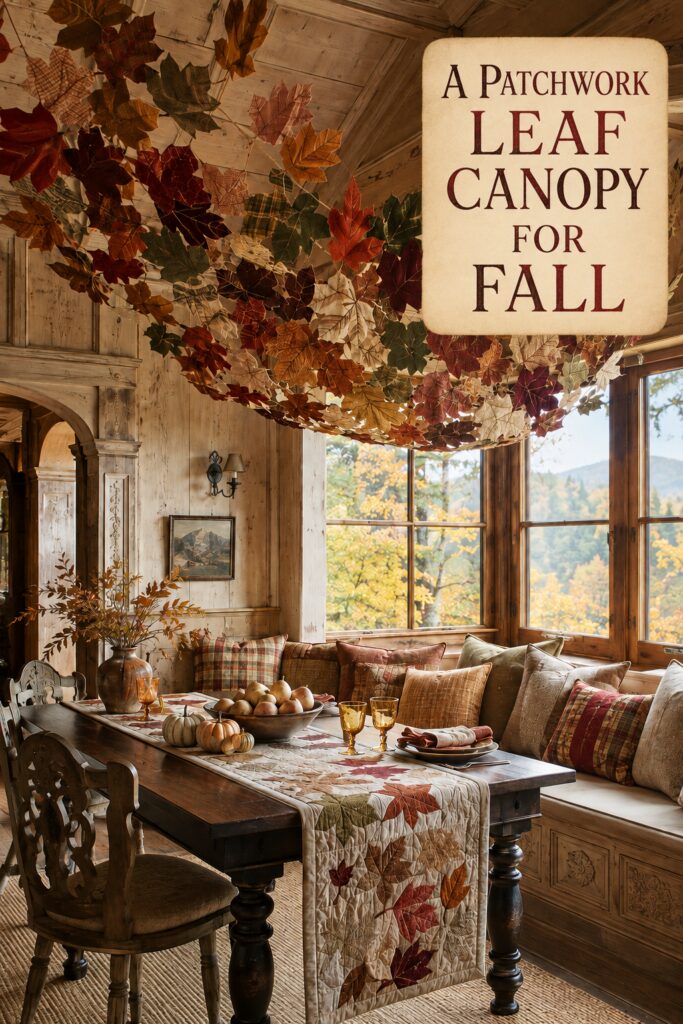
Image disclosure: This inspiration image was created with AI. It is intended to inspire a decorating effect that readers can recreate with similar materials and pieces.
What Makes This Chalet-Inspired Look Work
The leaf canopy is unquestionably the focal point, but the room works because the ceiling treatment is connected to everything below it.
Plaid leaves reappear as plaid pillows. Solid burgundy, olive, and cream leaves are repeated in the seating and table linens. The irregular edges of the canopy relate to the winding branches in the vase, while the quilted runner brings the leaf motif directly onto the table.
The palette is rich without becoming harsh. Warm wood surrounds the entire composition, acting as a neutral backdrop for the deeper seasonal tones. Sunlight through the windows keeps the abundance of fabric and foliage from feeling heavy.
Build a Leaf Canopy With Varied Color and Texture
A similar installation could begin with lightweight artificial leaves in several fall shades. Rather than using only orange and red, add olive, cream, faded rose, ochre, and deep burgundy.
The image’s most distinctive detail is the mixture of realistic leaf coloring and patterned fabric. Some leaves appear to be made from plaid, checked, or subtly printed material. This creates the patchwork quality that separates the canopy from an ordinary collection of faux foliage.
To reproduce that effect, combine purchased fabric leaves with handmade ones cut from quilting cotton. Fall fabric bundles can provide coordinated patterns without requiring large amounts of any one material.
Simple fusible interfacing can give thin fabric more body. Another option is to attach fabric to lightweight felt before cutting the leaf shapes. Include several sizes and rotate the leaves in different directions so the finished arrangement feels loose and gathered rather than mechanically repeated.
Look for Assorted Fabric-Style Fall Leaves
Choose leaves with soft surfaces, visible veins, and nuanced color variation. Avoid relying entirely on shiny plastic leaves, which may not produce the same textile-rich appearance.
Add Fall Quilting Fabric for Patterned Leaves
Look for small-scale plaid, check, leaf, and tonal prints in burgundy, olive, rust, tan, and cream. Fabric bundles are particularly useful because they provide variety within a coordinated palette.
Give the Canopy a Soft, Draped Shape
The canopy hangs lower in the center and rises gently toward the ceiling edges. That shallow curve makes it feel like a floating textile instead of a flat layer of decorations attached directly overhead.
For a manageable interpretation, attach leaves to lightweight mesh or netting on a work surface. Secure them in overlapping layers, leaving a few open areas so daylight and the ceiling remain visible. The finished panel can then be suspended as one lightweight unit.
A smaller panel over only the center of the table will often look more intentional than an installation that stretches across the entire room.
Any overhead display needs careful planning. Keep it away from candles, light fixtures, fireplaces, vents, sprinklers, and other heat or safety equipment. Do not obstruct doors, windows, walkways, or required ceiling devices. Use attachment hardware appropriate for the surface and total weight, and follow the manufacturer’s instructions. When there is any uncertainty, ask a qualified installer before mounting it.
Find Lightweight Hanging Supplies
Clear line and discreet ceiling attachments can help the canopy appear to float. The support system should be chosen according to the ceiling material and the actual weight of the completed panel.
Repeat the Leaves on the Table
The quilted runner makes the room feel cohesive without requiring the tabletop to be heavily decorated. Its cream background provides contrast against the dark wood table, while appliquéd leaves repeat the shapes and colors above.
Choose a runner long enough to drape over at least one end of the table. A quilted finish is especially effective because it introduces the same softness and handmade character as the canopy.
If a close finished match is difficult to find, a leaf runner pattern or kit offers another route. It can also help you coordinate the fabrics in the runner with the handmade leaves overhead.
Shop Similar Quilted Leaf Table Runners
Look for a warm cream ground, scattered or appliquéd foliage, visible stitching, and muted autumn colors. Traditional patchwork will suit this room better than a crisp printed runner with no texture.
Layer the Window Seat With Plaid and Solid Pillows
The built-in bench is generous and inviting, but its pillow arrangement remains visually connected to the table. Plaid pillows introduce pattern, while solid and lightly textured pillows give the eye places to rest.
Mix squares with one or two lumbar shapes. Use several related colors rather than purchasing an identical set. A useful combination could include:
- Burgundy and olive plaid
- Soft rust texture
- Faded sage or olive
- Warm oatmeal
- Muted leaf print
Keep the largest pillows toward the corners of the bench and place smaller patterned covers closer to the center. This creates comfort without hiding the carved woodwork or mountain view.
Add Muted Plaid Pillow Covers
Look for woven-looking designs with burgundy, rust, olive, tan, and cream. Smaller checks and softened tartans will complement the patchwork leaves without competing with them.
Warm the Table With Amber Glass
The amber goblets catch the window light and add a translucent golden note among the matte textiles and weathered wood. Their small scale keeps them from distracting from the installation, yet their color makes the table feel complete.
Vintage-inspired goblets with embossed, hobnail, or faceted surfaces are particularly suitable. They can be used for water, cider, or another seasonal drink and brought out again for Thanksgiving or other fall gatherings.
Bring In Vintage-Style Amber Goblets
Choose actual colored glass rather than a temporary painted coating when possible. Look for warm honey or amber tones and a substantial shape that will not feel delicate beside the heavy wood table.
Keep the Remaining Table Decor Restrained
The room already contains abundant pattern, so the tabletop uses only a few grounded accents. Small cream and orange pumpkins sit near the runner, while a low bowl of pears adds a natural harvest element without introducing another strong color.
A large brown pottery vase anchors one end of the table. Its open branches create height while remaining airy enough to avoid competing with the canopy.
You do not need all of these pieces. A quilted runner, two amber goblets, and one bowl of pears could finish the table without making breakfast or dinner inconvenient.
Adapt the Idea for a Smaller Dining Area
The effect can work without a chalet ceiling or a large permanent installation. Suspend a narrow leaf panel above a sideboard, create a small floating cluster over the center of a dining table, or drape layered fabric leaves from a ceiling-mounted hoop.
Another option is to build the patchwork foliage on a lightweight frame and hang it vertically as seasonal wall art. It will still communicate the handmade leaf concept while eliminating the complications of an overhead display.
Final Styling Tip
Repeat three or four fabrics from the canopy in the table runner or pillow covers. That small amount of coordination will make the entire room feel thoughtfully assembled, even when many different fall patterns are involved.