*This post may contain affiliate links for which I earn commissions.*
A working wool room offers a different kind of fall inspiration. Instead of relying on orange leaves, printed signs, and traditional seasonal colors, this space celebrates the quiet beauty of natural fibers.
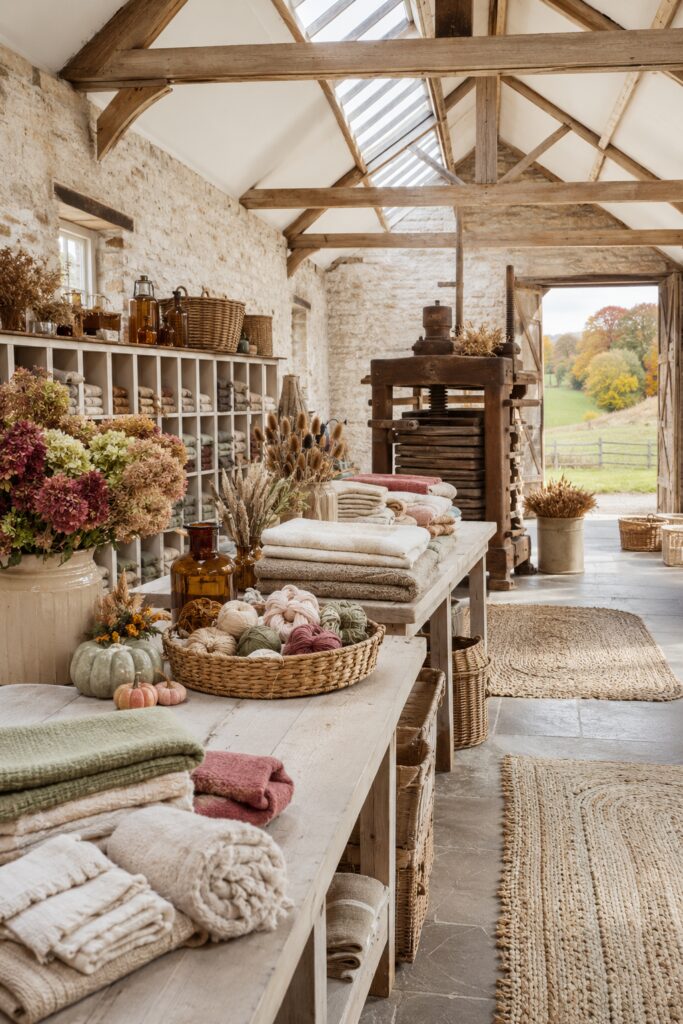
Stacks of cream, oatmeal, taupe, dusty rose, and muted sage textiles cover the long worktables. Coordinating yarn fills a shallow woven basket, while soft blankets and folded linens are organized inside open cubbies.
Dried hydrangeas, amber bottles, jute rugs, woven baskets, and a few pale pumpkins add autumn character without distracting from the room’s purpose. The result feels warm, textural, and grounded in the sheep farm setting.
You do not need a dedicated wool room to borrow these ideas. The same palette and layering techniques can soften a living room, bedroom, craft space, laundry room, entryway, or enclosed porch for fall.
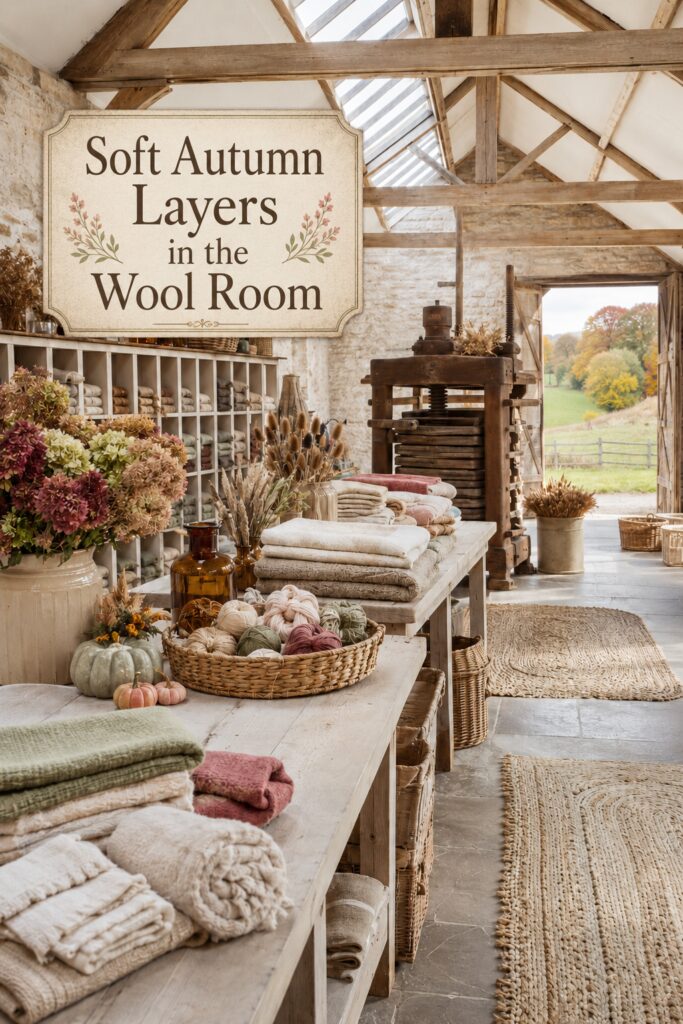
Image disclosure: This decorating inspiration image was created with AI.
Why This Soft Autumn Palette Works
Texture replaces strong seasonal color
Cream dominates the room, but it never feels flat. Cable knits, soft loops, smooth weaves, nubby fibers, braided jute, rough stone, aged wood, and dried petals create constant variation.
This is a useful approach for anyone who prefers subtle fall decorating. A room does not need vivid foliage colors when its surfaces provide enough depth.
Begin with one warm neutral, then repeat it in several textures. Cream might appear as a smooth wool throw, chunky knit blanket, woven rug, and pottery vase.
Muted colors appear in small amounts
Dusty rose and faded sage provide the main color accents. They appear in folded textiles, yarn, hydrangeas, and small pumpkins rather than across entire walls or furnishings.
These softened shades complement stone and timber because they share earthy undertones. Neither one interrupts the room’s calm atmosphere.
At home, select one muted green and one faded red, rose, or berry. Repeat each color two or three times so it looks intentional.
Folded textiles become part of the decor
The wool blankets are functional inventory, but their careful stacks also decorate the room. Some piles are tall and tonal, while others combine cream with one muted accent.
The folded edges reveal different weaves and thicknesses. This makes each stack more interesting than a pile of identical blankets.
A cabinet, bench, console, open shelf, or end of a dining table can hold a smaller version. Use three or four textiles with related colors and varied surface patterns.
Baskets make useful supplies look beautiful
Woven baskets hold yarn, folded linens, and other wool-room materials. The shallow yarn tray is especially effective because the colors remain visible from above.
This approach works well in craft rooms and living areas. Supplies do not need to be hidden when their colors and materials support the room.
Choose baskets with warm honey, straw, or light brown fibers. Several shapes are welcome, but similar materials will keep them connected.
Dried flowers echo the wool palette
The hydrangeas include faded burgundy, olive, tan, cream, and dusty green. Their rounded heads provide a soft visual counterpoint to the rectilinear cubbies, tables, and press.
Wheat and teasel introduce taller, spikier shapes. The contrast keeps the arrangements from becoming overly formal.
For a realistic effect, avoid perfect bouquets. Let some stems lean outward and mix freshly faded colors with browner, more weathered blooms.
Amber glass warms the pale surfaces
Amber bottles create small pockets of honey-brown color among the cream textiles and whitewashed wood. Their transparency prevents them from looking heavy.
A few substantial bottles will suit this room better than many tiny matching vases. Mix heights and shapes while keeping the glass color related.
Key Pieces for a Wool-Room-Inspired Fall Look
Layered Neutral Throws
Begin with soft throws in cream, oatmeal, taupe, and warm gray. Look for waffle weaves, simple ribbing, fine knits, or softly brushed finishes.
Add one muted sage and one dusty-rose textile. These do not need to match exactly. Slight color variation will make the grouping feel collected.
Chunky Cable-Knit Blankets
A few thicker knits provide contrast among the flatter folded textiles. Cream and beige are the most versatile choices because their stitch patterns remain visible without introducing another color.
Fold each blanket so the most interesting cable or braided detail faces outward.
Natural Jute Runner Rugs
Two long neutral rugs soften the stone floor and guide the eye toward the open doorway. Their woven patterns are simple enough to remain secondary to the textiles.
A single runner can produce the same effect in a hallway, kitchen, craft room, or beside a long worktable.
Shallow Woven Trays
Use a flat basket or shallow tray to display yarn, seasonal fruit, folded napkins, or decorative wool balls. A low profile keeps the contents visible.
For this look, fill the basket with cream, sage, dusty rose, rust, and taupe yarn. The yarn can later be used for actual projects rather than serving only as decoration.
Amber Glass Bottles
Arrange two or three amber bottles near folded textiles or dried stems. A large rounded bottle paired with one narrower vessel will create more interest than an identical set.
Leave some empty, and use others for teasel, wheat, or small dried branches.
Dried-Look Hydrangeas in Cream Pottery
The largest floral arrangement occupies a substantial cream crock. Its burgundy, green, and tan colors introduce autumn without relying on a conventional leaf garland.
Pair faux dried-look hydrangeas with a heavy cream vase or crock. A large container will balance the scale of a console, worktable, or open shelf.
Style Soft Fall Layers at Home
Choose one surface as the main display area. A console, open cabinet, sideboard, table, or built-in shelf will work.
Fold the largest cream and oatmeal textiles first. Stack three to five pieces, alternating thick and thin textures so the pile does not resemble store inventory.
Create a second, smaller stack containing sage or dusty rose. Separate the two groups with an amber bottle, woven tray, or floral arrangement.
Fill a shallow basket with yarn, decorative wool balls, or rolled napkins in the same muted palette. Avoid introducing unrelated jewel tones or vivid white.
Place a jute runner nearby to continue the natural texture at floor level. If the space already contains many brown wood surfaces, select a pale natural jute rather than a dark rug.
Add one generous hydrangea arrangement and one smaller grouping of wheat or teasel. Large, loosely arranged flowers will feel more relaxed than several tiny bouquets.
Finish with two or three understated pumpkins in sage, blush, or cream. They should signal fall without becoming the room’s main feature.
Shop Similar Pieces
Shop Soft Neutral Throw Blankets
Look for cream, oatmeal, taupe, dusty rose, and sage textiles with varied woven surfaces.
Add a Chunky Cable-Knit Blanket
Use one substantial cream or beige knit to make the softer folded layers feel more dimensional.
Look for Natural Jute Runner Rugs
Choose a simple braided or woven runner in an undyed straw color.
Add a Shallow Woven Tray
Use it to hold muted yarn, rolled textiles, or small fall accents.
Shop Amber Glass Vessels
Mix rounded and narrow bottle shapes in warm honey-brown glass.
Add Dried-Look Hydrangeas
Pair burgundy and faded-green blooms with a cream ceramic crock or farmhouse vase.
Final Styling Tip
Let texture carry the season. When wool, jute, wicker, weathered wood, stone, dried flowers, and glass are layered thoughtfully, only a few pumpkins are needed.