*This post may contain affiliate links for which I earn commissions.*
Glossy ceramic fruit gathers around a low pedestal in this Thanksgiving table inspiration, with peach flowers and green stems tucked between the rounded shapes. Blush plates, sage napkins, and amber goblets repeat the centerpiece’s colors at every place. It’s a harvest idea with a softer palette than the usual orange and brown.
The fruit is the detail I would keep at the center of this plan. You can simplify the flowers, use your own dishes, and make the arrangement smaller while preserving that playful mix of sculptural shapes and seasonal abundance.
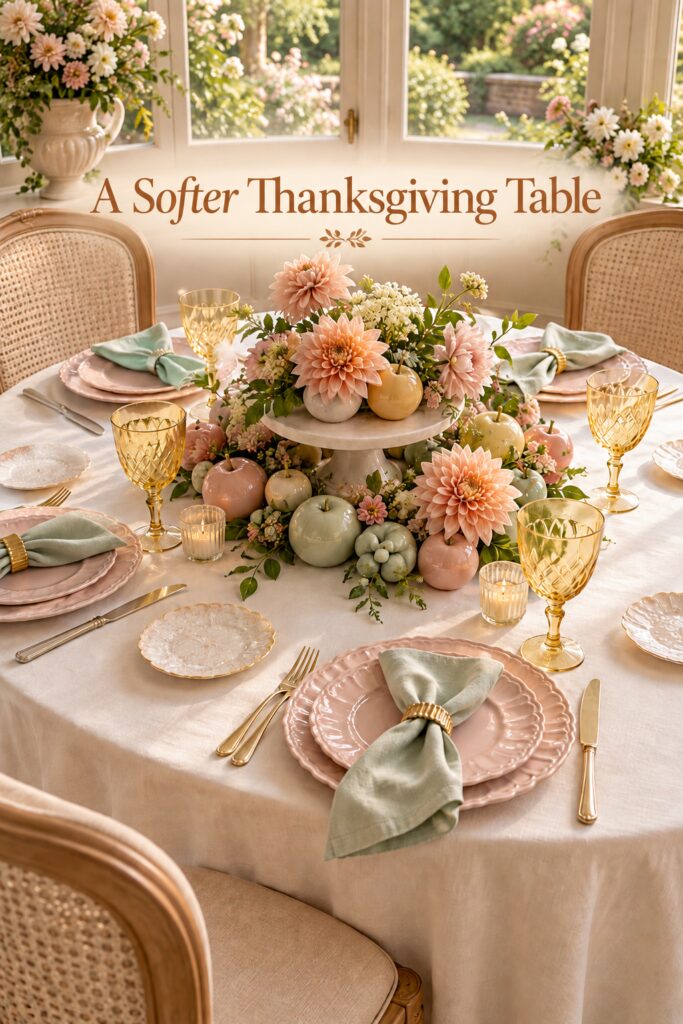
The inspiration image was created with AI and shows a styling concept rather than a real meal setting or verified products.
What Makes This Pastel Thanksgiving Table Work
The centerpiece has two levels: a low stand carries flowers and fruit above, while more pieces gather around its base. That small change in height makes the center feel full without relying on one very tall arrangement. Check the height from a seated position when adapting it.
The ceramic shapes repeat blush, pale green, yellow, and cream. Peach flowers add a softer texture among their shiny surfaces. Leaves and fine stems keep the group from looking like a row of ornaments, but the fruit shapes remain visible enough to explain the harvest theme.
Each place setting repeats the pink and green pairing with a blush plate and a sage napkin. Amber goblets introduce a warmer tone, relating to the peach flowers and gold-colored details. Because the colors are spread around the table, the centerpiece feels connected to the meal setting.
The pale cloth provides a quiet base for all those curved rims, layered petals, and rounded objects. You can use a simple cream cloth without matching the pictured chairs or garden-facing alcove. The tabletop relationships are what make the decorating idea useful in another room.
Find Low Pedestal Display Stands
Browse current Amazon options that can help you recreate this look.
Browse Low Pedestal Display Stands on Amazon →As an Amazon Associate I earn from qualifying purchases.
Key Pieces for a Ceramic Fruit Centerpiece
Pastel Decorative Fruit
Look for rounded decorative fruit forms with a glazed or similarly smooth finish. The inspiration includes apple-like shapes and smaller clustered forms. Treat those as a visual direction rather than a shopping list of exact ceramic objects that necessarily exist in the pictured colors.
If the perfect ceramic set isn’t available, use a few neutral fruit ornaments with pastel flowers and linens around them. Keep the decorative pieces separate from anything meant to be eaten. Their role is to establish the harvest idea and add shape, not to become part of the food service.
A Low Pedestal or Display Stand
Choose a broad, stable stand with enough surface for the pieces you intend to place on it. A pale finish lets the fruit and flowers show clearly. Check the complete height with the flowers added, since a low stand can still support an arrangement that blocks the view across the table.
A flat tray is a useful alternative for a smaller dining table. It keeps the group together and makes moving it simpler if you need room for serving dishes. You will lose the raised layer, but the repeated fruit shapes and peach flowers can still carry the same idea.
Peach Dahlia Style Flowers
Full layered flowers provide a soft contrast to the glossy fruit. Place a few substantial blossoms where their petal shapes are visible, then use smaller flowers to connect the spaces. You don’t need to surround every ceramic piece with a large bloom.
Use appropriate small containers for fresh flowers and protect the table from moisture. Faux stems can be easier to reposition, but keep their cut ends contained and away from place settings. Whichever material you choose, don’t let leaves and petals spread into the plates or serving areas.
Blush Plates with Curved Rims
The pink dishes repeat the centerpiece color at every seat. Their scalloped outlines also relate to the rounded fruit and full flowers. Plain blush plates can achieve the color effect if a heavily shaped rim feels too busy beside your existing glassware.
You can also keep cream dinner plates and add pink through a smaller plate or napkin detail. Try one complete place setting before arranging the whole table. Seeing the dishes, glass, and folded napkin together will help you decide where the color is most useful.
Sage Napkins and Gold Toned Rings
The green napkins bring the centerpiece’s cool color out to the table edge. Their loose folds look softer than a stiff upright napkin shape would. A simple gathered fold lets the fabric spread across the plate while still leaving the rim visible.
Use a ring that holds the fabric without forcing a bulky knot. If you don’t have coordinating rings, a folded napkin can do the same color work. Keep the fold easy to remove so guests aren’t dealing with a complicated decorative arrangement before they can start eating.
Amber Goblets and Warm Metal Accents
Amber glasses warm the pastel palette and stand out against the cream cloth. Their color connects naturally with the peach flowers. Clear glasses remain a practical substitute; you can carry the warm tone through existing gold-colored utensils or another small tabletop detail instead.
The little light accents should stay secondary to the centerpiece. Use flameless lights around flowers and loose greenery, and place them where they won’t interfere with hands reaching for glasses. A few points of warm light are enough when the table already has so much texture.
How to Arrange the Table for a Real Meal
Set out one plate, napkin, glass, and cutlery arrangement at each seat before building the centerpiece. This establishes how much room you actually have left in the middle. A round table can look roomy when empty and become surprisingly tight once all the glasses are in place.
Put the stand or tray in the center and add the largest fruit forms first. Keep some at the base and a few on the raised surface if you’re using one. Turn them so their shapes remain recognizable rather than burying them under the flowers.
Add the peach blossoms next, placing the fullest heads in a few different directions. Fill between them with smaller flowers and short green stems. Check all sides because a round table gives guests several views; a centerpiece that looks finished from one chair may have an awkward bare patch from another.
Sit down to check the height and reach. If you have to lean around a blossom to see the person opposite you, shorten the arrangement. Leave room for the serving pieces you plan to use, or move the centerpiece to a sideboard when the food comes to the table.
For a smaller gathering, reduce the number of decorative fruit pieces instead of shrinking the place settings. Guests still need useful space for their plates and glasses. A little group on a tray with two substantial flowers can preserve the harvest idea without overwhelming the meal.
Shop Similar Pieces for a Pastel Harvest Table
Look for Decorative Ceramic Fruit
Choose recognizable shapes with stable bases and finishes that suit the palette. Compare their size with your stand and place settings so the centerpiece doesn’t expand beyond the space you’ve reserved.
Shop Similar Low Stands and Peach Flowers
These work together to establish the arrangement’s height. A broad tray and shorter stems are useful alternatives when conversation and shared serving dishes need more open space at the table center.
Add Blush Tableware and Sage Napkins
Try the colors alongside your existing dishes before replacing anything. A napkin, small plate, or warm-toned glass can repeat the centerpiece palette without requiring an entirely new table setting.
Final Styling Tip
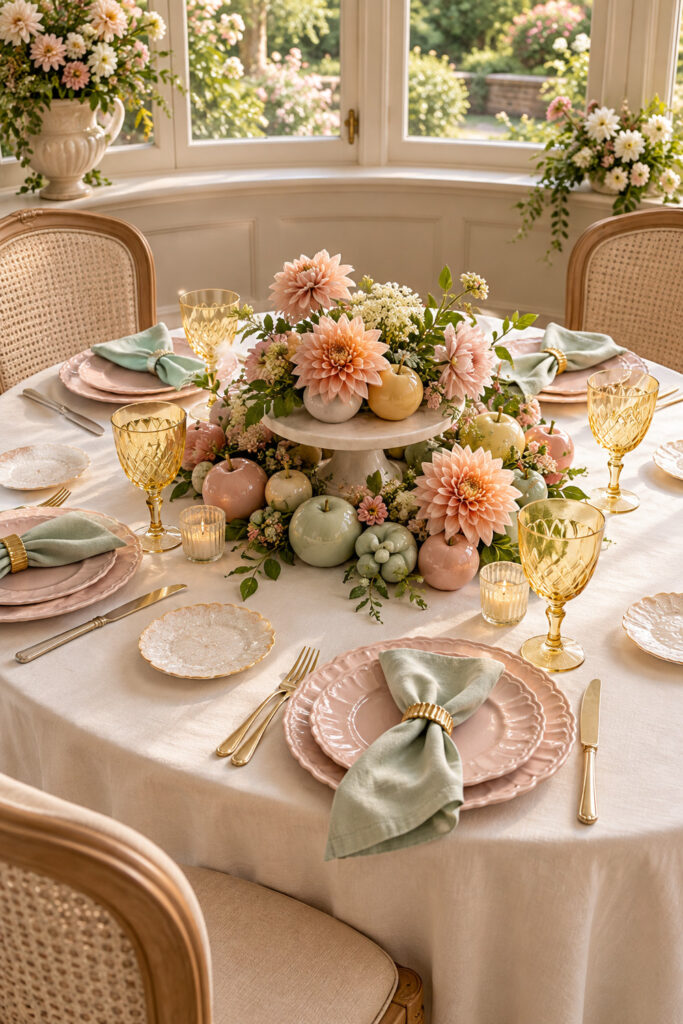
Leave a few ceramic fruit shapes fully visible. Their rounded outlines explain this centerpiece’s harvest theme, while the flowers can soften the gaps without covering the idea you started with.