*This post may contain affiliate links for which I earn commissions.*
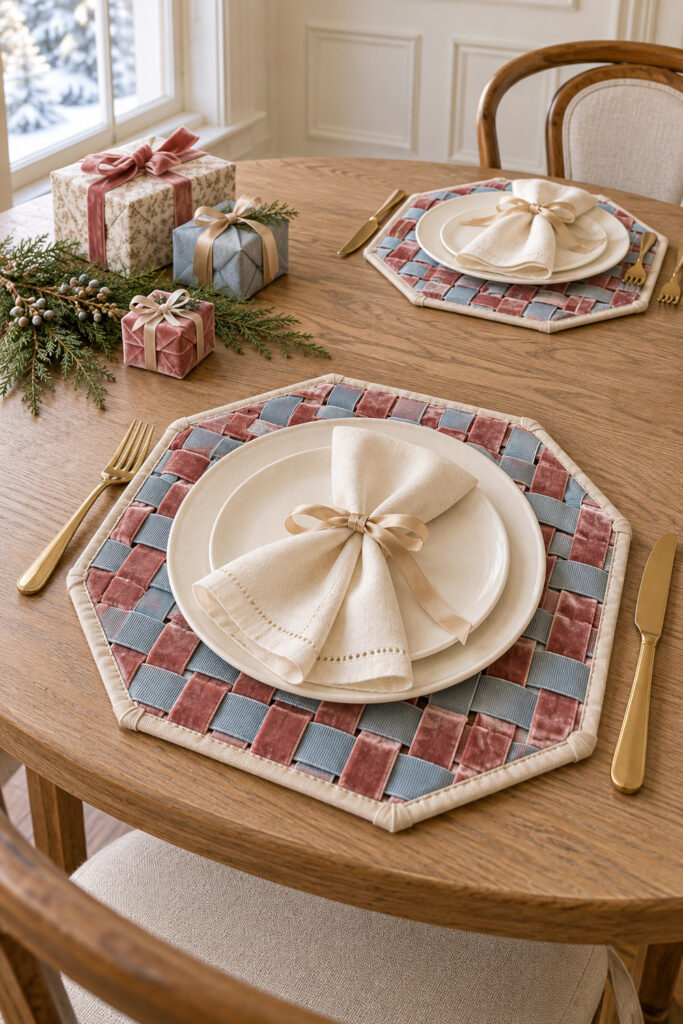
Wide rose and blue ribbons make an unexpected border beneath simple ivory plates. In this Christmas table inspiration, the ribbon strips form an over-and-under weave inside octagonal, cream-bound mats. Plain napkins tied with champagne ribbon keep the place settings soft, while a few small fabric-wrapped gifts repeat the colors farther along the oak table.
The woven surface is the idea worth borrowing. You can look for similar textile placemats or use a sturdy woven substitute, then repeat the rose, blue, and cream palette through details you already own. A complicated centerpiece would distract from the part that makes this table different.
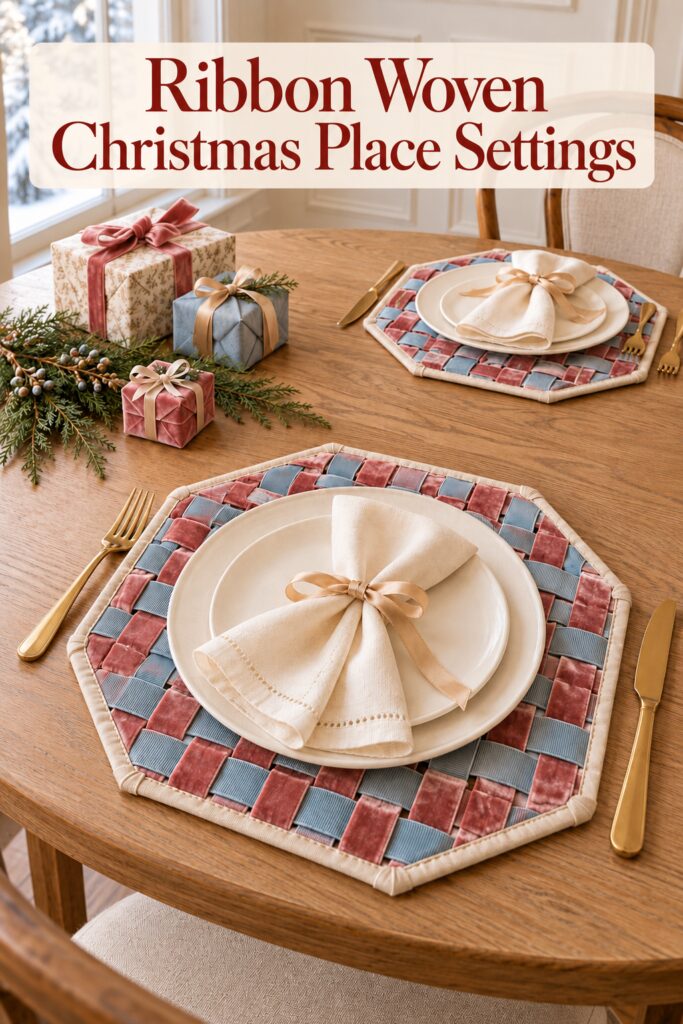
The inspiration image was created with AI and does not show verified tableware or a tested ribbon mat construction.
What Makes the Woven Border Stand Out
The plates are smaller than the mats, leaving enough ribbon visible to recognize the weave. That proportion matters more than the precise octagonal outline. If a dinner plate covers nearly all the pattern, the special surface becomes just another edge. Before choosing a mat, compare its dimensions with your actual plates rather than relying on a styled product photo.
Rose velvet suggests a soft, slightly changing surface, while the powder blue ribbon has a more linear, ribbed texture. The colors alternate in broad blocks, keeping the pattern readable. You can suggest the same effect with a checked or basket-weave textile mat, particularly if it has a similar scale and muted colors.
Cream binding gives the woven strips a tidy boundary. It also connects the mat with the plates and napkins, so the pink and blue don’t seem like isolated accents. The plain wood underneath supplies a calm background and leaves the repeated place settings easy to compare across the table.
Find Woven Textile Placemats
Browse current Amazon options that can help you recreate this look.
Browse Woven Textile Placemats on Amazon →As an Amazon Associate I earn from qualifying purchases.
Key Pieces for These Christmas Place Settings
Woven Textile Chargers or Placemats
Look for a flat mat with a firm edge and a visible woven pattern. The inspiration suggests ribbon over a supporting structure, but that doesn’t mean an unsupported ribbon weave would function as dinnerware. Choose something intended to sit securely beneath plates. If you plan to make a version, develop and test the structure separately before using it at a meal.
An octagonal mat is a close shape cue, while a round or rectangular one can preserve the pattern and palette. Avoid chasing the outline at the expense of stability. A wobbly place setting is frustrating, however pretty the ribbon looks. Check that the plate sits flat and that any raised binding doesn’t interfere with the rim.
Rose and Powder Blue Ribbon Details
If you can’t find a similar mat, use ribbon in a supporting role instead. A rose ribbon around a little parcel and a blue textile mat can repeat the two colors without claiming to duplicate the illustrated weave. This is often a more practical approach than trying to locate a very specific combination of materials in one finished product.
Choose ribbons with related softness rather than identical shine. A high-gloss metallic ribbon would introduce a much stronger highlight than the matte and plush surfaces here. For loose accents, keep cut ends neat and clear of plates and cutlery. Decorative ribbons belong outside direct contact with food unless explicitly intended for that use.
Plain Ivory Plates
Smooth ivory plates give the patterned border room to show. An existing white set is just as useful if the color sits comfortably beside your linens. Keep strong patterned rims for another table, or use them sparingly, since a printed border competes with the grid directly beneath it.
Set out one complete place setting before deciding on the rest. A smaller plate may reveal more mat, but it still needs to suit the meal you’re serving. Let the dinnerware determine the practical footprint, then choose a mat large enough to give the pattern a visible margin. You don’t need to sacrifice a comfortable serving size for the photograph’s proportions.
Cream Napkins and Champagne Ties
A loosely gathered cream napkin softens the grid. The small ribbon bow holds the center and leaves two broad fabric folds visible on the plate. Try the fold with a napkin you own before adding ribbon. Thick fabric may need a gentler gather so it doesn’t make a bulky knot above the place setting.
Make the tie easy to remove and set aside. It is a decorative greeting at the start of the meal, not something guests should struggle to untangle. A simple bow is enough. If you prefer napkin rings, choose a quiet cream or warm metal finish that won’t add a second strong pattern over the woven border.
Warm Metal Flatware
The gold-toned flatware adds a thin warm line against the oak and cream. It doesn’t need to match the ribbon exactly. Existing silver-colored cutlery can work, especially if you keep the other details restrained. The weave and color pairing remain the main idea even when the metal finish changes.
Use utensils meant for eating, and leave comfortable space between each setting. When the mats have pronounced corners, it is easy to position neighboring places too closely. Sit at the table yourself and check elbow room, glass placement, and the route for passing serving dishes before adding the final decorations.
How to Style the Table at Home
Begin with the mats and plates, working around the whole table before arranging the middle. Align the mats so their edges feel intentional relative to each seat. On a round table, they can turn slightly with the curve. Aim for a consistent relationship between plate and border rather than forcing every octagon to point in one direction.
Tie the napkins, then add the cutlery and glasses needed for the meal. The inspiration keeps the surface open, and that is useful for real dining too. If the woven pattern feels busy once glasses are added, remove other decorative details before changing the place settings. They are the feature you wanted to preserve.
Cluster a few small fabric-wrapped boxes toward the center or far side. Repeat the ribbon colors in different proportions, such as one blue parcel and one rose bow. Leave the foreground setting unobstructed. The little packages should connect the places, not form a wall across the middle of a compact table.
A low evergreen spray gives the arrangement its Christmas cue. Keep it away from food and choose a manageable outline that doesn’t extend beneath plates or utensils. Avoid adding tall foliage simply to fill the center. The low arrangement leaves the weave visible and allows people to see one another across the table.
Shop Similar Pieces
Look for Bound Woven Placemats
Compare the flatness, finished dimensions, and care instructions. A mat that can be cleaned appropriately for your household is more useful than a delicate decorative piece you worry about throughout the meal.
Shop Similar Cloth Napkins
Choose fabric that gathers softly and has a neat hem. Cream or warm white gives the ribbon pattern a quiet neighbor and can be used with many other table arrangements after Christmas.
Add Coordinated Ribbon Accents
Small amounts of rose, blue, and champagne ribbon can connect parcels and napkins. Use those repetitions selectively so the woven border remains the table’s most interesting textile detail.
Final Styling Tip
Check how much of the mat is visible after the whole setting is complete. A generous patterned border and a simple plate communicate this idea more clearly than several extra layers stacked on top.