*This post may contain affiliate links for which I earn commissions.*
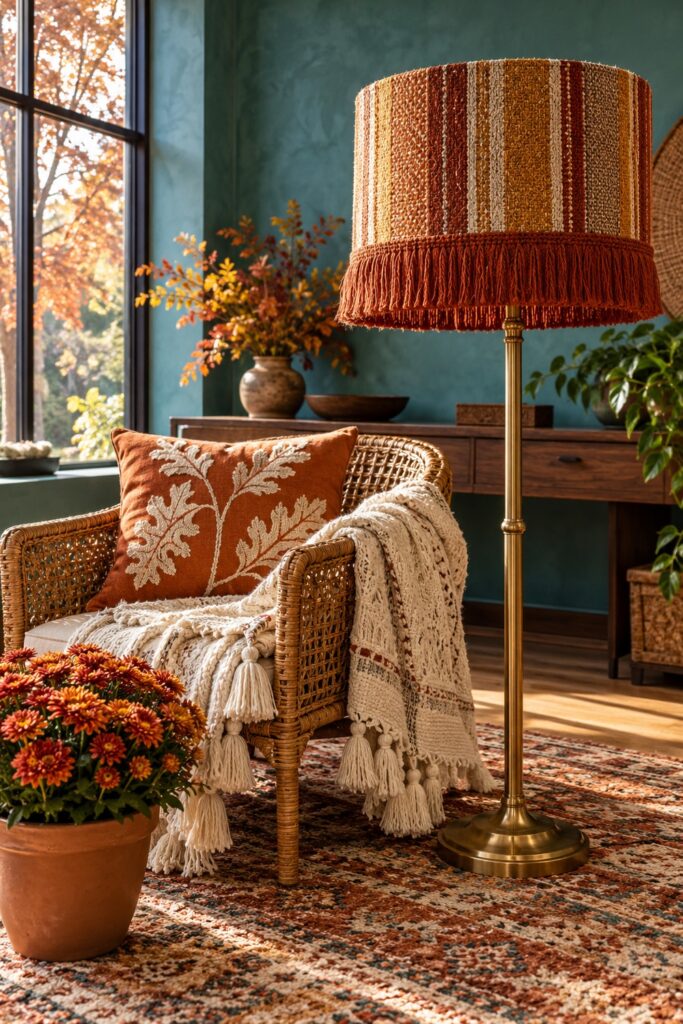
The shade is the first thing you notice in this autumn office corner. Rust, saffron, and cream stripes cover a broad drum shape, and a thick fringe hangs from its lower edge. Beneath it, a woven chair holds an orange leaf cushion and a cream throw with long tassels.
The room already has a teal wall, wood furniture, plants, and a patterned rug. The fall additions work with those pieces instead of demanding a whole new room. If your office has space for a separate chair, a few related textiles can give that corner a seasonal feel while leaving your actual work surface available.
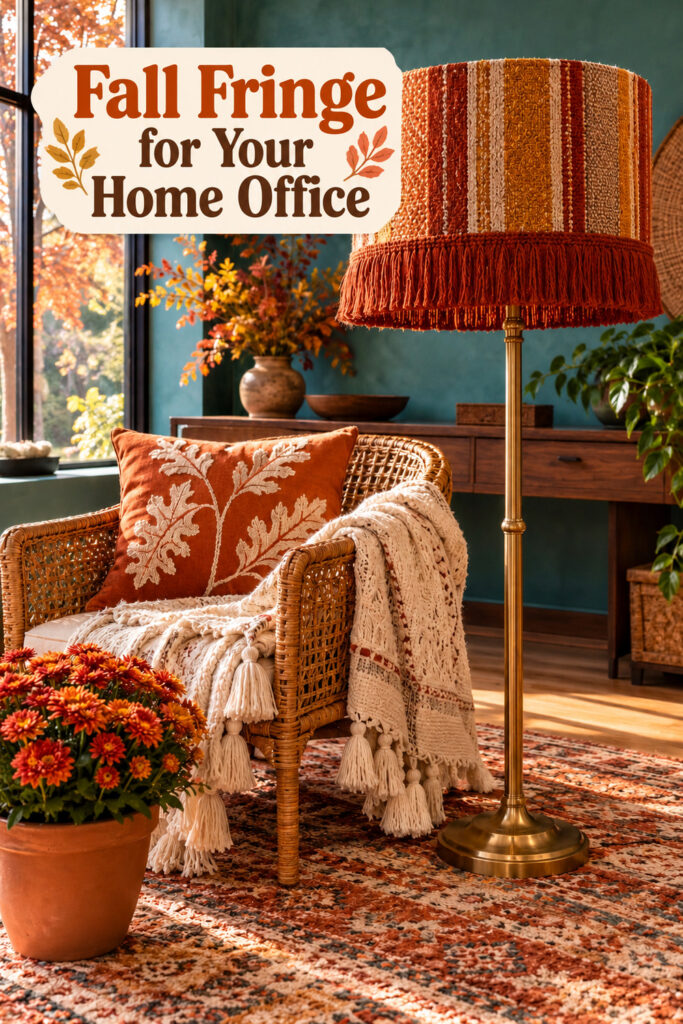
This inspiration image was created with AI.
What Makes This Autumn Corner Work
The warm shade stands out against the cool teal wall. Its vertical stripes also contrast with the round drum shape and the loose fringe underneath. That combination makes the lamp interesting even before you consider the other decorations. The narrow brass stem gives all that fabric a relatively simple support.
The chair repeats the shade’s rust color in a different form. Cream leaves on the cushion connect to the cream stripes above, and the throw repeats both the lighter color and the hanging yarn texture. Because the lamp, pillow, and blanket have different shapes, the repetition feels useful rather than overly matched.
The flowers near the chair and the branches on the rear counter bring the autumn colors into two other heights. The low mums and rear vase remain secondary. The patterned rug already contributes plenty of detail, so the shade remains the largest uninterrupted seasonal statement.
Key Pieces to Recreate the Look
A Suitable Fabric Drum Shade
Look for a drum shade with warm stripes or a textured rust fabric. A shade made for your lamp is the sensible starting point. Check its fitting type, dimensions, and the lamp manufacturer’s requirements before concentrating on the decorative details. A beautiful shade that doesn’t fit securely won’t be a useful office upgrade.
Find fabric drum lamp shades
Browse current Amazon options that can help you recreate this look.
Browse drum lamp shades on Amazon →As an Amazon Associate I earn from qualifying purchases.
The heavy woven surface in the AI image suggests the effect to aim for, not a tested lampshade construction. A finished shade designed for lighting can offer similar color and texture.
SAFETY NOTE: Avoid wrapping an existing shade in a thick blanket or attaching arbitrary fabric near the bulb just to reproduce the photograph.
Fringe Designed for the Shade
The deep rust fringe outlines the drum and makes the lower edge noticeable. A shorter trim would preserve the idea in a smaller room. If you’re choosing a finished fringed shade, look at how far the strands hang and whether they stay clear of the lamp’s working parts.
If suitable fringe isn’t available, use a plain textured shade and put the loose yarn detail into the throw instead. You still get the relationship between a warm lamp and softer textiles beside it.
A Brass Floor Lamp
The slender stem and round base are useful because they don’t compete with the broad shade. A similar warm metal finish can relate to the orange and wood tones. You could also keep a lamp you already own if its shape and shade fitting support the effect you want.
Place the base where it sits fully on a level surface. A thick rug edge beneath only one side could make a lamp wobble. Check the cord route before settling the furniture, and keep it away from the chair’s feet and your walking path. Check its position beside your working desk.
A Woven Armchair
The open woven frame adds texture without becoming another large block of color. Its warm natural finish relates to the lamp and oak furniture. If you already have a plain upholstered chair, it can support the pillow and throw just as well. The chair’s comfort and fit in the room come first.
Keep the seat usable after adding the textiles. A large cushion can push you too far forward in a compact chair, while a heavy throw can gather behind your back. Start with the pillow, sit down, and then decide how much of the blanket should rest on the arm instead of the seat.
An Orange Cushion with Cream Leaves
The embroidered leaf branches supply the clearest fall motif in the seating. Look for a cushion cover with a simple botanical pattern and enough plain orange space to show the stitches. A crowded print with several unrelated colors would change the calmer relationship between the pillow and striped shade.
You can adapt this with a plain rust pillow and a smaller cream botanical accent nearby. Try to repeat the shade’s color family rather than match it exactly. Different warm oranges often look more natural together when their textures are distinct, as they are in the woven shade and embroidered cushion here.
A Cream Tasseled Throw
The throw softens the chair’s straight woven edges and carries the lighter color down toward the floor. Its open stitches and long tassels are easy to see against the darker seat and rug. A less elaborate blanket can provide the same light patch if that’s what you have available.
Fold it lengthwise before draping it over one arm. This gives you a useful way to control how much fabric falls beside the chair. Keep the tassels off the walking route and away from the lamp base. You want to see them hanging, not find them wrapped around something each time you move the seat.
How to Style the Office Corner
Begin with the lamp and chair, since those pieces determine how the corner will function. Make sure you can reach the lamp switch and still move comfortably toward your desk. Leave enough room to pull the chair slightly forward when you want to sit. Then check that neither piece blocks the window or an office storage drawer.
Add the cushion and throw as a pair. The cushion supplies the rust color at seated height, while the blanket supplies the cream and fringe. If the combination looks busy against your existing rug, choose one of those textiles in a plainer version. The large shade can keep its pattern while the chair becomes simpler.
Set the mums where the container won’t be nudged by your feet. The image puts them close to the chair, but a wider office might suit a position just beside the window instead. Use a suitable inner pot or saucer to protect the floor. Use faux flowers if the spot doesn’t suit a plant.
On the rear work surface, keep the autumn branches to one contained arrangement. Their warm leaves connect to the shade without requiring more decorations along the whole counter. If that surface is where you spread out paperwork, move the arrangement to a separate shelf and let the office stay useful.
Shop Similar Pieces
Shop Similar Fringed or Textured Drum Shades
Compare the fitting and lighting requirements before the color. Look for a finished shade with rust or saffron tones and a readable fabric texture. A plain suitable shade is a better choice than decorative material improvised around a bulb.
Look for Leaf Cushion Covers and Cream Throws
Choose sizes that fit your existing chair. Inspect photographs for the scale of the leaf pattern and the length of the tassels. Different textures work when their cream and orange relate to the shade.
Shop Similar Autumn Floral Accents
Consider one low mum arrangement or a few leaf stems for an existing vase. These pieces should fill the remaining space after the seating is arranged, rather than deciding where the chair has to go.
Final Styling Tip
Repeat the shade’s cream stripe in the cushion or throw. That small connection helps a very noticeable fringed lamp belong to the chair beneath it, even when the rest of your office keeps its everyday furniture.