*This post may contain affiliate links for which I earn commissions.*
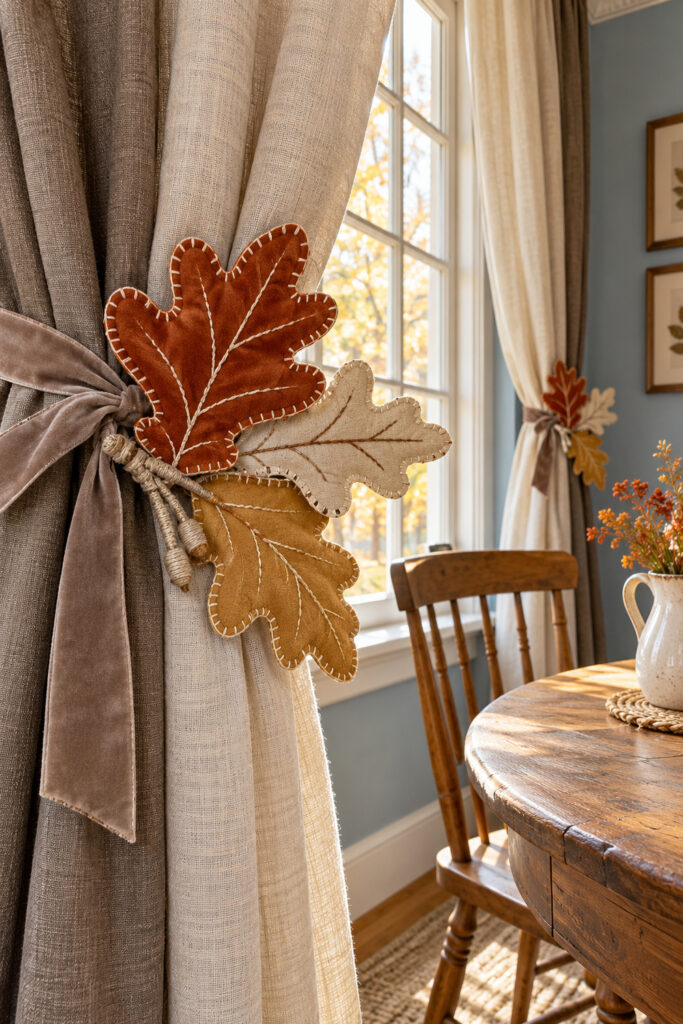
Three oversized fabric oak leaves turn a curtain tieback into the main autumn decoration in this breakfast nook. Rust velvet, pale oatmeal fabric, and ochre cloth overlap at the gathered curtain, with visible stitching outlining the lobes and veins. A broad taupe ribbon keeps the arrangement connected to the linen panels.
The rest of the nook stays simple: a wooden table, a spindle chair, pale blue walls, and a cream jug with orange stems. You can borrow the leaf-cluster idea without changing the furniture or filling the table with decorations. It puts the seasonal detail where the daylight can pick up its texture.
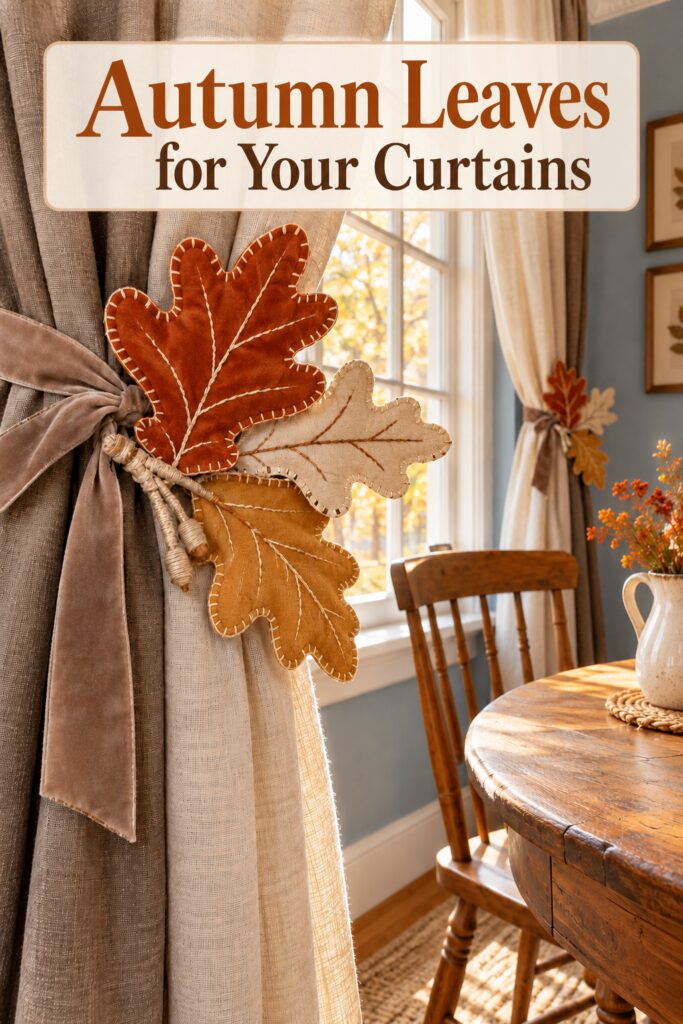
This inspiration image was created with AI and suggests a decorating arrangement rather than a verified curtain accessory.
Why These Leaves Read Clearly
The lobed oak shapes are broad and distinct. Their stitched outlines give each leaf a clear boundary, even where one overlaps another. A cluster of generic pointed leaves would create a different impression. When looking for similar accents, prioritize recognizable silhouettes and some variation in size before considering tiny embroidered details.
The colors separate the layers. Rust is deepest, oatmeal is lightest, and ochre sits between them. That simple relationship keeps the group readable against the taupe curtain. You can change the shades to suit your room, but retain a light, medium, and deeper color so the leaves don’t merge into one flat patch.
The fabric also changes from leaf to leaf. Velvet catches light differently from linen or felt, which gives the arrangement interest without introducing additional patterns. The cream stitches repeat across the materials, keeping the different surfaces related. It’s a small collection with a shared outline rather than a bundle of unrelated autumn ornaments.
Find Fall Curtain Tiebacks
Browse current Amazon options that can help you recreate this look.
Browse Fall Curtain Tiebacks on Amazon →As an Amazon Associate I earn from qualifying purchases.
Key Pieces for an Autumn Window Accent
Large Fabric Oak Leaves
Look for textile leaf ornaments or appliques with firm enough bodies to hold their lobed outlines. Flimsy fabric may fold into the curtain and hide the shape. A stitched or lightly padded leaf can remain visible without needing the rigid, glossy finish of some artificial foliage.
A finished oak-leaf pick is a possible substitute if it has a soft matte surface. Another route is a separate craft project using velvet or felt leaves. The inspiration’s stitched veins and wrapped stems are visual guidance, not proof that an identical premade cluster exists. Choose the route that fits the amount of work you want to do.
Broad Taupe Ribbon
The ribbon blends with the curtains rather than becoming a second color feature. It gathers the fabric in a broad band and gives the leaves a quiet base. Soft velvet suits the illustrated texture, but a substantial woven ribbon could do the same job if it folds comfortably and doesn’t leave a hard crease.
Don’t use a decorative leaf cluster as the only support for a heavy curtain. Begin with a suitable tieback or holdback system, then add the textile accent securely. Keep the ribbon and any loops inaccessible to young children, and avoid creating long dangling cords. Follow the guidance for the window coverings already installed in your home.
Linen or Linen Look Curtains
The panels have enough texture to connect with the handmade leaves while remaining plain. Existing neutral curtains are a useful starting point. You don’t need linen specifically, and changing the whole window treatment for one seasonal accent would lose much of this idea’s simplicity.
Check the leaf colors against the gathered curtain rather than a single flat layer. Fabric looks deeper where it folds, which may improve contrast with the oatmeal leaf. If your panels are patterned, try fewer, larger leaves in simple colors so the cluster doesn’t become another busy pattern on top of the first.
A Secure, Discreet Attachment
The cluster needs to stay in position without pulling the curtain out of shape. Choose an attachment that suits both the accent and the tieback, such as a sewn loop around the tieback itself. Any cut stems or wire ends should be fully covered and kept away from the curtain fabric.
Avoid attaching heavy pieces with an exposed pin where someone could catch a hand while opening the curtains. A light cluster is easier to manage and places less strain on the support. Test its position gently before leaving it in place, and remove it when washing the panels or adjusting the window hardware.
Arrange the Leaves Around Your Window
Gather the curtain as you normally would, then place the largest leaf near the front of the tieback. Angle it upward enough to show its whole outline. Add the palest leaf to one side and the ochre one below, leaving portions of their edges visible. Keep all three stems meeting near the same point so the arrangement reads as one cluster.
Work with the curtain’s folds rather than flattening them behind the decoration. The leaves need a little space from the fabric to show their edges, but they shouldn’t project so far that they catch anyone passing the window. A small angle change often reveals more of a leaf without making the whole cluster larger.
The distant curtain has a coordinated accent, but it doesn’t need to be an exact mirror. From the room’s main viewing angle, a smaller second cluster may be enough. Match its colors and overall placement, then check the pair from farther back. Window treatments often look more balanced when judged in the room rather than measured in isolation.
Leave enough curtain free above the tieback that the fabric drapes naturally. Pulling the band too tightly can make the leaves look like a badge attached to a rope of cloth. A broader, gentler gather provides a softer background and keeps the outline of the window clear. Adjust the height to your existing window proportions.
Keep the table decoration low and modest. The cream jug and a few orange stems repeat the autumn color without competing with the leaf shapes. If your table is used for breakfast every day, a small movable jug is more useful than a large arrangement. The tiebacks can remain the decorative feature while the tabletop stays available.
Check nearby practical details before finishing. The accent shouldn’t obstruct a window handle, vent, radiator, or the opening of the window itself. Remove it when necessary to operate the window comfortably. Textile decorations also need to stay clear of cooking heat and flames, particularly in a breakfast area connected directly to the kitchen.
Shop Similar Pieces
Look for Stitched Fabric Leaf Accents
Compare the size, material, and attachment method. A listing for tiny sewing appliques may not provide the scale needed for a curtain, while a large rigid wreath pick may be too heavy or awkward for a soft tieback.
Shop Similar Velvet Tieback Ribbon
Choose ribbon that coordinates with the curtain and can form a broad gather. If you already have suitable tiebacks, add a smaller amount of matching ribbon around them rather than replacing a working support system.
Add a Simple Cream Jug
An existing pitcher can repeat the light leaf color on the table. Keep the stems sparse enough to see individual branches, allowing the more detailed stitched cluster at the window to hold your attention.
Final Styling Tip
Before adding more leaves, turn the three you have until their lobed edges are distinct. Clear shapes, varied fabric, and one quiet ribbon are the details that make this autumn window idea work.