*This post may contain affiliate links for which I earn commissions.*
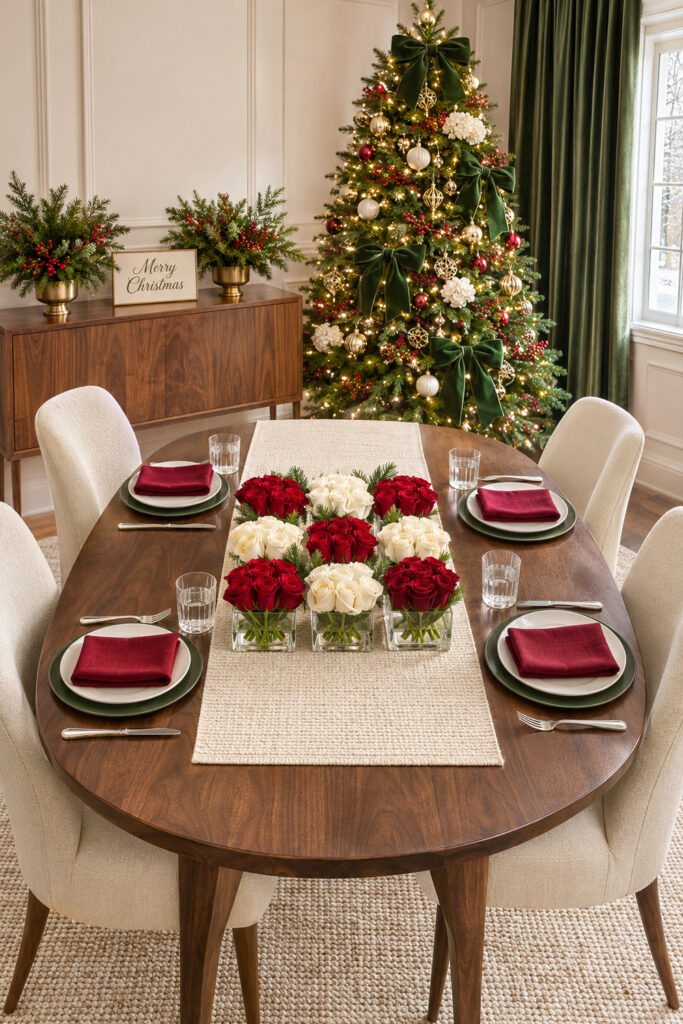
Nine square glass vases make a red and ivory checkerboard down the center of this Christmas table. Each one holds a compact bunch of roses, with short evergreen tips between the flower heads. The equal shapes give the arrangement order, while the full blooms keep it from feeling stiff.
The surrounding places stay simple: white plates on green underplates, folded cranberry napkins, clear water glasses, and silver cutlery. A generously decorated tree fills the corner behind them. You can borrow the repeated-vase idea without copying the entire room, provided the centerpiece leaves enough space for the people who will actually use the table.
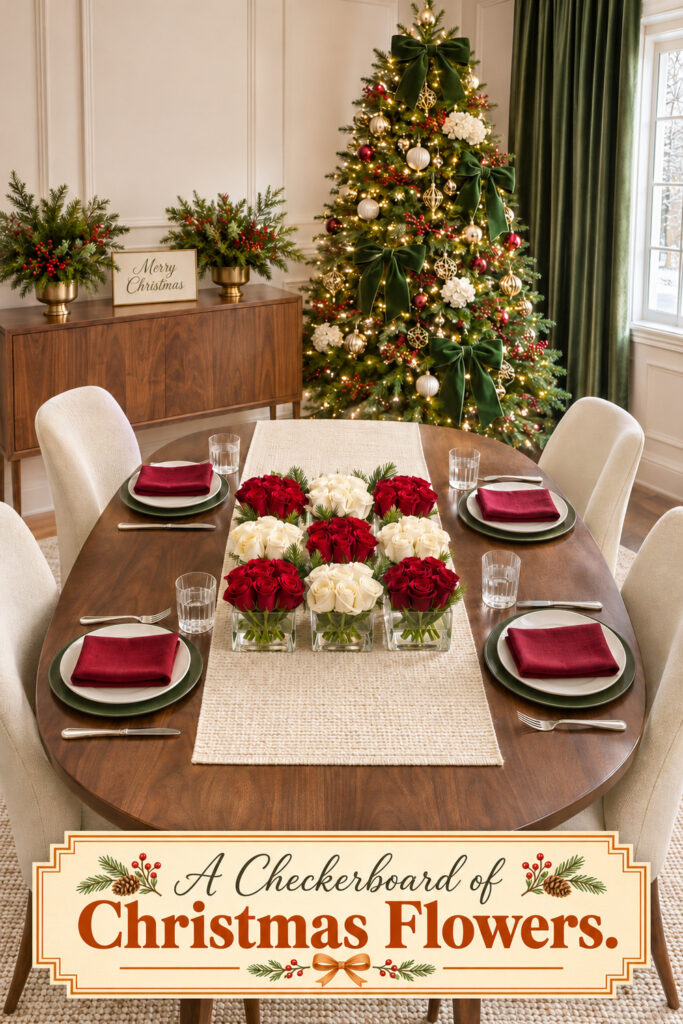
This image was generated with AI as decorating inspiration. Similar pieces can help you recreate the effect.
Treat the Nine Vases as One Centerpiece
The group works because the glass containers share a shape and height. Their small gaps make a clear grid, with red and ivory alternating across three rows. The eye reads one broad centerpiece rather than nine unrelated bouquets.
Choose the vessels together before buying flowers. Compare their bases, rim shapes, and overall size, not just the description on a package. Set all nine empty vases on the table and check the complete footprint. A small difference repeated several times can make the group much wider than expected.
Measure the Space Around the Grid
Place your normal plates, glasses, and cutlery first. Leave the room those settings need for comfortable use, then see how much center space remains. The finished flower heads will spread beyond the glass, so allow for them when checking the arrangement.
The pictured table holds four places, two along each side. The narrow ends stay open, giving the centerpiece some breathing room. If you need guests at the ends too, test their reach and view before deciding on nine containers. A smaller grid may be the better choice for a busy table.
Use low, stable vessels that fit the actual surface. Check the height from a seated position once the stems are in place. You should be able to see and talk across the table without leaning around a wall of flowers. A low rim alone doesn’t guarantee a low bouquet; the cut stems determine the final height.
Arrange the Colors Before Adding Water
Lay out five red groups and four ivory groups in an alternating pattern. The corners and center are red in this image, with ivory between them. That sequence gives the darker flowers a clear outline around the lighter ones.
You can use the empty vases and a few loose sample stems to check the color order first. Then prepare and fill each vessel away from the dressed table. Follow the flower supplier’s care directions, remove foliage that would sit below the waterline, and keep the cut stems contained. Wipe the outside and base before placing a vase on the runner.
Trim each bouquet to a similar height, but let the flower heads keep a natural rounded shape. Keep the evergreen tips short enough to belong within the group. Long sprays reaching across the gaps would hide the checkerboard and make the table harder to use.
Keep the Glass Bases Visible
The clear square vases let you see the supporting stems and the table beneath. Their lower edges give the flower grid a crisp outline against the cream woven runner. That little strip of visible glass helps the repeated shapes remain readable.
Choose vessels that are sound and appropriate for holding water. Protect the table as its finish requires, and check the runner’s care needs before using fresh flowers over it. Water marks are a poor substitute for a centerpiece. If you use faux stems, keep their cut ends from scratching the containers or slipping out of position.
Set the vases down with even gaps, then view them from both long sides. You can use a small removable spacer while arranging, taking it away before finishing. The aim is a clear repeating pattern, not an engineering inspection of every millimeter.
Give Each Place Its Own Space
The white plates stand out against the green underplates, and the cranberry napkins repeat the red roses at a lower level. Plain folded fabric suits the busy center because it doesn’t add another shape to interpret.
Lay out the utensils for the meal you plan to serve, with forks to the left and knives to the right of each place, blades facing inward. Position the glasses where diners can reach them without passing over the flowers. Turn each setting toward its own chair, checking the far side of the table as carefully as the near side.
The runner stays flat under the vase group. Keep plate edges and glass bases fully supported rather than half on a thick runner and half on the wood. If the runner creates an uneven surface at the settings, choose a narrower or thinner one that leaves those areas clear.
Use the Tree as a Larger Color Repeat
The Christmas tree carries red, ivory, green, and gold in much larger shapes behind the table. Broad green bows and round ornaments echo the flowers without repeating the checkerboard itself. The table has the small pattern; the tree supplies the taller seasonal fullness.
You can use fewer large decorations on the tree and still make that connection. Choose one or two colors from the centerpiece to repeat in visible ornaments or ribbon. Keep tree supports and cords clear of chairs and the serving route, following the actual lighting instructions.
The sideboard’s two evergreen bowls give the room another low layer, with a Christmas greeting between them. If your room has less space, one substantial arrangement on a nearby cabinet is enough to make the table feel connected to its surroundings. Keep it separate from the main grid so the two displays don’t merge visually.
Scale the Pattern for Your Table
For a narrow table, try a single row of three or five square vessels instead. Keep the alternating colors and low flower height, then leave the remaining center area available for the meal. This changes the grid but preserves the repeated rhythm that makes the inspiration useful.
A larger table can use the full three by three group if there is room around every place. Avoid enlarging all nine bouquets at once. Bigger flower heads and taller stems can turn a compact checkerboard into a solid block that blocks the view.
You can also use a different pair of flower colors. Choose enough contrast for the alternating pattern to show, and repeat one color in the napkins. Similar pale shades will create a quieter arrangement with less obvious squares.
Choose the Repeated Pieces Carefully
Begin with the vase footprint and the number of seats. The flower colors and linens can follow those practical decisions.
Look for Low Square Glass Vases
Compare their actual dimensions and stability. Matching clear shapes help the alternating flowers read as one centerpiece.
Shop Similar Red and Ivory Flower Stems
Choose heads that can make compact rounded groups at a low height. Fresh and faux options need different preparation, so select for your care plan.
Look for a Flat Cream Table Runner
A visible weave adds texture beneath the glass. Keep its width and thickness compatible with the plates and water glasses around the grid.
View the Table from Every Chair
Sit at each place and check the view through the center. Reach for the glass, move a plate as if serving, and inspect the vase bases for moisture. Straighten the gaps once the table works. Then step back toward the room entrance to confirm that the red and ivory squares remain clear.
Final Styling Tip
Turn one red bouquet at a time until the fullest flower heads face outward. That keeps the checkerboard readable from both sides of the table.