*This post may contain affiliate links for which I earn commissions.*
A folded green linen napkin gives each Christmas menu a little pocket to sit in. The card rests on a cream plate, with a small sprig motif near the top. Evergreen and berries carry the colors down the middle of the walnut table. The menus look like part of the setting and guests can lift them out when they sit down.
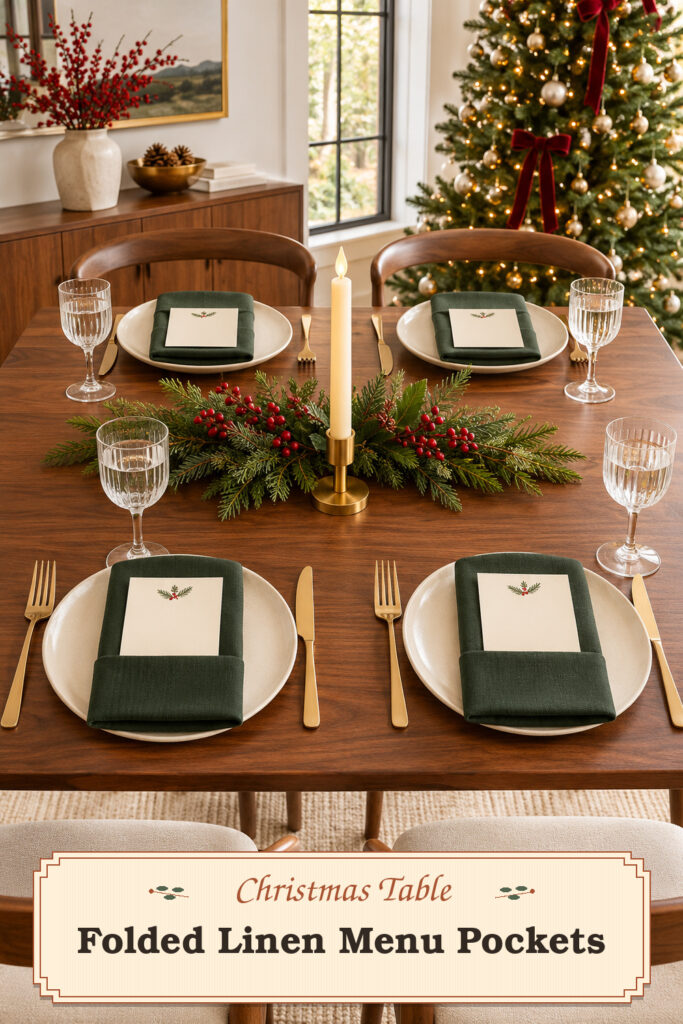
This inspiration image was created with AI.
Make the pocket the detail that repeats
The cream plate gives each green napkin a clear edge. A horizontal cuff crosses the front of the fold, holding the lower part of the menu. That small strip of fabric makes it easy to see why the card stays in place. The menus are all a similar size, so the four settings look related even with natural folds in the linen.
A sprig at the top of the card repeats the center greenery on a smaller scale. Red berries give the middle of the table some warmth. Clear glasses and pale dishes keep the view open across the walnut. The little tree in the background adds more green, so the table itself can stay low and easy to use.
A menu pocket works well when you have a few courses or want to show what’s being served. You can also use the same fold for a handwritten note at each place. Leave most of the paper clear so it’s easy to read. If you already have a patterned cloth, try a plain cream card and let the fold show against it.
Pick pieces that fit together
Deep green square napkins
Use cloth that folds neatly and stays put under a light card. A linen blend or soft cotton can work if it has enough body. Choose a square napkin large enough to make a cuff and still leave a clear rectangle on the plate. Test one with the card you plan to use before pressing the rest.
Cream menu cards
Choose card stock that can sit upright in the fold without sliding out. Keep it narrow enough to leave some fabric showing at both sides. A short card is easier to use than a long one that sticks far off the plate. If you write or print the menu, leave the lower part clear where the cuff will cover it.
Plain plates and simple clear glasses
A cream plate helps the green fabric look deeper. Choose dishes with a flat center so the folded rectangle can rest without tilting. Clear glasses add light and leave the card as the main detail. A low tumbler works if there isn’t much space at the place.
Low evergreen and one warm light
Put a short line of fir and red berries along the middle. Leave room around it for serving pieces. A flameless taper in a brass holder can give the table a small warm accent. Keep the tallest pieces where they won’t block the view between seats.
Fold one napkin before setting the full table
Lay a square napkin flat. Fold the lower edge upward a few inches to make the cuff. Keep the fold facing up and check that it’s high enough to cover the bottom of the card. Fold the top edge down if the napkin is too tall for the plate. Leave the lower cuff free so you can slide the paper behind it.
Turn the napkin over while holding the cuff in place. Fold the left and right sides toward the middle until the front has the width you want. Let the sides overlap a little and turn the napkin back over. The cuff should now run across the lower front. Press the fold lightly with your hand, then slide the bottom of the card behind it.
Set the first pocket on a plate and lift the card once. If the fabric comes away with it, widen the pocket or make the card a little narrower. If the card leans, move it farther down or shorten it. Use the first successful fold as a guide so you can make the remaining pockets quickly.
Put the plates on the table and turn each card toward the person who’ll sit there. Leave room to set a glass down without touching the paper. If a menu extends past the plate, shift it slightly toward the center or make it shorter. The napkin should still be easy to open once the card is removed.
Add the center greenery after the menus are in place. Look at the table from the doorway and see whether the green at the seats still shows. If the garland takes over, shorten it or move it nearer the middle. A few berries can repeat the red in the room without needing a larger centerpiece.
If you’re setting a long table, fold two pockets first and place them across from each other. Check that both cards point toward their own chairs. Make the others in pairs so you can compare how much paper shows above each cuff. If the menus have names, set the cards in order before you tuck them into the folds.
A table with children can use a shorter card at their places. You might print the same menu with fewer lines or use a little sprig and their names. Keep the paper size close to the other places so the folds still look related.
Once the menus have been read, gather them onto one tray or let guests set them beside their plates. Leave enough room for a fork and glass either way. A short card makes the setting easier to use through the rest of the meal.
Shop similar pieces for the folded settings
Look for green linen or cotton squares
A regular square makes the side folds easier to match. Check the finished size against your plate. A flat edge is easier to tuck than a very thick or fringed one.
Choose firm cream cards
Look for a color that fits the plate and stays easy to read in the dining light. A small sprig at the top is enough detail. If you have a long menu, use two sides or a separate larger card near the serving area.
Try clear glassware with a modest height
A shorter glass gives the menu room to show. Check that there’s enough space for the base beside the plate. A simple shape works well when the napkin and card already give the place a defined pattern.
Find flexible evergreen stems for the middle
Choose tips you can move easily around serving dishes. A few low branches will connect the setting to the Christmas tree. Use red berries where you can see them without reaching over a plate.
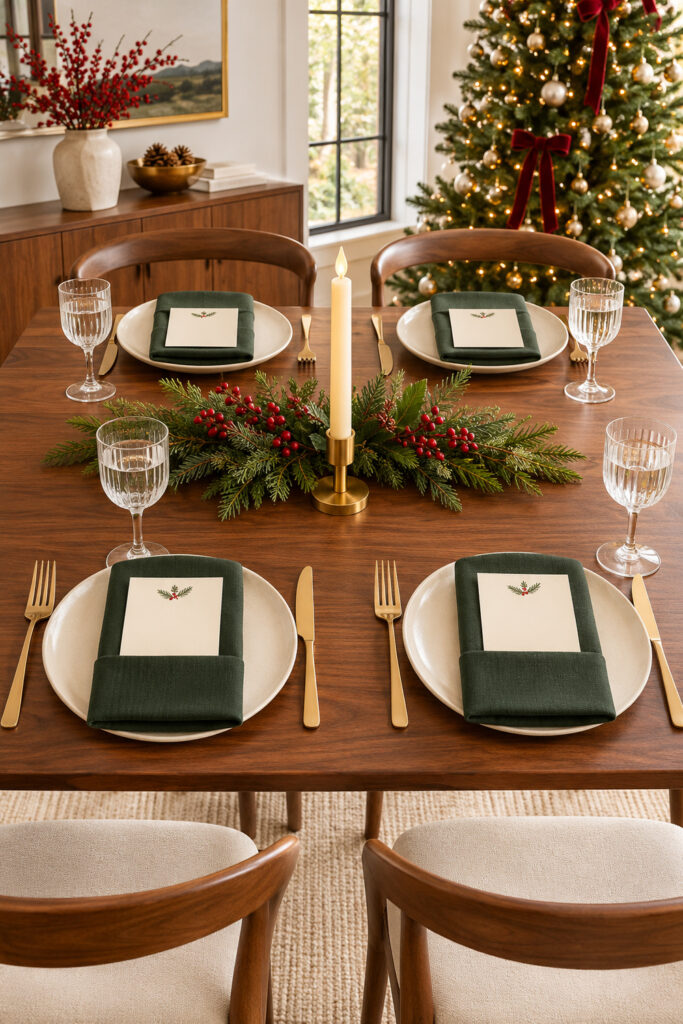
Final Styling Tip
Test the pocket at the tightest place and slide the menu out with one hand. If the fold stays in place and the glass is easy to reach, you can repeat that layout around the table.