*This post may contain affiliate links for which I earn commissions.*
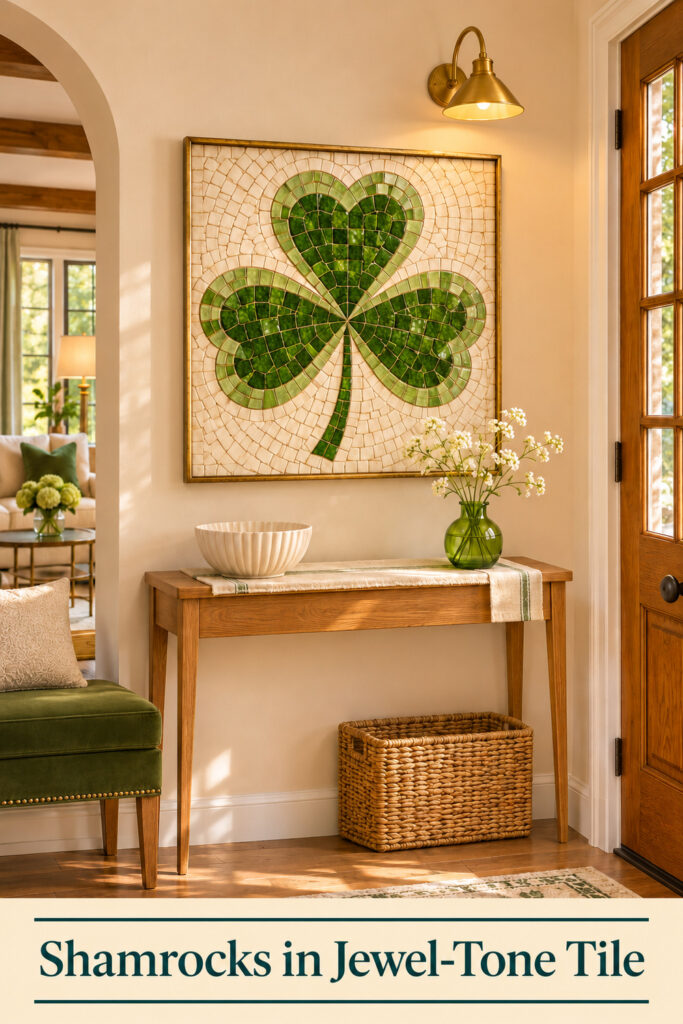
A green shamrock mosaic gives this entryway a clear St. Patrick’s Day focal point. Small tile shapes form three rounded leaves against a pale background, with a narrow warm-metal frame around the panel. Wood furniture, green upholstery, and a simple glass vase connect the artwork to the room.
The holiday theme stays concentrated on one wall feature. That leaves the console and doorway available for ordinary use while still making the occasion easy to recognize. You can borrow the approach with a suitable finished artwork or a different shamrock panel that provides the same readable shape.
This image was created with AI as decorating inspiration.
What Makes the Mosaic Entryway Work
The shamrock is large enough to identify before you notice the individual tile pieces. Its darker green interior contrasts with the pale surrounding surface, while lighter green sections soften the edges. Fine dividing lines add detail without changing the overall silhouette.
Warm wood and brass keep the green from feeling isolated. The panel frame, light fitting, and console share a related warmth, even though their materials differ. The pale wall gives each element enough room to show.
The bench and vase repeat green in smaller amounts. They connect the main motif with the lower part of the entryway without adding more shamrocks. A bowl and woven basket provide practical-looking shapes that remain quieter than the wall art.
Find Shamrock mosaic wall art
Browse current Amazon options that can help you recreate this look.
Browse Shamrock mosaic wall art on Amazon →As an Amazon Associate I earn from qualifying purchases.
Key Pieces for a Shamrock Mosaic Setting
A Clearly Readable Shamrock Panel
Look for three distinct leaves and a visible stem. A four-leaf clover is a different motif, so compare the actual outline if this is the idea you want. The shape should remain recognizable from the doorway, not only in a close view of the tile details.
A Controlled Range of Greens
Several related greens can create depth within the motif. A darker center and lighter edges are one way to organize them. If every tile has equally strong contrast, the panel may become visually restless and the larger shamrock shape harder to see.
A Pale Background Around the Motif
The cream area separates the green leaves from the frame and wall. Leave enough of that background visible to preserve the outline. A border filled with many additional symbols could compete with the simple focal shape shown here.
A Suitable Frame and Hanging System
Choose the artwork and fixing according to their actual construction and weight. A mosaic-style image printed on a light panel and a real tiled piece can have very different requirements. The inspiration doesn’t establish how a particular product was made or what support it needs.
A Slim Console With Working Space
The console gives the artwork a clear location within the entryway. Keep some tabletop available for the things you normally put down near the door. Its entire footprint should fit outside the door swing and normal walking route.
A Few Green and Cream Supports
A small green vase and plain cream bowl repeat the artwork colors in useful-looking forms. The bench introduces a softer textile area. Choose a couple of these connections rather than adding green accessories to every surface in view.
Choose the Artwork Position First
Measure the wall area above the console and compare the panel’s overall dimensions, including its frame. The artwork should feel connected to the furniture without crowding nearby trim or a wall light. A paper template can help test the visual size before installing any fixing.
Look at the planned position from the open doorway. The motif should be visible when you enter rather than hidden behind the door or another tall object. Check how the door moves through its full range before committing to the arrangement.
Consider the light falling across the panel. A slightly reflective surface can add interest, but glare may obscure a large part of the shamrock. Compare the view at different times when you can. A matte or softly finished interpretation may suit a strongly lit wall better.
Mount the artwork using the requirements for the actual piece and wall. This is a styling idea rather than a tiled construction or hanging tutorial. Don’t treat a decorative frame as evidence that the panel is light enough for any removable hook.
Once the main panel is settled, place the console objects below it. Keep their tallest points clear of the lower leaf edges and stem. The green vase can sit toward one side, while the bowl occupies a quieter area on the other.
Build the Full Entryway Without Crowding It
The small bench gives the entryway another use and repeats the green lower in the room. If your space can’t accommodate it comfortably, omit it. The console and shamrock panel can carry the whole idea without another piece of furniture.
A basket beneath the console provides texture and a possible storage zone. Check that it doesn’t project into the passage or prevent your feet from moving naturally around the table. Choose its size according to the available opening rather than the width of the artwork above.
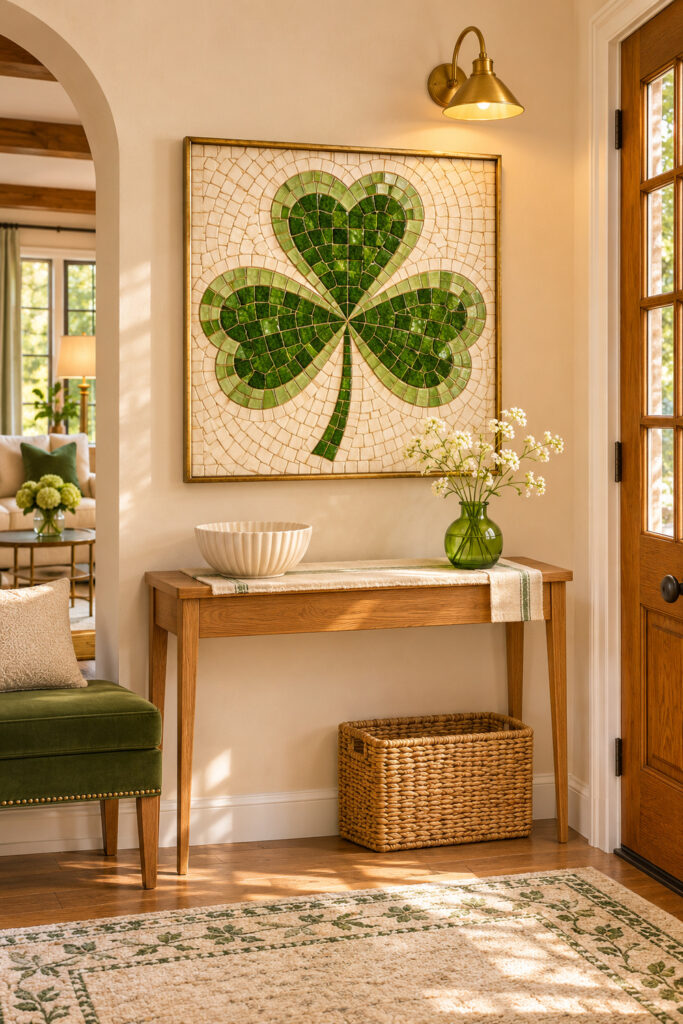
The light rug connects the furniture areas while keeping the wood floor visible. Use a rug suitable for the entrance and the door clearance. A thick edge or poorly placed corner can make a decorated entryway less pleasant to use.
Keep supporting flowers small enough to leave the artwork in charge. White stems in green glass relate to the palette without creating another strongly colored bouquet. You can use a plain vessel you already own if the wall panel provides enough green.
For a quieter interpretation, choose a smaller panel with more pale background and keep the bench neutral. For a richer version, repeat deep green in one upholstered piece. The aim is a clear color connection, not equal amounts of green across the whole room.
The mosaic effect can also be interpreted through framed art rather than literal ceramic pieces. Be clear about the material when choosing. Both can offer a decorative shamrock, but their surface texture and reflections will differ from one another.
Shop Similar Pieces
Look for Shamrock Mosaic Wall Art
Check the leaf count, actual materials, full dimensions, and mounting requirements. A close product image can make printed texture appear raised. Choose the version that suits your wall and the amount of detail you want.
Shop Similar Green Glass Vases
A modest vessel can repeat the panel’s color without a second shamrock motif. Look for a stable base and an opening suited to a few stems. A transparent finish will look lighter than an equally dark opaque ceramic piece.
Add a Plain Cream Catchall Bowl
Choose a useful shape for the items you normally place near the door. A quiet ribbed texture can add detail without another pattern. Keep it low enough to preserve the visible stem and lower edge of the artwork.
Look for Shallow Woven Storage Baskets
Compare the available depth beneath your console with the basket’s full footprint. A low, accessible shape can be more useful than a taller decorative one. Keep the surrounding passage open when the basket is in place.
Final Styling Tip
Stand at the open door and find the shamrock first. If a bouquet, lamp, or crowded console catches your eye before the artwork, simplify that supporting area. The panel can provide the holiday identity while the rest of the entrance keeps working normally.