*This post may contain affiliate links for which I earn commissions.*
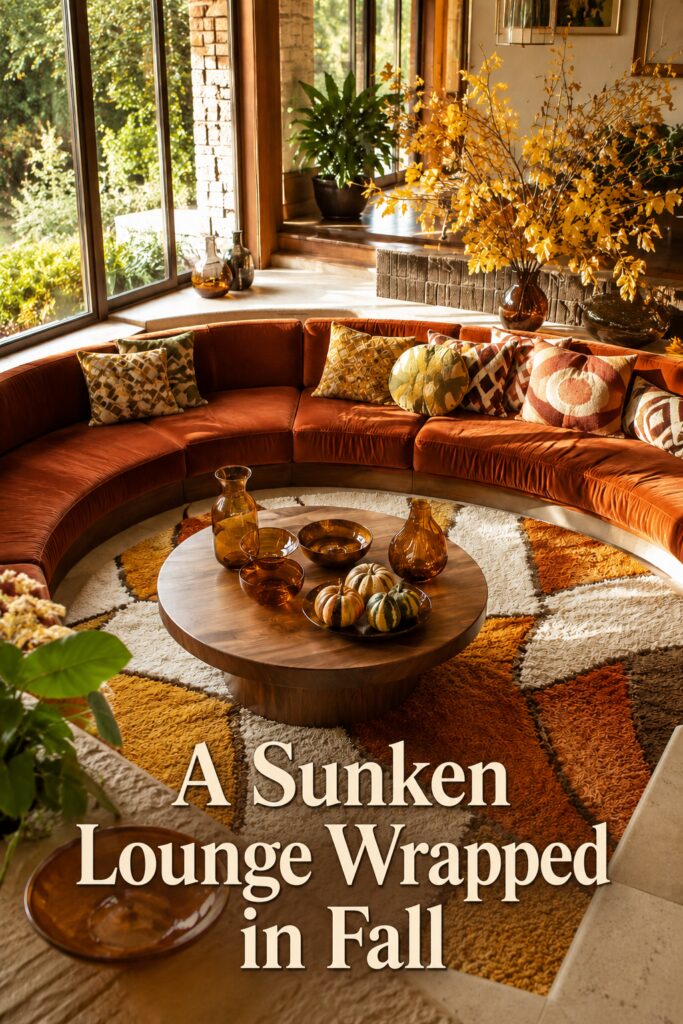
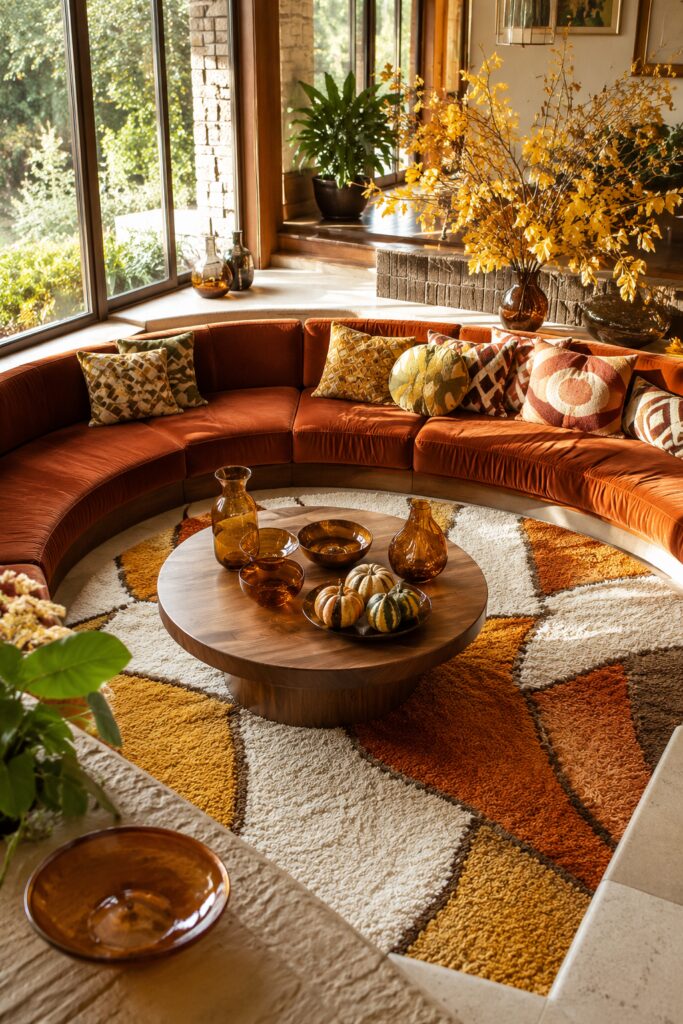
Some rooms need very little seasonal decorating because their permanent palette already feels made for fall. This sunken lounge is one of them. Curved rust velvet seating, amber glass, golden foliage, walnut wood, and a graphic shag rug create an autumn atmosphere before the first pumpkin enters the room.
The appeal comes from the way the architecture and furnishings work together. The rounded conversation pit feels intimate and distinctly nostalgic, while tall windows keep all those earthy colors from becoming heavy. A few small gourds complete the seasonal story without turning the lounge into a conventional harvest display.
You do not need an original 1970s conversation pit to borrow the idea. The same effect can be recreated with enveloping seating, low furniture, repeating curves, and a controlled mix of rust, mustard, olive, cream, and amber.
Disclosure: The inspiration image featured in this post was created with AI.
Let the Seating Establish the Mood
The curved rust-colored sectional is the visual anchor. Its low profile emphasizes the sunken floor, while the generous sweep of velvet makes the room feel welcoming rather than formal.
In a conventional living room, look for a curved sectional, modular sofa, or two rounded sofas arranged in a shallow arc. Burnt orange, cinnamon, terracotta, and tobacco are all useful color descriptions when shopping. Velvet is especially effective because its changing sheen gives a single upholstery color more depth.
If replacing a sofa is not practical, bring the same warmth to an existing neutral sectional with a large rust-colored throw, velvet seat cushions, or several oversized pillows. Concentrate the rust color in one substantial area so it reads as the room’s foundation rather than a scattered accent.
Ground the Lounge With a Retro Geometric Rug
The rug is nearly as important as the sofa. Its large angular pattern introduces cream, mustard, burnt orange, brown, and muted olive beneath the rounded furniture. That contrast between straight geometric shapes and sweeping curves keeps the nostalgic scheme from feeling too literal.
Choose a rug large enough to define the entire seating arrangement. A small rug floating beneath the coffee table will not create the same immersive effect. In a standard living room, the front legs of every seat should rest on the rug whenever possible.
Look for broad shapes rather than a tiny repeating print. A thick tufted or shaggy texture will feel closest to the inspiration, although a low-pile washable rug can provide a more practical interpretation for a busy household.
Repeat Curves Through the Coffee Table
A low round coffee table echoes the circular footprint of the lounge without competing with it. The warm wood grain also provides a quiet transition between the orange sofa and the patterned floor.
A drum table or pedestal table works particularly well because it has visual weight close to the floor. Avoid delicate metal legs or a sharp rectangular top if you want to maintain the enclosed conversation-lounge feeling.
Keep the tabletop styling low. The view across the seating area should remain open, especially when the coffee table is surrounded on several sides.
Layer Pillows With a Collected 1970s Spirit
The pillows introduce smaller doses of mustard, olive, cream, caramel, and rust. Their geometric motifs feel related, but they are not identical. That variation gives the sofa a collected look instead of making it resemble a coordinated furniture display.
Start with three types of pattern: one angular geometric, one rounded or sunburst-inspired motif, and one quieter textured solid. Vary the scale so that every pillow is not competing at the same visual volume.
Round pillows are particularly useful in this setting because they reinforce the curved architecture. One circular cushion among several square covers is enough to make the grouping feel more intentional.
Leave sections of the velvet visible. The upholstery is an important part of the palette, so it should not disappear beneath an uninterrupted row of pillows.
Use Amber Glass as a Repeating Accent
Amber glass appears on the table and around the perimeter of the room. The repetition creates continuity while allowing natural light to pass through the accessories.
Mixing forms is more interesting than buying several matching vessels. Try a rounded bottle vase, a low bowl, and one taller sculptural vase in related honey and tobacco tones. Vintage-inspired ribbing, bubbled glass, and softly irregular silhouettes fit the period mood especially well.
Group two or three pieces on the coffee table, then repeat one amber vessel on a nearby shelf or console. This creates a visual path through the room without filling every surface.
Empty vessels can be decorative on their own. Leaving some of the glass unfilled also prevents the autumn branches from overwhelming the space.
Frame the Room With Golden Branches
The tall branches are the strongest explicitly seasonal element in the lounge. Their loose shapes rise above the low seating and draw attention toward the windows and upper architecture.
Place one generous arrangement behind the sofa or on a raised ledge rather than distributing short stems throughout the room. The height makes the styling feel dramatic, while the limited number of arrangements keeps it sophisticated.
Fresh branches can be gathered where permitted, or faux stems can provide a reusable alternative. Bendable stems are helpful because they can be opened into an asymmetrical silhouette. Choose muted ochre or deep gold leaves instead of intensely artificial yellow.
Use a substantial amber, brown, or dark ceramic vase to balance the height of the branches.
Add Harvest Details With Restraint
Only a few striped miniature gourds sit in a shallow bowl on the coffee table. That restraint is one of the most useful ideas in the entire room.
Choose gourds that repeat colors already present in the rug and pillows, such as cream, olive, tan, and soft orange. A shallow amber or wood bowl keeps the arrangement low and makes the collection feel like part of the room rather than a separate seasonal centerpiece.
Three to seven gourds are usually enough. If they begin to conceal the table or interrupt conversation, edit the arrangement back.
Adapt the Conversation Pit Idea to a Regular Room
The original architecture is unusual, but its design principles are easy to translate. Arrange seating so people face one another, keep the central table low, and use a large rug to create a room within the room.
A curved sectional can produce the strongest resemblance, but an L-shaped sofa paired with two rounded lounge chairs can establish a similar sense of enclosure. A swivel chair is another useful option because it supports conversation without making the arrangement rigid.
Keep walkways clear and avoid placing accessories on the edge of a step-down floor. If your home has a sunken area, lighting the transition and preserving an unobstructed path are more important than adding another decorative object.
Make Fall Feel Like Part of the Room
What makes this lounge memorable is not the quantity of seasonal decor. It is the consistency of the palette. Rust velvet, walnut, amber glass, mustard textiles, olive accents, and golden foliage all tell the same autumn story.
Begin with the rug and one dominant rust-colored textile. Add patterned pillows, a rounded wood surface, and several amber vessels. Finish with one tall branch arrangement and a small bowl of gourds.
The result can feel nostalgic and enveloping without becoming a period replica. It is a fall room designed for gathering, lingering, and enjoying the softer light of the season.