*This post may contain affiliate links for which I earn commissions.*
An embroidered holly panel gives this Christmas snug its main seasonal detail. Olive-green leaves and red berries spread across pale fabric inside a dark wooden frame. The screen stands in front of an unlit stone fireplace, with a cinnamon armchair and thick ivory throw beside it.
Build a similar corner around one botanical textile, then let wood, stone, and repeated colors connect it to the room.
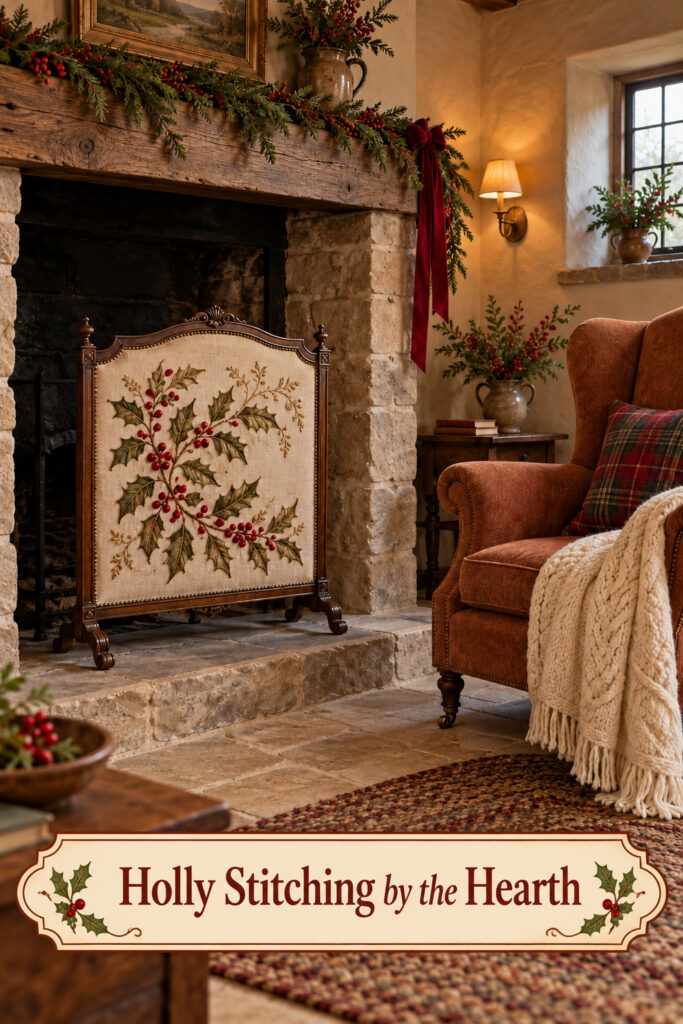
This Christmas room inspiration was created with AI and shows decorative styling with an unlit fireplace.
Why the Holly Panel Holds the Room Together
The dark opening behind the screen makes the pale fabric easy to see. Within that light area, the branches spread diagonally, giving the embroidery movement without filling every inch. The wooden frame provides a clear boundary between the delicate stitching and the rough stone.
Red berries repeat in the mantel greenery, the pitcher arrangements, and the tartan cushion. Because the color appears in smaller amounts around the room, the panel feels connected without requiring a second embroidered piece. The cinnamon chair supplies a larger warm area that is related to the red but less intense.
The ivory throw repeats the screen’s pale background in a heavier texture. That change matters: a knitted blanket and fine embroidery can share a color without looking like a matching set. The different surfaces give the seating corner depth while the palette stays fairly restrained.
Key Pieces for a Textile-Focused Christmas Corner
A Decorative Holly Panel
Look for embroidered holly artwork, a botanical textile panel, or a printed fabric with clearly defined leaves and berries. An exact needlework firescreen may be difficult to find. Framed textile art displayed elsewhere in the room can preserve the focal idea without requiring a freestanding antique piece.
A fabric screen is decorative and combustible. Use this look only with a fireplace that is out of use and fully cold; remove the decorative piece and nearby combustible accents before operating any fire or heater. It is not a substitute for a functional fireguard, and styling imagery cannot establish safe operating clearances.
Find framed holly textile art
Browse current Amazon options that can help you recreate this look.
Browse framed holly textile art on Amazon →As an Amazon Associate I earn from qualifying purchases.
A Dark Wood Frame or Stable Stand
The carved dark frame separates the pale textile from the surrounding stone. Choose a finish with enough contrast to outline the panel, especially if your walls or furniture are already cream. A very pale frame may blend into the fabric and weaken that useful boundary.
If you use a freestanding decorative screen, check its feet and stability on the actual surface. An uneven hearth can make a piece rock. A securely hung framed textile on a nearby wall is a sensible alternative where the hearth needs to remain clear or the fireplace is regularly used.
Cedar-Style Mantel Greenery
The mantel arrangement follows the timber horizontally, with finer tips falling over the front edge. It repeats the botanical idea without copying the holly stitching exactly. A few berry details provide the link, while the greenery supplies the larger seasonal line.
Keep any arrangement clear of heat sources and follow the fireplace manufacturer’s requirements. For a working fireplace, use a separate mantel plan that meets its clearances and remove the decorative textile setup. The room’s visual theme can continue through artwork and cushions away from the appliance.
Burgundy Velvet Ribbon
A long ribbon at one end of the mantel adds a strong red line beside the pale stone. Its softness contrasts with the timber, and the dark red connects to the smaller berries. You can use a shorter bow if a long tail would approach the hearth or interfere with nearby furniture.
Tie the ribbon to a suitable decorative support rather than pulling it tightly around fragile stems. View the tail from the chair as well as from across the room. It should look like part of the mantel arrangement, not like a line pointing toward an unrelated object below.
A Cinnamon Chair and Tartan Cushion
The armchair provides a substantial warm surface beside the pale screen. If your chair is another color, a rust or cinnamon cushion can introduce a smaller version of that warmth. The important connection is between a comfortable seat and the botanical detail nearby.
Tartan adds straight lines beside the curving holly branches. Choose a pattern that repeats red, cream, or muted green from the panel. One cushion is enough when the chair, throw, and nearby rug already provide several textures. More patterns can make the fine stitching harder to appreciate.
An Ivory Knitted Throw and Small Wood Table
The throw has enough texture to be noticeable without a strong color change. Drape it where it remains usable, leaving a portion of the chair visible. A blanket that covers the entire seat can make the arrangement feel staged and hide the warm upholstery that helps balance the screen.
The small table holds a pitcher arrangement and a short stack of books. Keep room for an actual cup or reading glasses if this is a seat you use. The table should support the corner’s daily purpose as well as its Christmas appearance.
How to Style a Similar Snug at Home
Decide where the textile can be displayed safely before arranging anything else. If your fireplace is in regular use, begin with a nearby wall or cabinet instead of the hearth. A framed holly design beside the chair can carry the same theme while leaving the fireplace area functional.
Place the chair so the textile remains visible from the room entrance. In the inspiration, the seat sits to one side rather than directly in front of the screen. You can borrow that offset arrangement while leaving enough space to walk comfortably between the furniture and other features.
Add the pale throw and one patterned cushion, then pause. Check whether the chair’s main color is still visible. If the blanket dominates, fold it more narrowly over one arm. That small adjustment can restore the warm balance without adding another item to the room.
Arrange greenery where it belongs in your actual space. A low line on a suitable shelf or sideboard may be more useful than decorating a mantel. Repeat the panel’s red berries in one or two places, keeping the surrounding leaves quieter so the stitched design retains its detail.
Use the side table to connect the chair to the decoration. A pale pitcher echoes the fabric background, and a little greenery repeats the botanical shape. Keep that grouping lower than the main textile so it doesn’t block the view or become a competing bouquet.
Check the corner from a seated position. You should see enough of the panel to enjoy its branching pattern without turning the chair into an awkward angle. Adjust the smaller objects first; moving a pitcher or folding a throw is often enough to make the arrangement feel more settled.
Shop Similar Pieces
Look for Embroidered Holly Artwork
Search by the textile motif before committing to a screen format. A framed botanical panel can offer the same pale background, dark outline, and stitched seasonal detail in a more suitable location.
Shop Similar Tartan Cushions and Ivory Throws
Choose the cushion for its colors and the throw for its visible texture. They don’t need to match the panel exactly, but each should connect to something already in the room.
Add Cedar Greenery and Velvet Ribbon
Keep these accents in a location appropriate to your heating setup. A restrained arrangement can connect the furniture and textile without relying on a fully decorated hearth.
Final Styling Tip
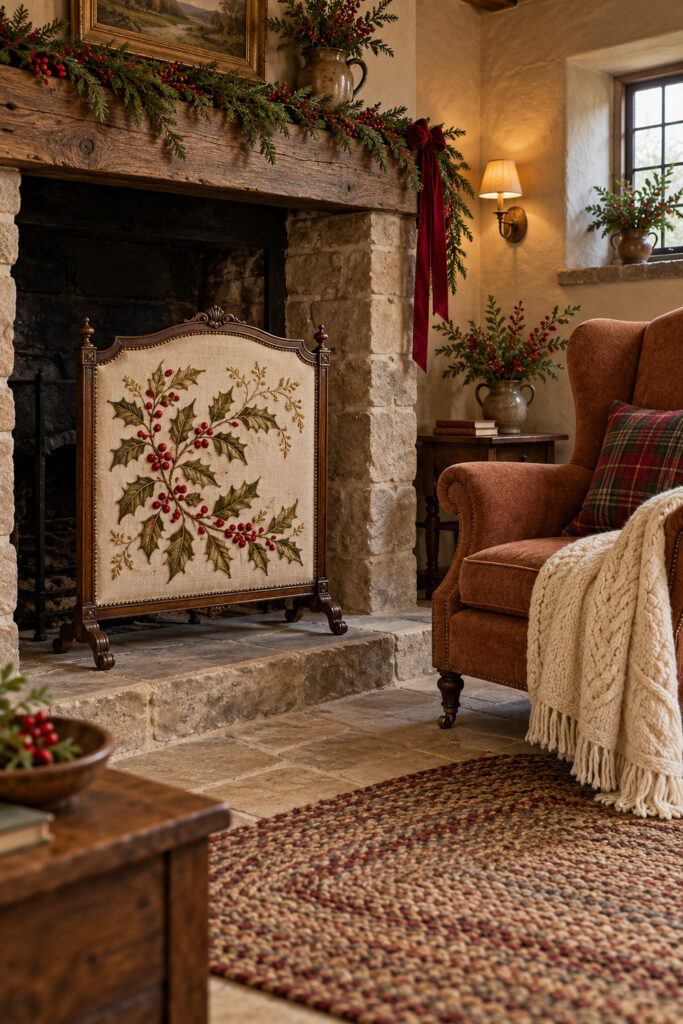
Let the holly panel remain the most detailed textile in the corner. Use the cushion for pattern and the throw for texture, then leave a little surrounding space so the needlework can be appreciated.