*This post may contain affiliate links for which I earn commissions.*
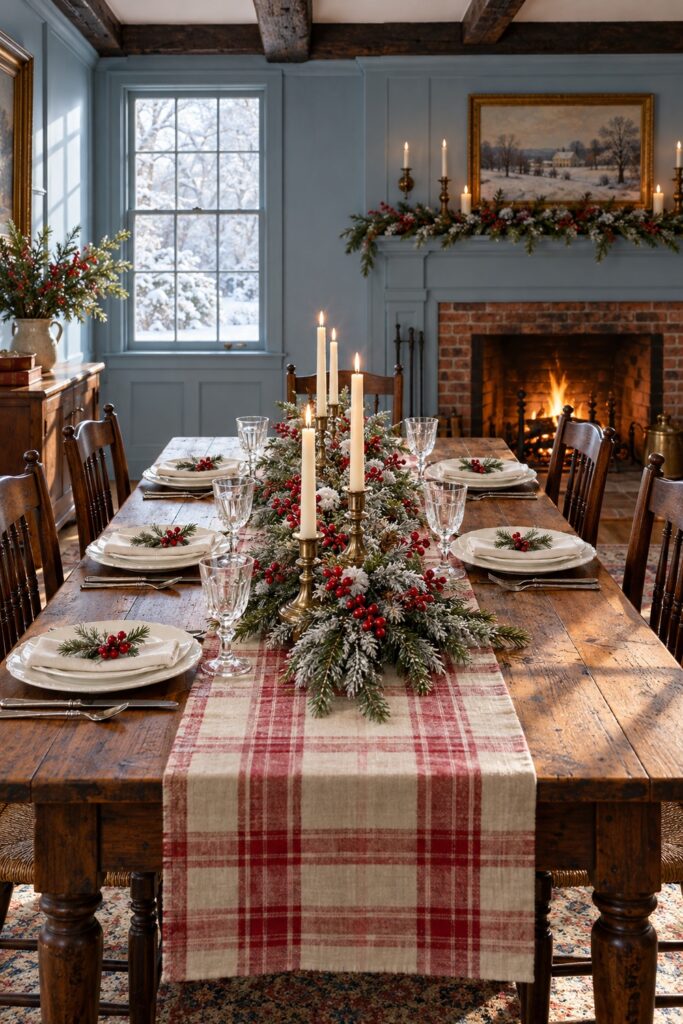
A red and cream plaid runner draws the eye along this wooden Christmas table toward the fireplace. Frosted evergreen and red berries form the centerpiece, while cream candles rise above the low foliage. White plates, folded pale napkins, and clear goblets keep the place settings simple enough for the seasonal details to lead.
The pale blue room makes the red accents especially noticeable, but this table idea can work with a different wall color. Its strength comes from a narrow patterned foundation, repeated greenery, and restrained dishes. You can adapt the arrangement to a shorter table or an everyday dining space while keeping it comfortable for a holiday meal.
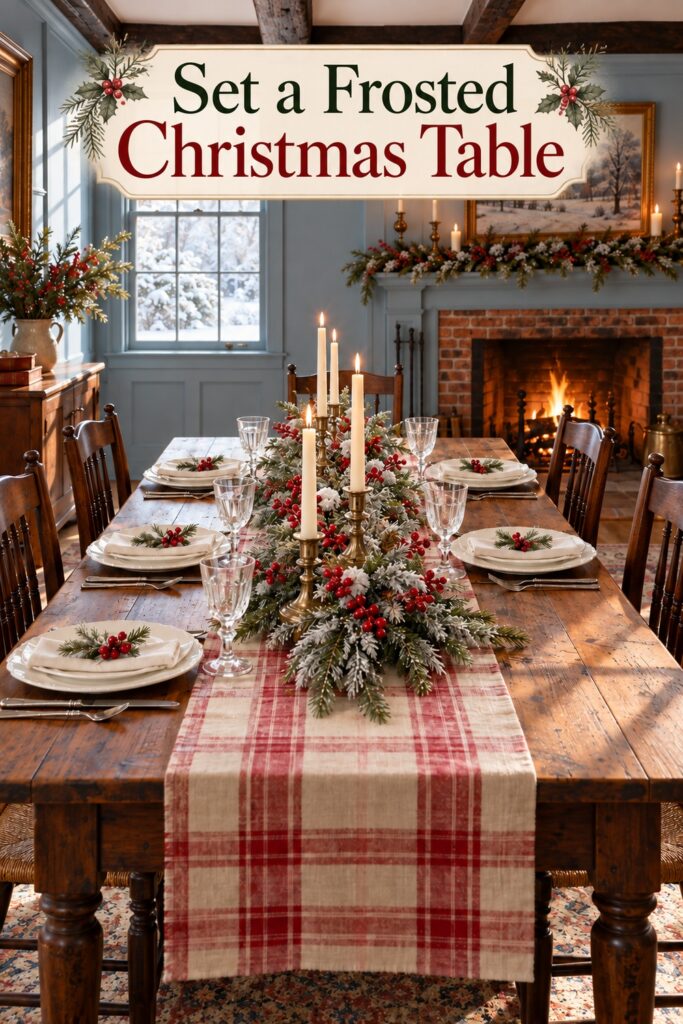
The inspiration image was created with AI and provides a styling direction rather than exact items or a photographed dinner setting.
Why the Centerpiece Feels Full Without Hiding the Table
The runner covers the center instead of the entire surface. Exposed wood on each side gives the place settings a warm background and keeps the dining table’s character visible. The plaid pattern provides a clear line through the arrangement, even where branches partly cover it.
Find Red and Cream Plaid Table Runners
Browse current Amazon options that can help you recreate this look.
Browse Red and Cream Plaid Table Runners on Amazon →As an Amazon Associate I earn from qualifying purchases.
Frosted tips lighten the evergreen, while berries add distinct red clusters at intervals. The centerpiece stays low except for the candle shapes. That separation between broad foliage and slender vertical accents prevents the center from becoming one dense block. It also offers a useful starting point for a table where guests need to see each other.
White dishes repeat the pale tones of the runner and frost. Clear glass adds a little reflection without introducing another color. The mantel carries related greenery and berries in the background, making the room feel connected. At home, a smaller arrangement on a sideboard can do the same work if you do not have a fireplace.
Pieces That Establish the Table’s Character
A Red and Cream Plaid Runner
Choose a runner narrow enough to leave room for plates, cutlery, and glassware on both sides. Measure the table and account for the chairs at its ends. A short overhang can finish the look, but a long tail that lands in someone’s lap will be inconvenient during dinner.
The cream ground in the plaid helps the pale dishes feel related to the patterned center. Look at the textile under your room’s usual lighting before adding other reds. A softened cranberry or warm red may suit wood better than a very sharp scarlet, depending on the finish. Use one main pattern rather than mixing competing checks.
Frosted Evergreen Garland or Loose Sprigs
A flexible garland gives you a continuous base, while separate sprigs make it easier to adjust the arrangement around serving dishes. Either approach can work. Choose a moderate amount of frosting so green needles remain visible and the branches do not become an entirely white mass.
Check for loose flocking before placing greenery near food. Use decorative materials in the center, away from plates and serving surfaces, and remove anything that sheds. Real evergreen can offer a related texture without artificial frost. You can introduce the pale contrast through the linen and dishes instead.
Red Berry Picks
Small berry groups create focal points along the greenery. Place them at uneven intervals, turning some toward one side of the table and some toward the other. The goal is balanced red color from several seats, not a perfectly measured sequence of identical clusters.
Keep faux berries separate from food and make it clear they are decorative. Secure the stems within the foliage so guests cannot accidentally pull the whole centerpiece while moving a dish. If you use loose picks, count them when clearing the table so every piece is removed before linens are washed.
Cream Tapers and Brass-Tone Holders
The candle shapes add vertical rhythm above the low branches. Related holders in different heights can create that rhythm without needing an exact matching set. Compare their base widths and stability before arranging them among a soft textile. A narrow holder that rocks on a thick fold is unsuitable.
Battery-operated tapers are the practical choice when foliage surrounds the holders. For real candles, create clear separation from fabric and greenery, use stable heat-resistant holders, and supervise them. Do not reproduce the image’s close flame placement. You can retain the cream-and-brass combination while moving the flames to a safer uncluttered surface.
White Plates and Pale Napkins
Simple white or ivory plates let the central runner remain the strongest pattern. Use the dishes you already have if their tones relate reasonably well. A stack of two plates adds depth, but only include layers needed for the meal or useful for your serving plan.
Fold napkins into a tidy rectangle or soft flat fold and place them on the upper plate. A small decorative sprig can sit on top before guests arrive. Remove it before eating, particularly if it contains artificial berries or shedding frost. A red napkin tie is an alternative when you want color without greenery near the dishes.
Clear Goblets and Understated Cutlery
Clear glass keeps the table light and allows the runner and centerpiece to remain visible between place settings. Use goblets proportionate to the plates and leave room for guests to lift them easily. Their shape can vary from the image without changing the overall feeling.
The cutlery forms quiet lines beside the dishes. Set only the pieces the menu requires and align them comfortably with each place. The decorated table should still communicate how to use it. Adding extra utensils purely for visual fullness can make the setting less clear and reduce the space available for food.
Lay Out the Table Before Adding Greenery
Start with the actual number of diners. Position plates and chairs first, then set the runner through the space that remains. Check the end settings as well as the sides. A centered runner may need a shorter overhang if someone sits at the head of the table.
Place the candleholders or battery tapers next, then arrange low greenery around them without crowding their bases. Turn the branch tips outward and keep the center line irregular. Add berry clusters after the foliage has its shape. This order makes it easier to see whether the red accents are evenly distributed.
Test the arrangement from a seated position. Ask whether guests can see across the table and whether a platter has a practical landing spot. If you serve family style, break the centerpiece into two or three short groups with gaps between them. The plaid runner will still connect the arrangement visually.
Repeat a small amount of greenery on a nearby surface if you want the room to feel dressed for the meal. Keep that second arrangement simpler than the table. One vase of branches or a low berry accent can support the theme without asking every surface to carry a full centerpiece.
Shop Similar Table Pieces
Look for Plaid Table Runners
Prioritize a usable width, appropriate length, and care instructions suited to dining. The pattern should support the dishes rather than overwhelm the place settings.
Shop Similar Frosted Greenery and Berry Sprigs
Check flexibility and shedding before placing them near food. Separate pieces may be easier to rearrange than one very thick garland.
Add Cream Battery Tapers and Brass-Tone Holders
Use stable bases and related heights. A restrained group can create the upward rhythm while leaving conversation and serving space clear.
Final Styling Tip
Set the table for the meal first and decorate the space that remains. Exposed wood, a visible plaid runner, and low evergreen groups will feel more welcoming than a centerpiece that leaves guests nowhere to put a dish.