*This post may contain affiliate links for which I earn commissions.*
A Thanksgiving table can feel nostalgic without relying on formal china or a traditional brown-and-gold palette. This lively setting combines terracotta checks, cobalt geometric plates, amber goblets, olive napkins, sculptural candlesticks, and warm walnut furniture for a relaxed interpretation of 1970s style.
The design is energetic, but it still feels inviting. Each place setting has enough breathing room, and the centerpiece remains low enough for guests to see across the table.
Although the table uses several strong colors and patterns, every element comes from a controlled palette. Burnt orange, cream, cobalt, olive, amber, golden yellow, and walnut repeat in different forms, making the setting feel collected rather than chaotic.
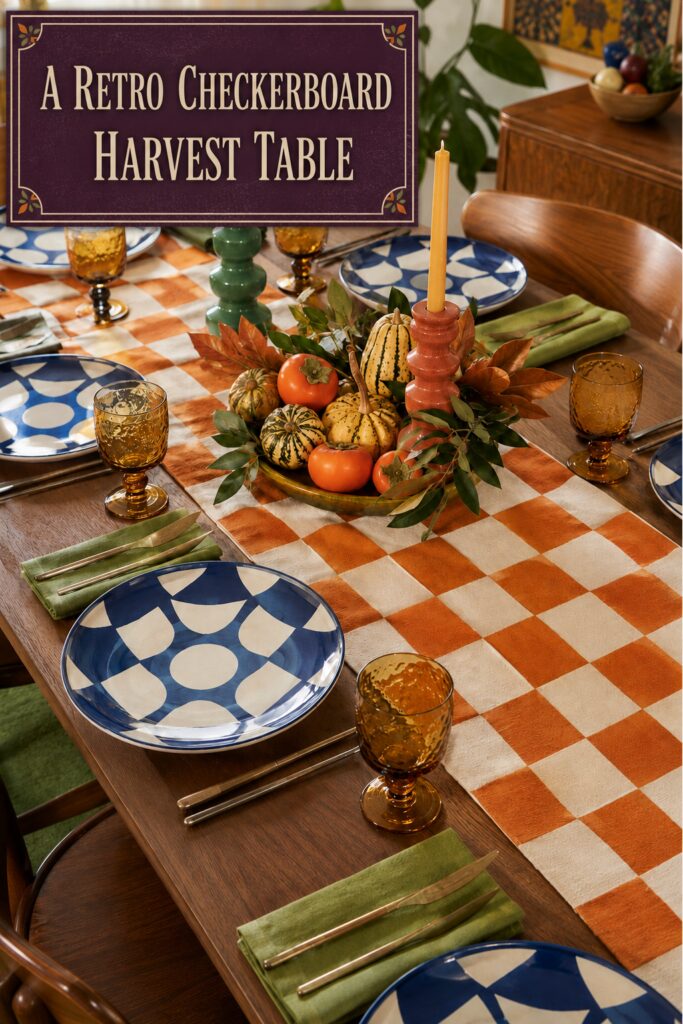
The inspiration image for this decorating idea was created with AI.
Why the Checkerboard Runner Works
The wide terracotta-and-cream runner establishes the table’s rhythm. Its large checks provide a confident backdrop for the centerpiece while allowing plenty of wood to remain visible along both sides.
Leaving the walnut tabletop exposed is important. The wood introduces warmth and prevents the patterned fabric from dominating every surface.
The runner is also more casual than a full tablecloth. It defines the center of the table, protects the area beneath the centerpiece, and visually connects the two ends without hiding the furniture.
For a similar result, look for warm rust, cinnamon, clay, or muted orange rather than a sharp pumpkin shade. An off-white or natural cream background will feel softer and more consistent with the retro palette.
Mixing Checks With Curved Geometric Plates
The dinner plates use broad cobalt and cream shapes that resemble circles, arches, shields, and stylized petals. Their curved pattern contrasts with the runner’s straight checkerboard grid.
This difference is what allows the patterns to coexist. If the plates also featured small checks, the place settings could feel overly coordinated. The rounded blue design introduces a new rhythm while remaining bold enough to hold its own against the runner.
To mix patterns successfully, vary both their scale and structure. Use one large straight-edged motif and one oversized curved motif. Connect them through a shared neutral, such as the cream appearing in both the runner and plates.
Solid olive napkins create a quiet pause between the two patterns. They help define each place setting without adding another printed layer.
A Harvest Palette Inspired by 1970s Interiors
Terracotta, olive, amber, cobalt, mustard, and walnut are strongly associated with warm retro interiors. Here, those colors are used in cleaner shapes and a light-filled dining room, which keeps the table from feeling heavy.
The deep blue plates provide the coolest note. Amber glasses and gold tapers pull the palette back toward warmth, while olive napkins and leafy stems give the arrangement an earthy foundation.
The coral candlestick relates to the runner and fruit without matching them exactly. Its slightly pinker undertone adds dimension. The dark green candlestick creates a similar variation within the olive foliage.
The goal is not to find six pieces in precisely the same shade. Slight differences make the table feel gathered over time.
Key Pieces for a Retro Harvest Table
Terracotta Checkerboard Runner
A wide checked runner is the most recognizable pattern in the setting. Look for substantial squares rather than a tiny gingham print.
Choose a length that leaves some wood visible at both ends or falls only slightly over the edges. A woven cotton or linen-like texture will feel more natural than a shiny printed fabric.
Cobalt Geometric Dinner Plates
Large blue-and-cream plates make every place setting feel graphic and distinctive. Search for abstract, mod, block-print, or hand-painted geometric designs rather than delicate floral patterns.
The plates do not need to be identical to the inspiration. Any bold cobalt motif with generous cream areas can achieve a similar balance.
Amber Textured Goblets
Amber glass adds instant warmth and a vintage quality. Goblets with a short stem, substantial bowl, and lightly hammered, ribbed, or hobnail texture are particularly effective.
Their transparency allows them to introduce color without feeling visually heavy. They also reflect the yellow tapers and warm wood around them.
Olive Cloth Napkins
Simple green napkins offer relief from the surrounding patterns. A muted olive, moss, avocado, or fern shade will support the retro look.
Fold each napkin into a relaxed rectangle and place the flatware on top. This creates a clean horizontal shape beside the round plate.
Sculptural Ceramic Candlesticks
The chunky green and coral candlesticks add height without looking formal. Their stacked rounded shapes echo the goblet stems, fruit, gourds, and curved plates.
Use two different colors from the table palette. They can share a similar shape or finish, but they do not need to be a matching set.
Harvest Centerpiece Components
The centerpiece combines small striped gourds, orange persimmon-like fruit, fresh-looking green leaves, and copper-toned foliage in a shallow bowl.
This is more practical to recreate as a collection of components than as one finished arrangement. Begin with a low bowl, fill it with several gourds and fruit, then tuck foliage around the edges to disguise gaps.
Building the Centerpiece in a Low Bowl
Select a broad, shallow vessel in olive, mustard, amber, or warm brown. A bowl with a slightly aged ceramic finish will fit the setting better than polished silver or clear glass.
Place the tallest striped gourd slightly off-center. Arrange smaller rounded gourds around it, turning each one so its markings are visible from a different side of the table.
Add orange fruit in the remaining spaces. Persimmons are especially suitable because their leafy green tops introduce another small shape. Faux fruit can be used if the table will remain decorated for several days.
Tuck real or artificial foliage beneath the gourds so the leaves extend beyond the rim. Mix green stems with a few rust or copper leaves to connect the centerpiece to the runner.
Keep the arrangement below eye level. The two taper candles will provide all the vertical emphasis the table needs.
Balancing the Candlesticks
Place one candlestick toward each end of the centerpiece rather than arranging them side by side. This stretches the harvest display along the runner and distributes height more evenly.
Using different colors gives the table a collected quality. A green holder can sit near the warmer foliage, while a coral or terracotta holder relates to the runner.
Golden yellow tapers are softer than white and less expected than orange. They connect naturally to the amber goblets and warm wood.
Flameless tapers can offer a similar look when children, crowded serving dishes, or reaching guests make open flames impractical.
Setting Each Place Without Overdecorating
Center each plate in front of its chair and place an olive napkin to one side. Since the plates and runner already carry strong designs, elaborate napkin folds and decorative rings are unnecessary.
Set the amber goblet above the knife or slightly toward the plate. Its warm transparency should remain visible against the exposed wood rather than disappearing over the checked fabric.
Warm metallic flatware complements the 1970s palette, but simple stainless pieces can work just as well. The overall color relationships matter more than matching every detail exactly.
Avoid adding individual pumpkins or favors to every plate. The bold dish pattern deserves to remain visible, and the central arrangement already supplies the Thanksgiving theme.
Adapting the Table With Pieces You Own
A rust plaid runner can substitute for the exact checkerboard pattern. Blue-and-white dishes with bold stripes, block prints, or abstract florals can stand in for the curved geometric plates.
Clear goblets can be used if amber glass is not available. Introduce the amber note with votive holders or small glass bowls instead.
Solid green dinnerware can also work when paired with blue napkins or cobalt glasses. Preserve the same balance of warm orange, earthy green, cool blue, and translucent amber.
The defining idea is the combination of a bold center stripe, unexpected blue dishes, vintage-toned glass, and a low edible-looking harvest arrangement.
Find a Terracotta Checkerboard Runner
Look for oversized checks, softened orange tones, a natural cream background, and a matte woven texture.
Add Blue-and-Cream Geometric Plates
Choose broad abstract shapes and substantial blue areas that remain visible beneath food.
Set the Table With Amber Goblets
Prioritize warm honey coloring, short stems, textured glass, and a comfortable water-glass capacity.
Fold Olive Napkins Beside Each Plate
Select washable cloth napkins in moss, avocado, or muted olive without embroidery that competes with the patterns.
Display Sculptural Ceramic Candlesticks
Look for stacked rounded shapes, glossy or reactive glazes, and colors that relate to the runner and napkins.
Assemble a Low Gourd and Persimmon Centerpiece
Combine a shallow bowl with striped gourds, orange fruit, green leafy stems, and a few copper-toned leaves.
Final Styling Tip
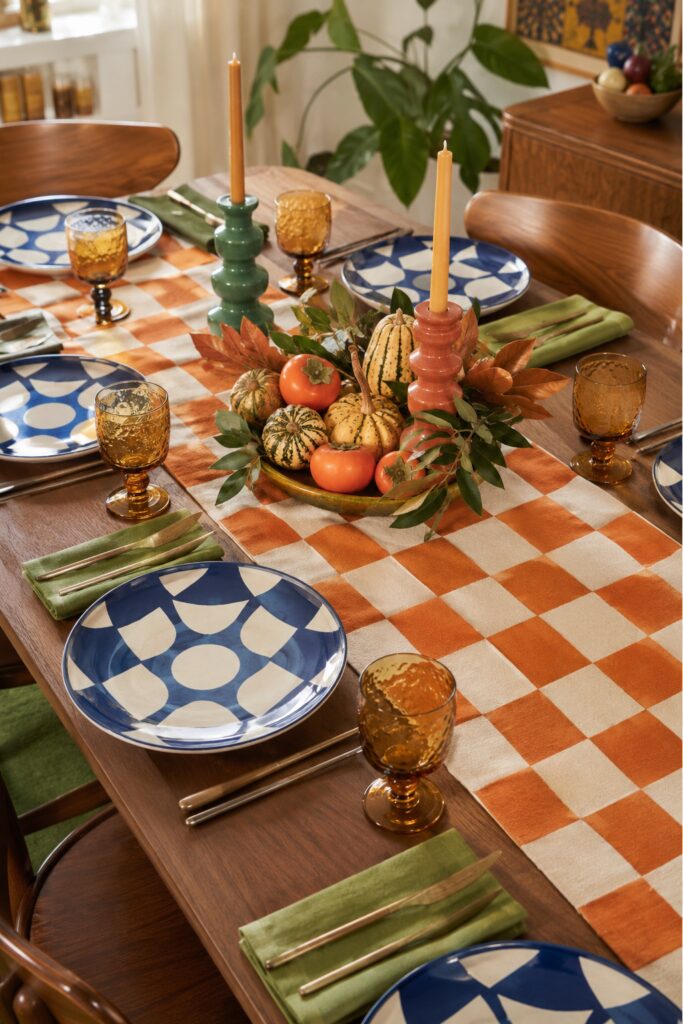
Give every strong element a quieter neighbor. Pair the checked runner with exposed wood, patterned plates with solid napkins, and sculptural candlesticks with a low natural centerpiece.