*This post may contain affiliate links for which I earn commissions.*
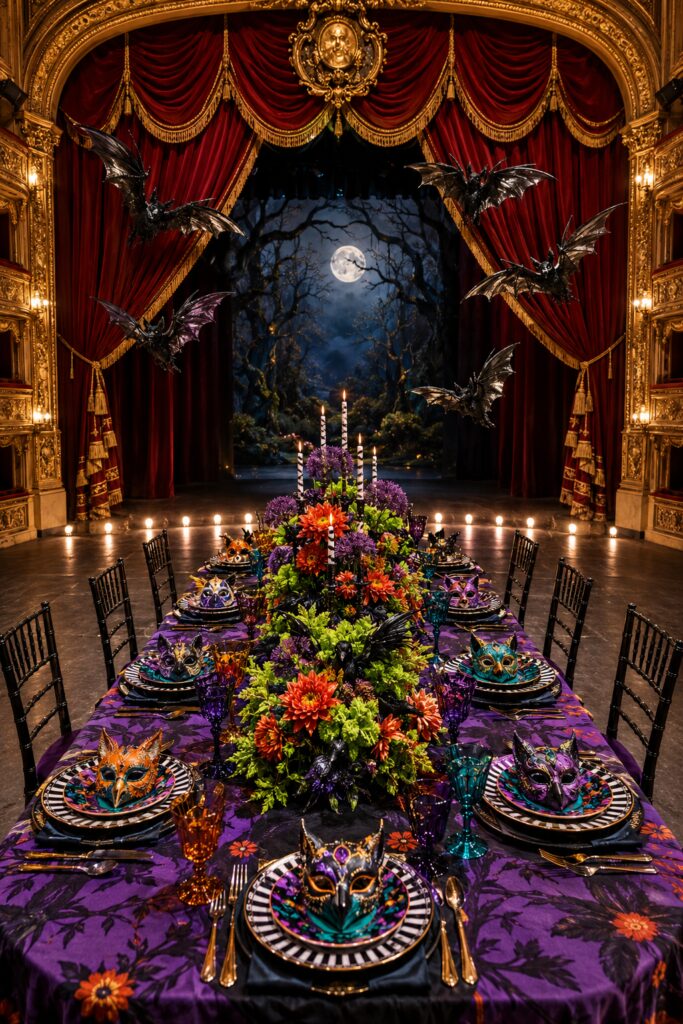
This spectacular Halloween table looks ready for opening night. Set beneath sweeping burgundy curtains and ornate gold architecture, it combines theatrical masquerade masks, striped plates, jewel-toned goblets, black chairs, orange flowers, purple foliage, ravens, and striped taper candles.
Every place setting resembles a mysterious guest waiting for the performance to begin. The masks are the distinctive detail that transforms the table from an elaborate seasonal dinner into a Halloween masquerade.
Although the opera-stage setting is extraordinary, the table itself can inspire a real dining room, event space, or covered patio. The effect comes from repeating a controlled palette, building a continuous centerpiece, and giving each place setting one memorable decorative element.
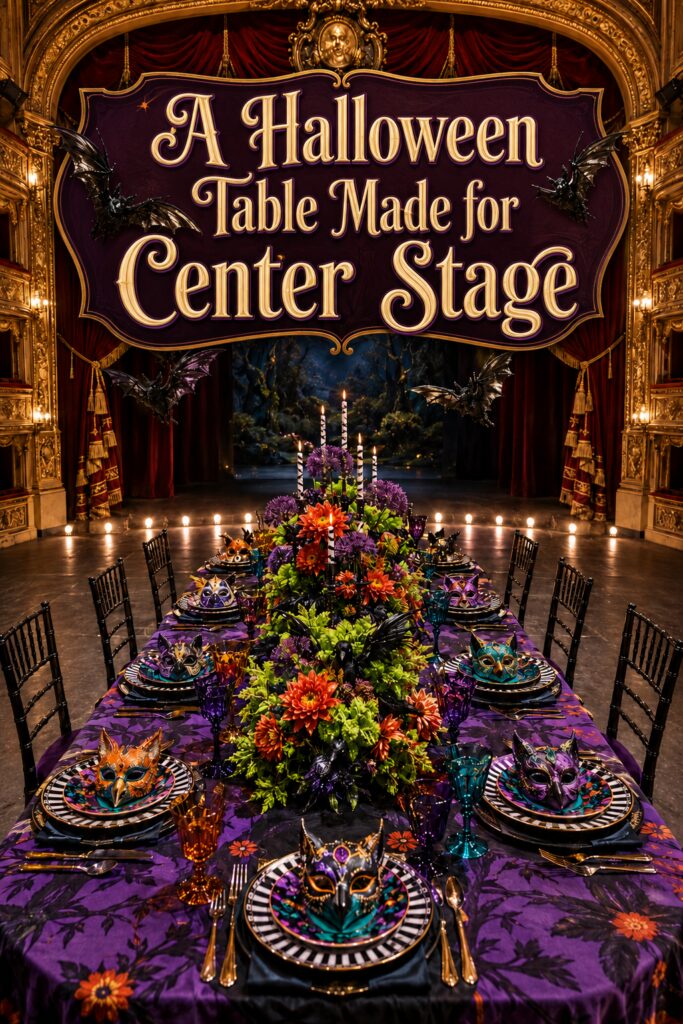
This inspiration image was created with AI.
What Gives This Halloween Table Its Stage Presence
The masks turn place settings into characters
A jeweled animal mask rests on every plate. Purple, teal, orange, and black designs create variety while the repeated shapes make the table feel coordinated.
Because the masks sit upright, they provide more height than a traditional place card or napkin decoration. They also create an immediate sense of mystery and occasion.
For a real dinner, the masks could serve as guest favors. They should be placed where they will not touch food directly, or set on folded napkins that can be removed before the meal.
A long centerpiece creates one continuous scene
The centerpiece extends nearly the full length of the table. Orange flowers, purple clusters, chartreuse foliage, black leaves, ravens, and candles are layered into a lush garden-like arrangement.
This uninterrupted design gives the table its maximalist appearance. Instead of using one tall arrangement in the center, the flowers guide the eye from the nearest place setting toward the moonlit stage.
A home version can use several smaller vessels placed close together. Once foliage is allowed to overlap the containers, the separate arrangements will appear to form one continuous centerpiece.
Purple replaces the expected orange foundation
Orange is present, but purple dominates the tablecloth, flowers, goblets, masks, and decorative details. Black provides structure, while teal and orange create concentrated accents.
The result feels more theatrical than a conventional black-and-orange Halloween table. The purple cloth is especially important because it unifies the different colors and patterns above it.
Graphic dinnerware adds order
The black-and-white plate rims create strong circles beneath the elaborate masks. This graphic repetition helps control the visual abundance of the centerpiece and patterned tablecloth.
Solid black chargers and napkins provide another layer of structure. Gold flatware adds a formal finish and connects the table with the gilded theater.
Jewel-toned glassware catches the light
Purple, teal, and amber goblets repeat the colors of the masks and flowers. Their transparent surfaces keep the saturated palette from feeling too heavy.
Using multiple glass colors could become distracting on a simpler table, but here the shades are repeated enough to feel intentional. Guests could receive alternating colors instead of a complete matching set.
Vertical candles lead the eye toward the stage
Black-and-white striped taper candles rise above the flowers near the center of the table. Their pattern relates to the plate rims, and their height provides a transition between the low place settings and the enormous stage behind them.
A few tall candles make a stronger statement than many small votives. Flameless tapers are a practical alternative when masks, artificial foliage, and suspended decorations are nearby.
Key Pieces for a Masquerade Halloween Table
Ornate animal masquerade masks
The masks are central to the concept. Look for cat, fox, owl, raven, or other animal-inspired designs in purple, teal, orange, black, and gold.
They do not need to be identical. A shared metallic trim or jewel treatment can unify different colors and shapes.
For a more affordable table, use simple mask blanks and decorate them with metallic paint, rhinestones, feathers, and narrow trim.
Black-and-white striped plates
Striped or checkerboard plates give the place settings their graphic foundation. Reusable ceramic or melamine dishes will provide the most substantial appearance, while disposable plates can work for a larger party.
If exact striped dinner plates are difficult to find, place a striped paper plate or decorative layer between a black charger and a smaller solid plate. It can provide the visual effect without replacing an existing dinnerware set.
Purple floral table linen
The cloth in the image combines a rich purple background with black foliage and scattered orange flowers. It supports the entire palette without looking like novelty party plastic.
A purple floral tablecloth is the closest option, but a solid plum cloth with a floral runner could create a similar effect. Black satin runners or napkins can add the deeper layer seen around each place setting.
Mixed jewel-tone goblets
Embossed goblets in purple, teal, and amber make the table feel collected and opulent. They also introduce color without adding more printed patterns.
Use one goblet per guest and alternate shades down the table. If several complete sets are not practical, select one principal color and introduce the others through votive holders or small glass accessories.
Striped taper candles
Black-and-white tapers connect the striped plates with the centerpiece. Their pattern is noticeable but narrow enough not to compete with the flowers.
Place the candles in black or antique-gold holders at several points along the arrangement. Keep them high enough to rise above the foliage without blocking guests’ view across the table.
Orange, purple, and chartreuse centerpiece materials
Large orange blooms supply strong focal points, while purple clusters and vivid green foliage fill the surrounding space. Black leaves and ravens introduce the Halloween layer.
The flowers can be fresh, artificial, or a mixture of both. Artificial greenery may be especially useful for building the arrangement in advance.
How to Arrange the Table at Home
Begin with the cloth because it establishes the dominant color. Use purple as the foundation, then add black chargers, napkins, or a narrow runner to create depth.
Build the place settings before arranging the centerpiece. Stack a black charger, graphic dinner plate, smaller patterned or solid plate, and folded black napkin. Rest one mask at the top of each stack.
Alternate the mask colors rather than placing all the purple masks on one side and the teal ones on the other. Repeat the same sequence with the goblets to carry the color rhythm along the table.
For the centerpiece, position several low containers down the middle. Fill them with green foliage first, then place the largest orange flowers at intervals. Add purple clusters around them and finish with black leaves, berries, or feathers.
Tuck small raven figures into the greenery so they appear to perch among the flowers. Use them sparingly. Their black silhouettes will be visible even when only a few are included.
Add the tallest candles near the middle and shorter tapers toward the ends. Confirm that guests can still see one another and that sleeves, masks, and foliage remain safely away from flames.
Creating Drama Without an Opera House
A dining room can borrow the theatrical feeling by framing the table with curtains. Burgundy velvet or velour panels behind a buffet, window, or doorway will immediately establish the stage-like backdrop.
Gold frames, candleholders, or wall accents can suggest ornate theater architecture without requiring a heavily decorated room. Black chairs or chair covers will help the saturated table colors stand out.
Suspended bats are optional. If used, keep them above an unoccupied section of the room and away from candles, food, and seated guests. The tablescape already communicates the theme clearly without overhead props.
Shop the Masquerade Table Elements
Select a Mask for Every Guest
Choose several related colors and animal shapes. Metallic trim and jewel details will help different masks feel like part of one collection.
Add Graphic Black-and-White Dinnerware
Use striped or checkerboard plates to organize the more elaborate patterns and colors across the table.
Cover the Table in Deep Purple
Look for a floral cloth with plum, black, and orange or layer a solid purple cloth beneath a darker botanical runner.
Alternate Colored Goblets
Purple, teal, and amber glassware can follow a repeating sequence down both sides of the table.
Raise Striped Tapers Above the Flowers
Use black-and-white candles as vertical punctuation within the centerpiece rather than lining them evenly along the table.
Grow a Garden of Halloween Color
Combine orange flowers, purple clusters, chartreuse foliage, black leaves, and small ravens into a low arrangement that flows from one end of the table to the other.
Final Styling Tip
Choose one feature to make unforgettable. When masks lead the place settings, the remaining patterns, flowers, goblets, and candles can support that story instead of competing to become the next focal point.