*This post may contain affiliate links for which I earn commissions.*
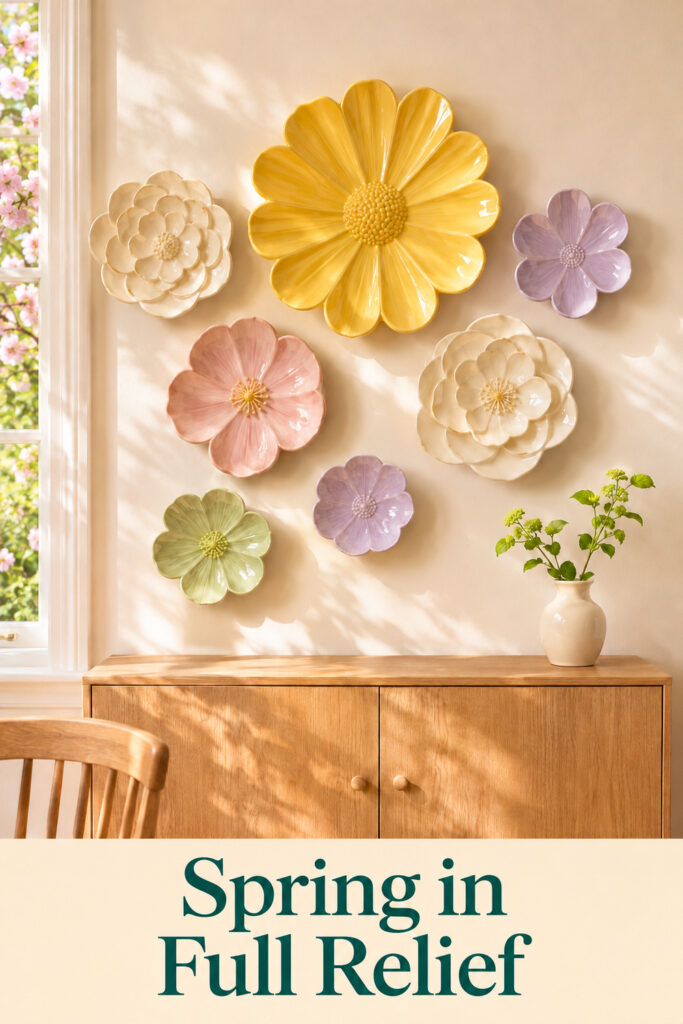
Flower-shaped ceramic plates give this dining room wall its spring character. Butter yellow, blush, lilac, pale green, and cream are spread through an airy grouping above a wooden sideboard. Their raised petals catch the light, so the display has interest beyond its colors.
The idea works as a concentrated seasonal change. You can keep the furniture and most of the room as they are, then use the wall collection as the new focal point. A small vase beneath it is enough to connect the display with the surface below.
This image was created with AI as decorating inspiration.
What Makes the Ceramic Flower Grouping Work
The largest yellow flower provides a starting point for the eye. Smaller pieces gather around it at different heights rather than forming a rigid rectangle. That uneven outline suits the flower shapes and keeps the grouping from feeling like a set of plates lined up for inspection.
Cream pieces create pauses between the stronger colors. They also relate to the pale wall, which helps the grouping feel light even though the ceramics have visible depth. The sideboard’s wood introduces warmth without another competing pattern.
Light is especially useful here. Shadows beneath the petal edges reveal that the flowers are sculpted objects. Flat printed plates could make a different spring display, but they wouldn’t produce the same dimensional effect.
Find Flower shaped ceramic wall plates
Browse current Amazon options that can help you recreate this look.
Browse Flower shaped ceramic wall plates on Amazon →As an Amazon Associate I earn from qualifying purchases.
Key Pieces for a Sculpted Flower Wall
One Larger Flower Plate
Choose the main piece before filling out the collection. Its scale should suit the wall above your furniture, and its shape should remain recognizable from across the room. A broad daisy-like form creates a different impression from a tightly layered rose, so consider the outline as well as the color.
Several Related Smaller Forms
Variation in petal shape helps the collection feel gathered rather than repetitive. Keep something consistent, such as a similar glaze character or a shared pale background. Too many unrelated finishes can make the display feel accidental even when all the objects represent flowers.
A Restrained Pastel Mix
The inspiration uses several colors, but none covers a large area of the room. Repeat a few hues instead of introducing a new shade in every piece. Cream can help separate similar pink and yellow tones, especially when the wall itself is warm white.
Appropriate Plate Hangers
Check how each ceramic piece is intended to hang. Irregular petal edges may not suit a standard wire hanger, and adhesive systems have their own material and weight requirements. Use the maker’s guidance for the actual object rather than assuming every decorative plate can be mounted in the same way.
A Quiet Wall Surface
A pale wall makes the petal shadows easier to see. If you have patterned wallpaper, test the collection against it before deciding. A large-scale background pattern may compete with the flower outlines. You could instead choose an adjacent painted wall or use fewer, larger pieces.
Simple Furniture Underneath
The wood sideboard anchors the display without needing to match its colors. Keep the top mostly clear so the collection remains visible. A low vase or a few plain stems can connect the two areas, but a tall bouquet might hide the lower flowers.
Arrange the Collection Before Making Holes
Lay the plates on a protected surface and compare their shapes. Put the largest piece down first, then add the smaller ones around it. Leave gaps where the wall will show. The spaces are part of the arrangement, not unfinished areas that need another purchase.
Try an outline that is a little taller on one side. Then test a more centered version. The best arrangement depends on your furniture, the neighboring walls, and the sizes you have. There is no need to make every petal line up with another object.
Paper templates can help transfer the grouping to the wall. Mark the approximate shape and hanging point of each piece, then position the templates where the ceramics would go. Check from the doorway and from a seated position at the dining table.
Pay attention to the gap above the sideboard. If the lowest flower seems detached from the furniture, bring the whole grouping down rather than adding a tall accessory beneath it. If the ceramics feel crowded by objects on the cabinet, clear the surface before changing the wall arrangement.
Once you’re satisfied, mount each piece with suitable hardware and follow its instructions. Check the actual hanging points rather than measuring only to the top edge. Different plate shapes may need different fixing positions to reach the visual height you planned.
Use Color and Relief Together
Place deeper-colored flowers where they can balance the largest piece. A small lilac plate may carry more visual weight than a larger cream one, depending on the wall color. Treat size and contrast as separate choices rather than assuming the biggest object always needs a matching partner.
Look at the collection in the light you normally use in that room. Glossy glazes can reflect windows or lamps, while matte surfaces reveal texture differently. Move a piece within the planned grouping if glare hides its center from your usual viewpoint.
For a narrower wall, use fewer flowers and keep a clear size difference. A small grouping with one main piece can be more readable than many tiny objects scattered across the space. Preserve the gaps and the sculpted shapes that make the idea distinctive.
If you want a quieter palette, keep most flowers cream and use only a couple of colored pieces. The relief will still provide interest. That approach can also make it easier to use ceramics you already own without replacing the whole collection.
Allow for seasonal storage if you plan to take the plates down later. Keep their hanging instructions and any removable fittings together, and protect raised petals from pressure. A collection with fragile edges needs a little more care than flat dishes stacked in a cupboard.
Shop Similar Pieces
Look for Flower-Shaped Ceramic Wall Plates
Check whether the product is designed for wall display and what hanging method it supports. Photos can make shallow printed dishes look more dimensional than they are. Look for side views or clear descriptions of the sculpted petals.
Shop Similar Smaller Floral Accent Plates
Compare the actual diameters with your main piece. A useful collection needs a visible range of sizes, not several nearly identical objects. Similar glaze character can connect different flower shapes.
Add Suitable Ceramic Display Hangers
Match each hanger to the material, shape, and weight of the piece. Some systems need a particular surface on the back to work correctly. Confirm that compatibility before deciding where the plate will hang.
Look for a Plain Low Vase
Choose a supporting vessel that won’t compete with the wall collection. A small cream vase can repeat the pale ceramics without becoming another flower-shaped object. Keep any stems low enough to leave the bottom of the grouping visible.
Final Styling Tip
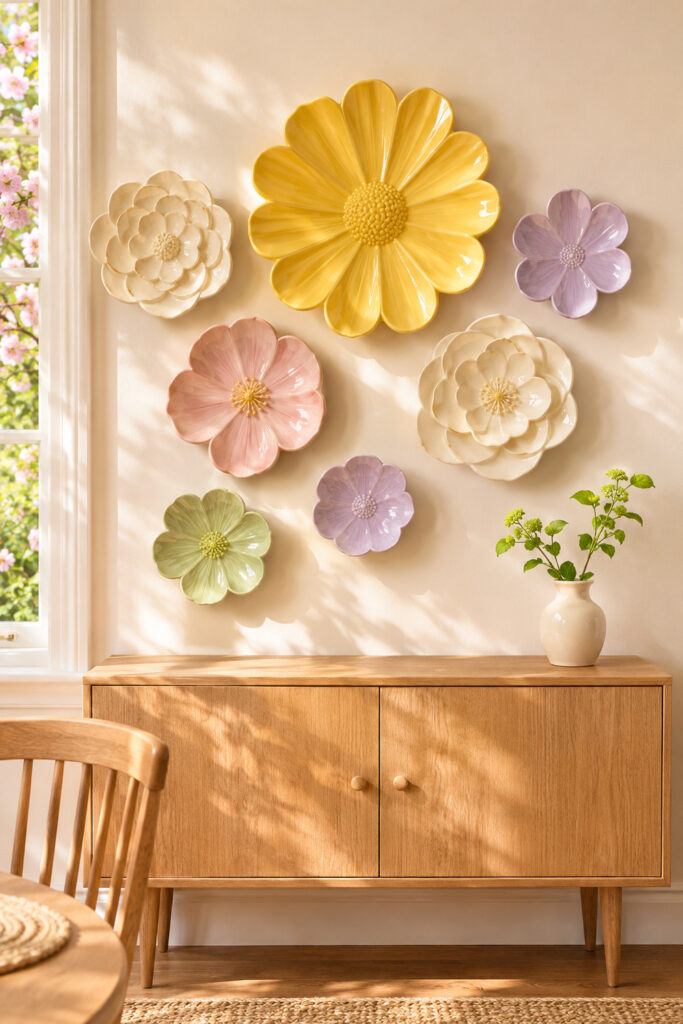
Leave the sideboard clear while you live with the wall arrangement for a day. You may find that the sculpted petals provide all the detail that area needs, with only one small supporting object below.