*This post may contain affiliate links for which I earn commissions.*
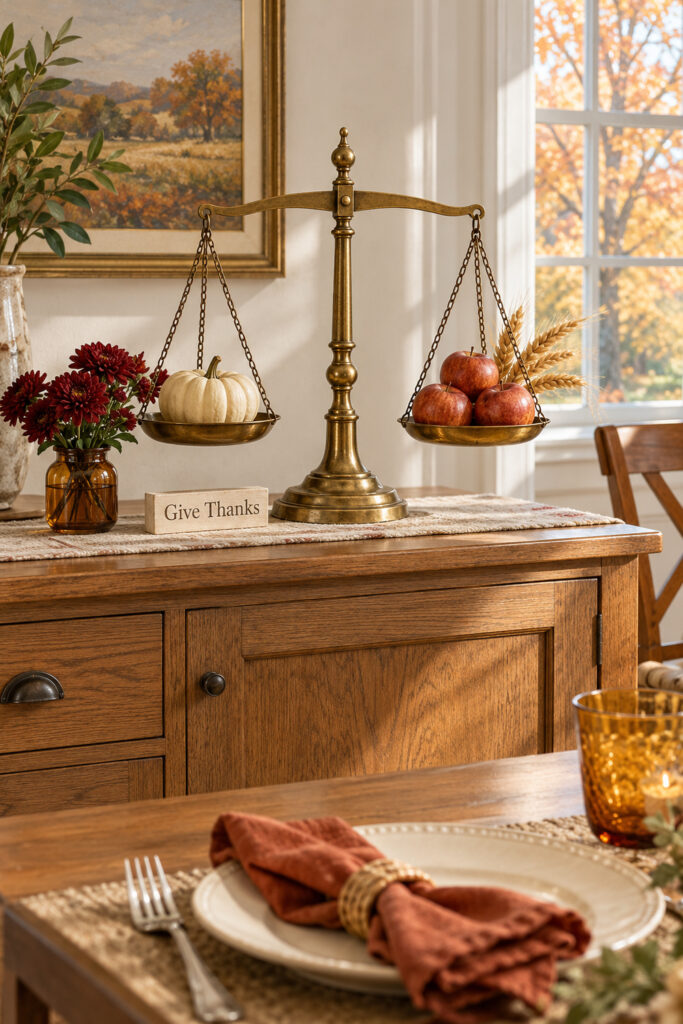
A balance scale isn’t the first thing most of us reach for when decorating for Thanksgiving. That’s what makes this sideboard interesting. A cream pumpkin rests in one brass pan, while red apples and wheat fill the other. The familiar harvest materials give the unusual base an easy purpose.
Burgundy flowers, an amber jar, and a small Give Thanks block finish the arrangement without crowding the scale. If you own a decorative piece with two sides, this is a useful lesson in balancing different shapes rather than buying everything in matching pairs.
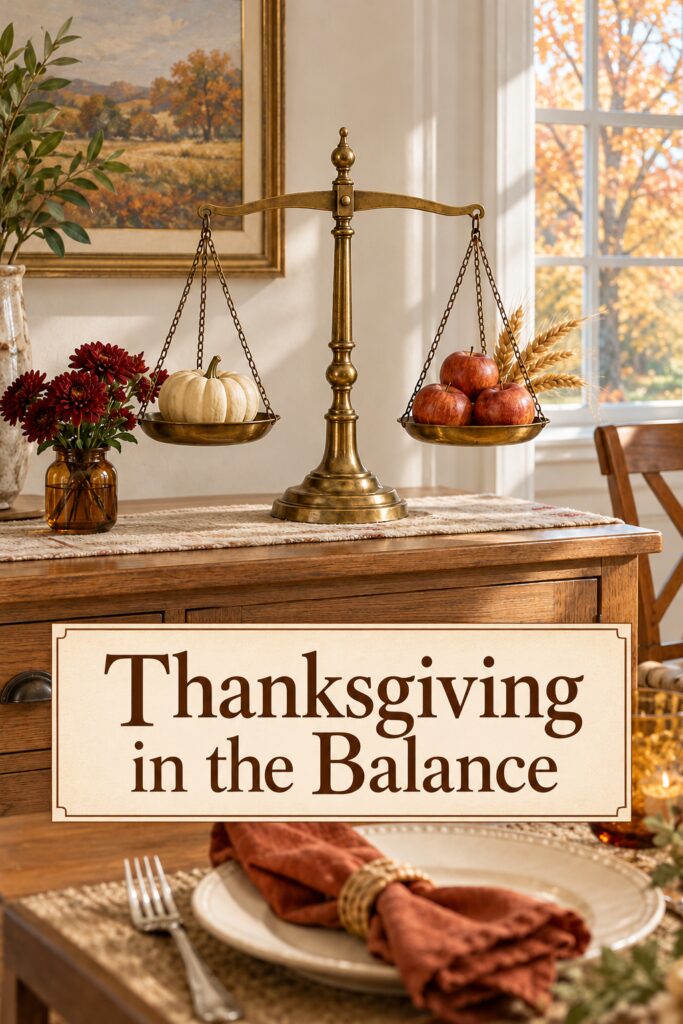
The inspiration image was created with AI and represents a decorating idea rather than a display of verified products.
What Makes the Harvest Scale Work
The scale supplies a strong outline before you add any decorations. Its upright stem, curved crossbar, and hanging chains frame the harvest pieces, so the contents can remain simple. The empty space between the chains is part of the appeal. Fill it with a large garland and you lose the shape that made the arrangement worth trying.
The two pans carry different materials, but they share a compact rounded form. A pale pumpkin stands out against the brass on one side, while darker apples form a small group on the other. The wheat extends upward from the fruit without becoming another large centerpiece. Your eye can travel across the display without getting stuck at one heavy end.
Warm wood, amber glass, and brass work together because their tones are related. Cream linen and the white pumpkin keep those warm surfaces from feeling too dense. Burgundy flowers add another harvest color while staying below the scale’s crossbar. Nothing has to shout over anything else.
Find Decorative brass balance scales
Browse current Amazon options that can help you recreate this look.
Browse Decorative brass balance scales on Amazon →As an Amazon Associate I earn from qualifying purchases.
Key Pieces to Recreate the Sideboard
A Decorative Brass Balance Scale
Choose a scale intended for display and check that its stand and pans are secure. Decorative scales vary in construction, so don’t assume one can carry a real pumpkin simply because the inspiration shows it. Lightweight faux produce gives you more control over both weight and placement.
Look for a broad base and pans deep enough to contain the items you plan to use. If the scale swings freely, arrange it away from a busy serving route. Test the empty piece on a level surface before adding anything. A wobble in the stand won’t improve when apples join the party.
A Cream Pumpkin
The pumpkin gives one pan a simple pale shape. A small faux version can reproduce that contrast without the weight or changing condition of fresh produce. Choose one that sits inside the pan rather than balancing on its rim. The stem should remain below or comfortably between the chains.
If your scale is smaller, try a single miniature pumpkin. Resist adding several just to fill the bowl. The inspiration works because you can read the pumpkin’s shape clearly. A little visible brass around it helps frame that shape and makes the whole arrangement look less crowded.
Red Apples and Dried Wheat
Group a few lightweight decorative apples in the opposite pan, keeping them low and securely contained. Similar sizes will nest more easily than one oversized apple surrounded by tiny ones. A mix of deep red and muted russet tones can echo the warm colors in the flowers.
Use a short wheat bundle tucked behind the fruit. Trim the stems so they rest inside the pan and don’t poke through the chains at awkward angles. The wheat should rise as a small fan, not a tall sheaf that competes with the center post. If it won’t stay put, leave it beside the scale in a separate little vessel.
A Burgundy Flower Arrangement
The amber jar and dark red flowers anchor the left side of the sideboard. Keep their overall height below the scale’s main beam so the two silhouettes remain distinct. A modest bunch is easier to place than a broad arrangement that spills under a hanging pan.
Fresh flowers need a suitable watertight container, while faux stems let you adjust the display without worrying about spills. Either can give you the same color relationship. Turn a few blooms toward the room and remove leaves that make the jar area look crowded.
A Plain Runner and Small Greeting
The narrow cream runner draws the separate pieces into one group and softens the wood. Its texture is more useful here than a bold print would be. You already have fruit, flower petals, wheat heads, chains, and metal curves to look at.
A small Give Thanks sign states the occasion without covering the scale’s base. Keep the sign low and place it where the lettering can be read from the room. If you don’t own one, the harvest ingredients can carry the seasonal idea on their own. There is no need to shop for a sign before starting.
How to Style the Arrangement at Home
Begin with the scale alone, centered where you want the main display to sit. Leave room on either side for the pans to hang without touching a wall, lamp, or nearby vase. Check any movement before introducing breakable pieces. A sideboard should remain practical if you also use it for serving.
Add the pumpkin first, then the apples. Work toward visual balance while respecting the scale’s actual limits. On a functional balance, different real weights may tilt the beam; on a decorative version, the bar may be fixed. Neither needs forcing into the exact angle shown. Use lighter pieces and accept a modest difference in pan height if the stand remains secure.
Now add the wheat and flowers, watching the space around the chains. From across the room, you should still see two separate bowls and a clear upright center. If the flowers hide the left pan, move the jar outward rather than pushing its stems under the chain. Tiny spacing changes are often more helpful than adding another object.
Finish with the greeting block near the base. On a narrow cabinet, skip a larger side accessory and let the scale occupy most of the width. On a long sideboard, leave a stretch of empty wood for serving instead of repeating the arrangement at both ends. That gives the display room to be interesting and useful at the same time.
Shop Similar Harvest Pieces
Shop Similar Decorative Brass Scales
Check the base, pan attachment, and stated decorative use before focusing on the finish. An aged brass tone will sit comfortably with warm wood. Choose a size that leaves space for the pans on your particular cabinet.
Look for Lightweight Cream Pumpkins
A matte or softly textured surface will contrast with the metal without looking overly shiny. Confirm the pumpkin’s width and height, including its stem. It should fit inside the pan with some visible space around it.
Add Faux Red Apples to Recreate the Look
Look for realistic muted reds rather than a uniformly glossy candy finish. Lightweight pieces make the arrangement easier to manage. Compare the apple diameter with the pan measurements so you can plan a small group that stays contained.
Shop Similar Amber Bud Vases
Choose a short vessel with a narrow enough opening to support a modest flower bunch. Amber glass repeats the warmth of the brass without matching it exactly. Use a watertight vase if you plan to include fresh stems.
Final Styling Tip
Before calling it finished, stand back and check the empty space around the chains. Keeping that framework visible lets a pumpkin and a few apples feel like a complete Thanksgiving display rather than produce that happened to land on a scale.