*This post may contain affiliate links for which I earn commissions.*
Pastel eggs hang from budding branches above a weathered metal watering can in this Easter inspiration. The can gives the arrangement its garden character, while an apricot gingham bow softens the handle. A small moss grouping and two extra eggs finish the base without taking attention from the branches.
The open shape is what makes this version appealing. You can see each hanging egg and follow the branches between them. It feels more like a few thoughtfully decorated stems than a tree that needs every possible space filled.
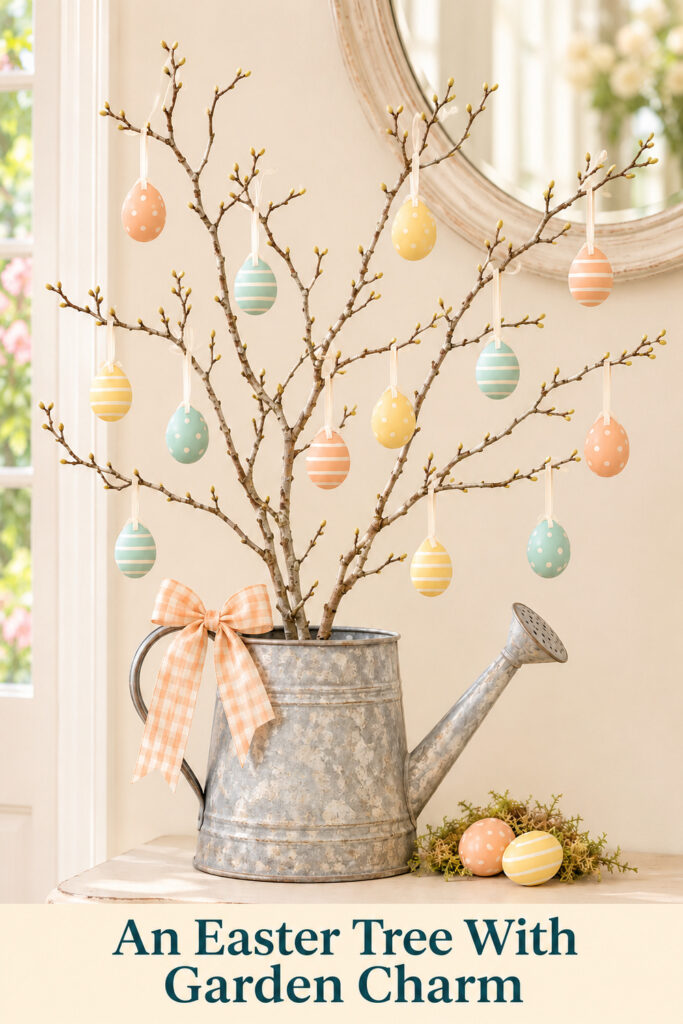
This image was created with AI as decorating inspiration.
What Makes This Garden-Inspired Egg Tree Work
The watering can provides a solid, textured base beneath the fine branches. Its rounded body and long spout also create a recognizable shape at table height. Above it, the branching outline spreads into a lighter, more delicate arrangement.
The egg colors repeat in several places rather than forming separate blocks. Aqua, apricot, and yellow appear at different heights, with stripes and dots adding variety. Cream hanging ribbons keep those small patterns from competing with another strong color.
The branches have tiny buds but very little foliage. That leaves the eggs visible and preserves the early-spring feeling. A dense leafy spray would change the effect and could hide the ornaments you wanted to show.
Find Vintage style metal watering cans
Browse current Amazon options that can help you recreate this look.
Browse Vintage style metal watering cans on Amazon →As an Amazon Associate I earn from qualifying purchases.
Key Pieces for This Easter Arrangement
A Broad-Based Watering Can
Choose a can that stands flat and has enough interior room for a secure branch support. A vintage-style finish can suggest age without needing an actual antique. Check older pieces for sharp edges or damage before using them indoors. The spout counts toward the arrangement’s width, so measure the whole outline.
An Airy Branch Structure
Look for a few branches with useful side shoots rather than a tight bundle of straight stems. Faux budding branches can offer a consistent appearance. If using natural material, choose clean, sound branches and consider how they will behave indoors. Avoid weak tips that bend heavily under even a lightweight ornament.
Lightweight Hanging Eggs
The eggs need to suit the branches. Hollow decorative ornaments are more practical than heavy solid pieces on fine twigs. Check the hanging loops and connections before placing them overhead. For this look, similar egg sizes help the different patterns feel coordinated.
A Small Pastel Palette
Choose a few related colors and repeat them through the tree. Apricot and aqua create a useful warm-and-cool contrast, while pale yellow keeps the grouping lively. You could change the palette, but retain enough contrast between the eggs and wall for each ornament to show.
A Gingham Handle Bow
The bow connects the container to the softer colors above it. Attach it to the actual handle rather than letting it appear suspended beside the can. Keep its tails away from the tabletop edge if the arrangement sits where people pass close by.
A Modest Base Accent
The loose eggs and moss in the inspiration make the can feel connected to the surface. You can omit them on a narrow console. Their job is to finish the base, not turn the entire tabletop into a second Easter scene.
Position the Branches Before Hanging Eggs
Start with the watering can on a stable surface and decide which way the spout should face. Leave enough room for that projection without extending into a walkway. Check the view from the doorway as well as straight ahead; the can should still read clearly as a watering can.
Test the branch arrangement before adding ornaments. Use a secure internal support appropriate to the can and branch weight. The stems should enter the container naturally and remain upright without depending on the decorative bow. This is a proposed styling approach, so check the stability of your particular materials as you work.
Build an open outline with a few gaps of different sizes. Aim for side branches that offer hanging points at several heights. Avoid placing the tallest tip directly against a mirror frame or shelf above it. The branches need a little breathing room around their edges.
Hang the first eggs near sturdier parts of the structure. Then add lighter ornaments farther out where the twigs can carry them without drooping. Keep hanging loops short enough to prevent neighboring eggs from colliding, but long enough for each egg to fall below its branch.
Pause after every few ornaments. Look for crowded areas and empty areas that feel accidental. An open space is useful when it helps you see the branch shape; it only needs another egg if the overall balance calls for one.
Keep the Colors Moving Through the Tree
Spread the aqua ornaments between upper and lower branches rather than keeping them on one side. Do the same with the apricot and yellow. This makes the eye travel through the arrangement and keeps one area from appearing heavier simply because all the stronger color is there.
Mix dots and stripes with a little restraint. A plain egg can provide a quiet break if the patterns start to feel busy. Keep the hanging ribbons similar so they don’t become a fourth pattern to manage.
The inspiration uses a pale wall and light console, which help the branch lines show. Against dark furniture, a pale metal can or lighter ornaments could provide the same separation. Against patterned wallpaper, use fewer eggs and check that their outlines remain readable.
For a shorter shelf, choose a compact branch structure rather than cutting every tip to the same height. A varied outline looks more natural. Reduce the ornament count with the size of the tree so the smaller version keeps its open character.
Shop Similar Pieces
Look for Vintage-Style Metal Watering Cans
Check the body diameter, overall width, and whether the can is intended for decorative use. The handle and spout can make a compact container surprisingly wide. If the surface underneath needs protection, use a suitable discreet pad or liner arrangement.
Shop Similar Lightweight Easter Egg Ornaments
Compare the ornament material and hanging method, not just the colors. Hollow pieces with secure loops are better candidates for fine branches than heavy decorative eggs. Check the actual dimensions so the ornaments don’t overwhelm the twigs.
Add Faux Budding Branches
Look for branching stems with several usable hanging points and realistic taper. Flexible wire stems can help shape the outline, but they still need adequate support inside the can. A few well-shaped pieces are preferable to a dense bundle with nowhere to hang an egg.
Look for Apricot Gingham Ribbon
Choose a width that suits the watering can handle. A soft or lightly structured ribbon can make a full bow without looking stiff against the weathered metal. Keep the check scale small enough to read as texture beside the larger egg patterns.
Final Styling Tip
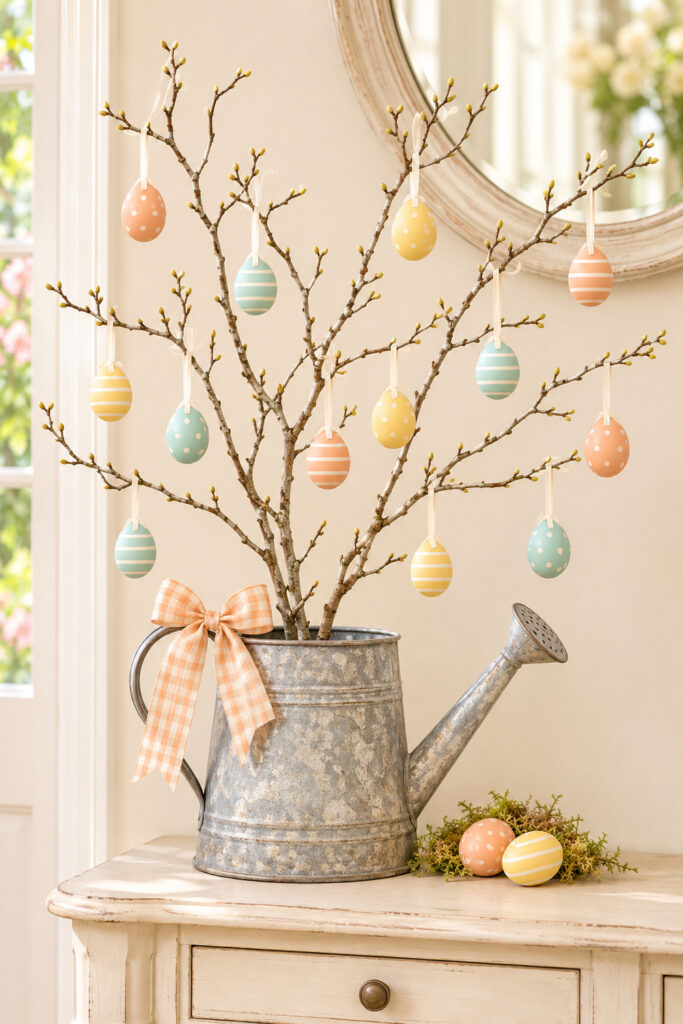
Before adding the base accents, look through the branches toward the wall. You should see open spaces as well as eggs. If the ornaments form a solid curtain, remove a few and let the branch outline become part of the decoration again.