*This post may contain affiliate links for which I earn commissions.*
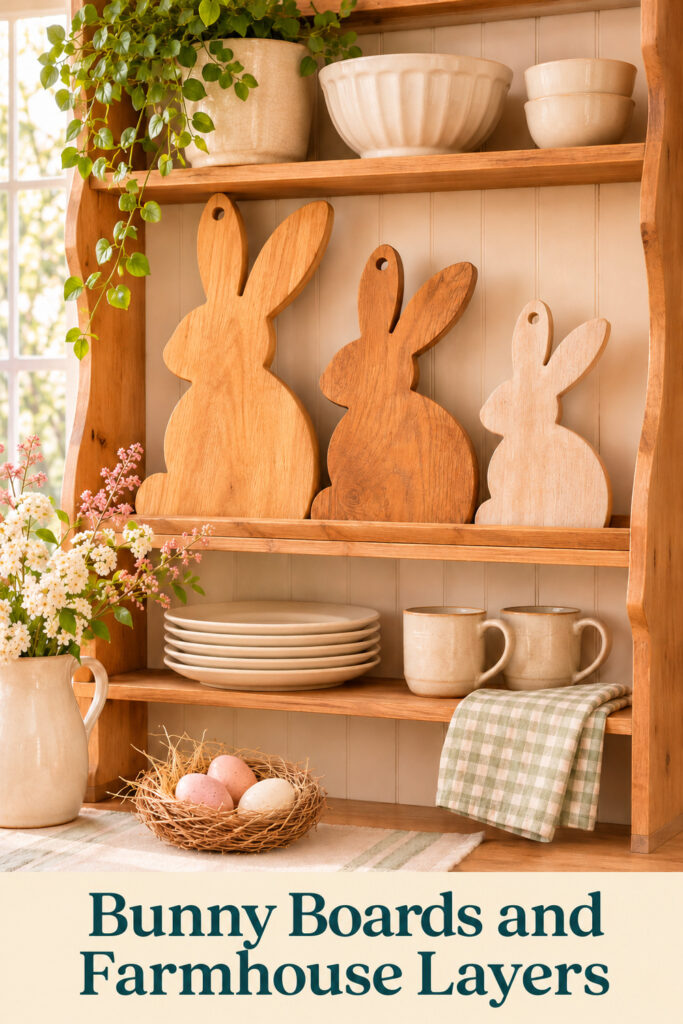
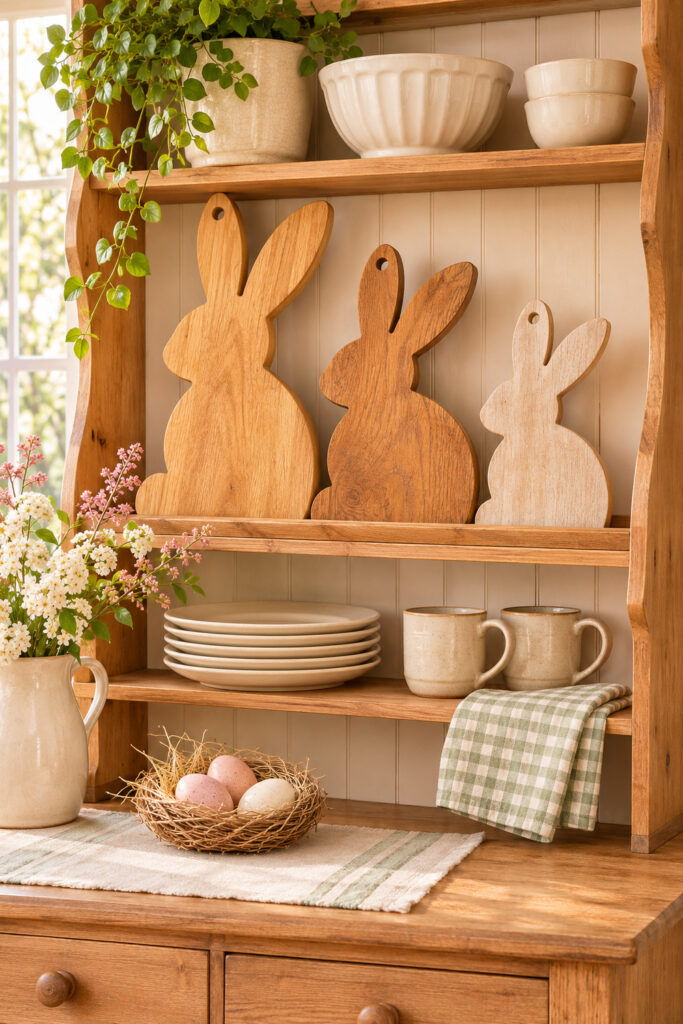
Wooden bunny silhouettes stand behind cream dishes on this farmhouse kitchen dresser. Their warm finishes vary, but the tall ears and seated outlines connect them as one Easter collection. A green checked towel and a small nest of pale eggs soften the shelves below.
The boards give the display a strong shape without needing a lot of painted detail. You could interpret them as decorative breadboard-style pieces, then layer them with the crockery you already use. The important part is keeping the rabbit outlines readable and the shelf arrangement properly supported.
This image was created with AI as decorating inspiration.
What Makes the Bunny Board Display Work
The boards occupy a clear area of the dresser instead of being scattered among many small objects. Their staggered heights make the ears easy to distinguish. The plain surfaces also let the wood grain become part of the decoration.
Cream plates and mugs provide a quieter layer underneath. They repeat the lighter backing of the dresser and separate the darker wood surfaces. The checked towel introduces pattern in one small area rather than adding it to every shelf.
The nest and decorative eggs reinforce Easter at counter height. They remain secondary to the rabbit shapes above. A few flowers and trailing greenery give the scene depth, but the main idea still works if you simplify those supporting pieces.
Find Bunny shaped wooden display boards
Browse current Amazon options that can help you recreate this look.
Browse Bunny shaped wooden display boards on Amazon →As an Amazon Associate I earn from qualifying purchases.
Key Pieces for a Farmhouse Easter Dresser
Decorative Bunny-Shaped Boards
Look for clear silhouettes with ears that remain recognizable from across the kitchen. Related outlines can work together without matching exactly. Compare the full height and width, including any handle or hanging hole, before deciding they will fit your shelf.
A Useful Range of Wood Tones
The inspiration combines light, medium, and pale washed finishes. That variety helps one rabbit stand apart from the next. Keep the colors within a related warm range if you want a quieter farmhouse effect. Strongly contrasting glossy paint would create a different kind of display.
Proper Shelf Supports
The boards need to sit securely in a suitable groove, stand, or other intended support. A lip on a dresser shelf may help, but it isn’t proof that any tall object will stay upright. Check the actual pieces and furniture rather than balancing them against loose plates.
Plain Cream Crockery
Ordinary plates and mugs provide a familiar kitchen layer. Choose a manageable quantity and leave access to items you use regularly. The dishes should not become the structural support for the decorative boards, even if their shapes overlap in the view from the front.
A Checked Tea Towel
The soft green checks connect the pale dishes with the spring greenery. Fold the towel so part of its pattern remains visible without a long tail dragging over working areas. A plain linen towel could provide the same soft contrast against the wooden shelf edges.
A Small Easter Accent at the Base
A low decorative nest and a few eggs connect the upper rabbit shapes to the counter. Keep the grouping contained and away from food preparation. You can use a shallow dish beneath it if loose material would otherwise spread across the surface.
Arrange the Boards Before Filling the Shelves
Clear a section of the dresser and test the boards by themselves. Begin with the largest one, then compare how the other outlines sit beside it. Their bodies can overlap slightly, but keep the ears and faces from disappearing behind neighboring shapes.
Check the height of the shelf above. The rabbit ears should have comfortable clearance rather than appearing wedged beneath it. If the fit is too tight, use fewer or smaller pieces. Lowering a shelf may be possible on some furniture, but only according to its intended adjustment system.
Look at the boards from the doorway and the main work area. A silhouette that reads well straight ahead may merge with another when viewed from one side. Move the objects along the shelf until their separate outlines remain useful from the usual approach.
Set each piece into its proper support before adding dishes. Leave enough shelf depth for the full base, and avoid leaning boards at a steep angle to force them below an overhead shelf. The arrangement should remain stable when nearby cups or plates are lifted away.
Add the crockery in a lower or separate zone. A short plate stack and a pair of mugs can suggest an everyday kitchen without filling the whole dresser. Keep the items you reach for most in the easiest positions, with the decorative pieces behind or above them.
Add Soft Layers Without Hiding the Wood
Fold the towel over a shelf edge where it won’t cover a bunny’s lower outline or catch on a drawer. Its pattern can provide enough contrast by itself. Adding a different printed cloth to every shelf would make the quiet wood shapes harder to notice.
Place the nest low on the dresser counter. Keep its footprint small enough that the surface retains some everyday use. A few pale eggs repeat the softness of the cream crockery without introducing another strong color block.
Flowers can frame one side of the display, but check their height against the boards. A tall bouquet directly in front of the rabbits may hide the feature that made you like the idea. A shorter vessel or a position farther to the side may work better.
For a narrow dresser, use one main bunny board and one smaller companion. Keep the dishes simple and let the wood contrast provide the layering. The effect comes from recognizable silhouettes placed among familiar kitchen pieces, not from owning a large collection.
Treat decorative boards according to their actual intended use. A breadboard-like shape doesn’t establish that the material or finish is suitable for preparing or serving food. If you want a dual-purpose piece, check that information before using it beyond decoration.
You can also keep some wood pieces out after Easter if their shapes suit your preferences. The nest and eggs are easy to remove, while ordinary crockery and towels can return to their usual arrangement. Plan storage so narrow ears aren’t pressed beneath heavier objects.
Shop Similar Pieces
Look for Bunny-Shaped Wooden Display Boards
Compare silhouette, thickness, overall size, and the way the piece is intended to stand or hang. A flat decoration may need a separate suitable support. Check whether the finish is decorative only rather than assuming it is a kitchen preparation board.
Shop Similar Plate or Board Display Stands
Match the support to the board’s dimensions and weight. A stand designed for a small plate may not hold a tall wooden rabbit securely. Confirm that the support fits fully within the shelf depth.
Add Cream Stoneware Dishes
Use existing everyday pieces where possible. If adding something, look for simple shapes that won’t compete with the boards. A shared pale glaze can connect different mugs and plates without requiring a matching set.
Look for Green Checked Kitchen Towels
Choose a check size that reads as a soft supporting pattern. Consider the folded dimensions and care instructions as well as the color. The towel should remain practical enough to use when the seasonal display comes down.
Final Styling Tip
Remove a few supporting objects and check whether all the rabbit ears become easier to see. Keep the version that shows the silhouettes clearly while leaving the dresser useful for the dishes it normally holds.