*This post may contain affiliate links for which I earn commissions.*
Small silver flower cups make this Christmas centerpiece feel generous without spreading bouquets across the whole table. Their low white flowers gather on a round brass tray, with slim candlesticks rising between them. Dark green napkins repeat the foliage while the champagne linen keeps the setting light.
The useful idea is a collection of modest vessels treated as one centerpiece. You can use fewer cups on a smaller table and keep the tray as the boundary. Start with comfortable place settings, then build the flowers within the center space that remains. The full effect comes from close grouping, not from one oversized vase.
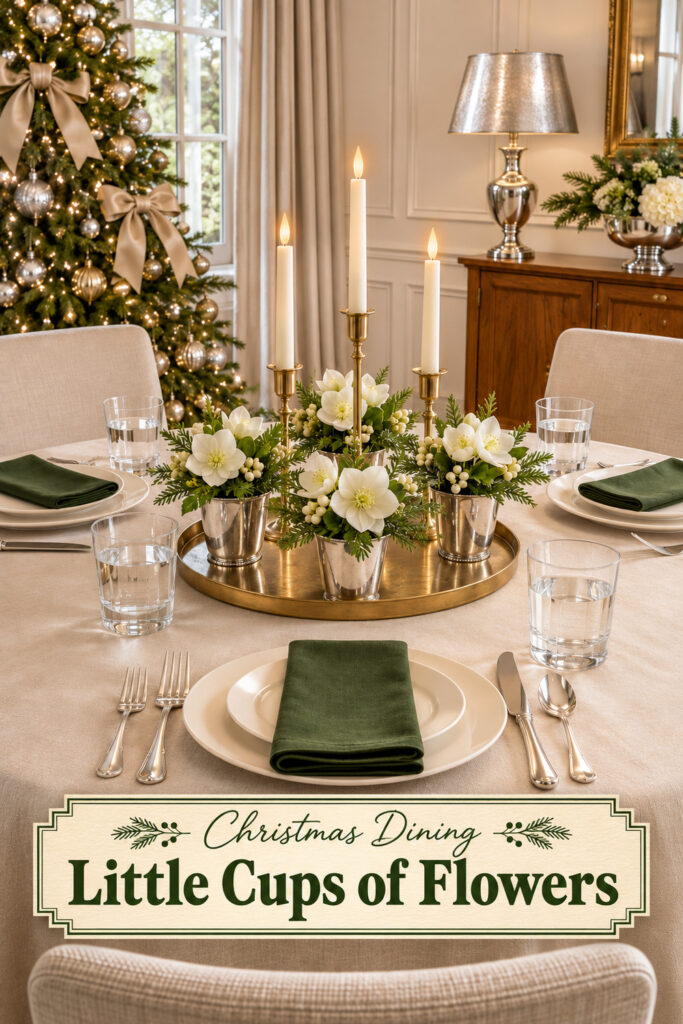
This image was generated with AI as decorating inspiration. Similar vessels and suitable decorative lighting can recreate the overall effect.
Let the Tray Hold the Composition Together
The low brass tray connects the separate silver cups. Its warm rim remains visible around the flowers, making the arrangement read as a compact group rather than scattered vases. The different metal colors also provide contrast without adding another strong fabric shade.
Choose a tray that fits your table after the places are set. Check its usable inside area, including any handles or raised edge. The cups need stable resting spots. A decorative rim is helpful for defining the group, but it shouldn’t force a vase to tilt or sit partly outside the base.
Choose Small Vessels with Similar Proportions
The silver cups are short enough for their flowers to sit low. A slightly rounded body gives each little arrangement some fullness, while the narrow bases leave spaces for stems and candlesticks to be arranged around them.
Look at the collection together before adding flowers. Similar heights make a calm base, even when small details differ. One much taller cup may work better elsewhere rather than being forced into the middle.
For fresh flowers, check that the vessels hold water safely. A decorative metal cup may need a suitable liner or small inner container. Fill the arrangements away from the dining table and protect any surface that could be marked by moisture.
Faux flowers are another practical option, especially when the centerpiece will remain in place for several days. Use an appropriate discreet support inside the cups so stems don’t tip. Keep the same low scale and flower direction whichever material you choose. The image’s soft floral shapes matter more than reproducing an exact variety in a vessel that won’t hold it well.
Build Each Posy as Part of the Group
A posy is simply a small flower arrangement. Here, pale Christmas rose shapes face outward, with evergreen tips filling around them. White berries and smaller details add texture without making every cup a different color story.
Start with one main flower face in each cup. Add a little greenery around it, then compare the vessels side by side. Their finished width can vary slightly, but none should overwhelm its neighbors or hide the whole cup beneath a very broad bouquet.
Turn the flowers toward the different seats. A round table is viewed from all sides, so the centerpiece needs to look finished beyond the camera-facing edge. Check for bare backs and stems that stick out toward a guest’s glass.
Keep the foliage low enough that the silver vessels remain visible. If every branch reaches across the tray rim, the compact arrangement will begin to lose its shape. Trim or reposition a few stems before widening the group. The tray is a useful boundary, not an invitation to keep adding flowers until it disappears.
Fit the Candlesticks into the Open Spaces
The brass candlesticks add slim vertical lines above the low flowers. Their related finish connects to the tray, while their different heights keep the upper outline from looking flat. The narrow stems leave more open view than another large vase would.
Use stable holders with enough flat base area to sit securely. Arrange them before making the flowers too full, and check that a cup can’t nudge a candlestick when someone moves the tray.
Flameless tapers are a practical choice beside greenery and cloth. Choose lights that fit the holders properly and follow their directions. Keep access to the switches so you don’t need to lift full flower cups just to turn the display on.
Check sight lines from every seat. Tall narrow objects can still interrupt conversation when they line up directly with someone’s face. Move a holder or reduce the height rather than assuming slender always means unobtrusive. A smaller group of lights can give the same warm effect if the actual table needs less in its center.
Keep the Place Settings Simple Around It
Ivory plates, silver utensils and clear glasses keep the outer table calm. Green napkins repeat the foliage and provide a dark shape against the champagne cloth. Their plain folded form leaves the centerpiece as the main decorative detail.
Use your own plate size when planning the arrangement. A large charger can take more space than the picture suggests, so set out a complete place before choosing the tray diameter. Allow room for hands and the ordinary movements of dinner.
Fold the napkins consistently and face each setting toward its chair. Keep glasses clear of projecting leaves and leave enough distance from the tray rim that someone can lift a glass without brushing the flowers.
The metallic detail can remain mostly in the center. You don’t need a gold ring, charger and place-card holder at every seat to justify the brass candlesticks. Repeating one cooler finish in the flatware helps the silver cups belong to the table while keeping the total number of small accessories manageable.
Link the Centerpiece to the Room
The Christmas tree carries the same metal colors and pale ribbon in the background. A silver lamp and light flower arrangement on the cabinet repeat the softer glow. These supporting areas make the dining room feel finished without copying the tabletop group exactly.
Use what is already in the room. A small ribbon change or a few matching ornaments may be enough to connect the tree to the dinner setting. The low cup collection can be the new feature while the rest stays familiar.
If your walls or curtains are darker, keep the pale flowers and linen as the light area. If the room is already cream, the deep green napkins and foliage will provide contrast. The arrangement can fit several classic interiors because its main relationships are simple and visible.
Scale the Group for the Meal
Three cups on a modest round tray can work for a small table. Keep the flowers low and use one or two appropriately placed lights if that leaves better sight lines. Don’t reduce the space for plates just to preserve the number of vessels in the inspiration.
For shared serving dishes, move the full tray to a sideboard and keep one small posy on the table. Check the loaded tray’s weight before moving it, and carry pieces separately when that is more sensible. A grouped display doesn’t mean it should always be lifted as one heavy object.
Choose Similar Pieces by Size and Use
Start with the tray and cups. Add lighting once their stable placement and finished flower heights are clear.
Look for Small Silver-Look Posy Cups
Check water suitability or plan compatible liners. Similar proportions will make the group easier to arrange.
Shop Similar Low Round Brass Trays
Choose a level base and enough interior space for the actual cup footprints. A restrained rim lets the vessels remain visible.
Look for Secure Flameless Taper Holders
Check the fit of the lights and keep the controls reachable. Slender shapes will preserve more open space above the flowers.
Sit at Each Place Before Finishing
Look across the table, lift a glass and check the reach to a serving dish. Move any flower or light that blocks the view or catches a sleeve. Wipe moisture from the tray and remove loose leaves before dinner.
Final Styling Tip
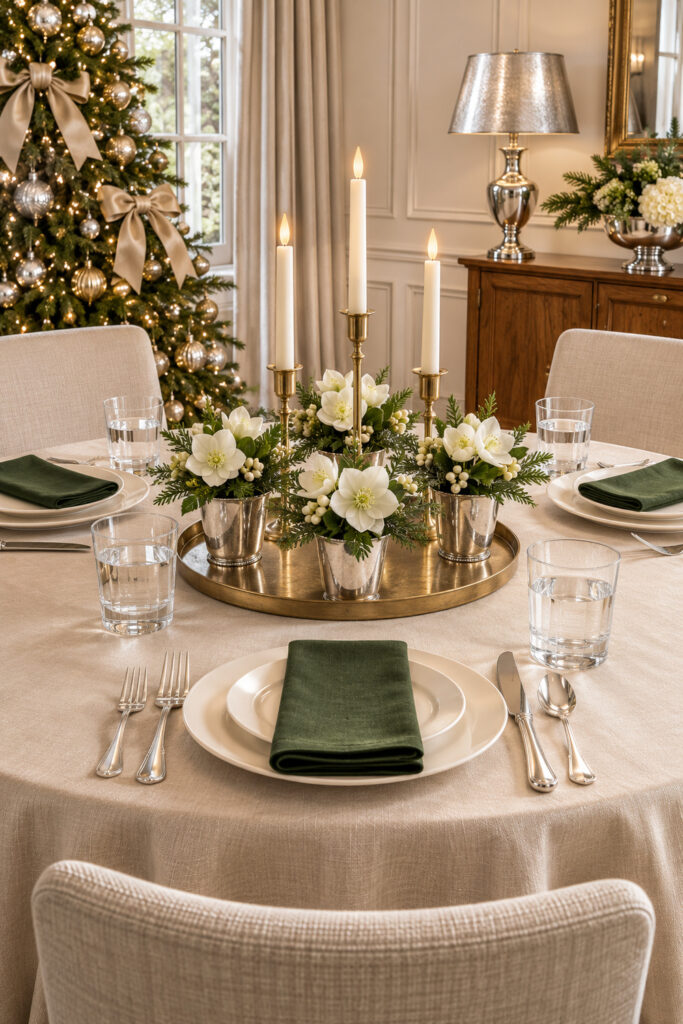
Let a narrow brass edge show around the silver cups. That visible boundary makes several small arrangements feel like one considered Christmas centerpiece.