*This post may contain affiliate links for which I earn commissions.*
The quilts make this farmhouse loft feel ready for Christmas before you notice the smaller decorations. Red-and-cream patchwork covers the upper and lower parts of a wooden blanket ladder, with a blue knitted throw crossing the middle. A cedar swag, checked bow, and a few red ornaments finish the top without hiding the fabrics below.
The sloping rafters and pointed window give the arrangement a particular setting, but the textile idea can work against an ordinary wall. A nearby cream chair, wooden trunk, patterned rug, and framed quilt design help the display belong to the room. You can keep your own furniture and start by giving a few favorite blankets somewhere visible to hang.
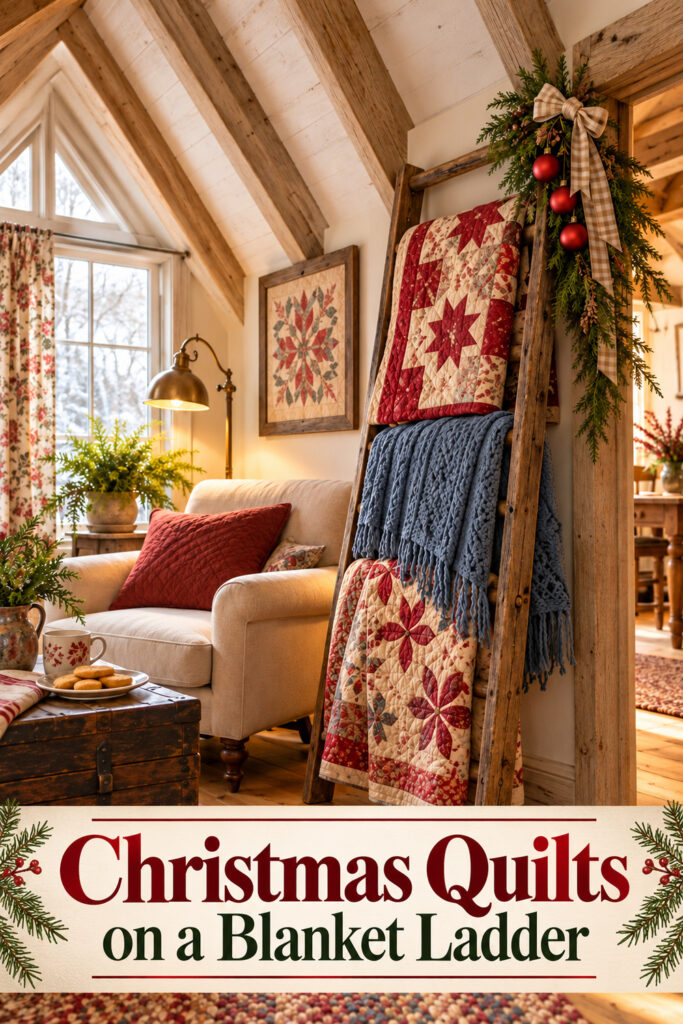
The inspiration image was created with AI and shows a decorating concept you can adapt with similar pieces.
What Makes This Quilt Display Work
The ladder turns fabric into a vertical arrangement. Instead of seeing only the top folded blanket in a stack, you can follow separate red patterns and a broad blue texture from top to bottom. The wooden rails remain visible at the edges, giving the soft layers a clear outline. That contrast between structure and fabric is worth preserving.
The red-and-cream quilts bring the strongest pattern, while the knitted blue throw creates a calmer band between them. It separates the patchwork areas without looking unrelated to the room. If your blankets have different colors, look for the same relationship: two pieces with a shared color and one quieter textile between or beside them.
The greenery sits high, where it follows the ladder’s vertical shape. It doesn’t spread across every rung or cover the quilt designs. That restraint helps an everyday blanket display become seasonal while keeping the textiles as the subject. A small amount of cedar and ribbon may be enough once the red fabric is already present.
Find Decorative Blanket Ladders
Browse current Amazon options that can help you recreate this look.
Browse Decorative Blanket Ladders on Amazon →As an Amazon Associate I earn from qualifying purchases.
Key Pieces for the Farmhouse Loft Look
A Broad Decorative Blanket Ladder
Choose a ladder intended to hold textiles and check its load and placement instructions. A wider design gives folded quilts room to show their patterns without becoming thick bundles. Smooth rungs are important, particularly with knitted throws or older fabric that can snag. Decorative weathering should not mean rough edges against the blankets.
Plan where the feet will stand as well as where the top will touch the wall. The leaning angle uses floor space, and a nearby rug can change how securely the base sits. Follow the recommended restraint or mounting method. Keep the ladder clear of the doorway and treat it as display furniture rather than something to climb.
Red and Cream Patchwork Quilts
Look for pieces whose patterns you enjoy seeing in a partial fold. A star or geometric block can read clearly when only part of the quilt hangs over a rung. You don’t need two matching quilts. Repeating red and cream across different patterns can suggest the same layered collection while making use of things you already own.
If a textile is old, fragile, or valuable, consider whether hanging is appropriate for its condition. A lighter contemporary blanket may be easier to display without strain. Keep fabrics away from strong prolonged sunlight and check them periodically for dust or stress at the folds. The inspiration offers a decorating arrangement, not a preservation method for heirloom quilts.
A Muted Blue Knitted Throw
The blue throw changes both color and texture. Its broader plain area gives the red patchwork room to stand out, while the knit adds detail when you’re closer to the ladder. Choose a soft fold that leaves the lower quilt visible. If the throw has fringe, let it hang clear of the next rung rather than bunching it into a thick ridge.
Cedar a Checked Bow and Red Ornaments
A short cedar swag near the top gives the ladder a Christmas outline. Attach it independently of delicate fabric, using a suitable removable method that won’t scratch the wood or pull the textiles. Keep the heaviest part supported near the rail rather than dangling it from a loose branch. A checked bow can conceal its own binding.
The red ornaments repeat the quilts’ color in a different material. Use lightweight pieces and secure each one so it doesn’t roll into a fold or drop behind the ladder. A few are enough. If the upper quilt already has a strong red design, the greenery and bow alone may give you all the seasonal detail you need.
A Cream Chair and Wooden Trunk
The chair keeps the ladder from feeling like an isolated storage object. Its pale upholstery provides a quiet area beside the patchwork, and the rust cushion adds a smaller warm note. An existing chair can do the same job even if its shape differs. Leave room to sit down without brushing the textiles or tipping the ladder.
Arranging the Layers at Home
Start with the ladder bare and view it from the doorway. The image places it beside the chair, where the sloping wall gives its top a clear background. Your wall may be straight, but the principle is similar: keep the ladder’s outline visible and avoid a position where another tall object hides one of the rails. Check the placement before loading it.
Fold the largest patterned quilt first. Decide which part of its design you want to show, then hang it so the weight is spread over the rung. Don’t force a bulky quilt onto a narrow support. If it hangs too low, try a different fold or use fewer textiles rather than cramming another layer beneath it.
Add the blue throw and then the lower quilt, adjusting the lengths until each has its own visible band. Step back after every addition. A small change in the blue fold can reveal a useful star block below or make the lower red fabric disappear completely. This is where arranging your actual textiles matters more than copying the picture’s exact proportions.
Bring in the cedar and bow once the folds are settled. Keep greenery clear of areas where someone will grab a blanket, and make sure removing a textile won’t pull an ornament down. If the blankets will be used frequently, a separately mounted swag above the ladder can be easier to manage than greenery tied across its working rungs.
Finish with the surroundings already in the room. A fern by the window, a patterned rug, or one framed textile print can echo the loft’s details without duplicating all of them. Keep the walking space between chair and ladder comfortable. The room should still feel ready to use after the Christmas layers have been added.
Shop Similar Pieces
Look for Textile-Suitable Blanket Ladders
Compare width, rung spacing, weight guidance, and wall restraint instructions. Measure with your folded blankets rather than choosing solely by ladder height. A few broad visible layers are more useful than many tightly crowded rungs.
Shop Similar Patchwork and Blue Throws
Look for a clear relationship between patterns and plain areas. Red-and-cream geometric quilts can sit beside a quiet blue knit without being part of one set. Use the pieces you already have before deciding another blanket is necessary.
Add Small Removable Cedar Accents
Choose lightweight greenery and ribbon that can sit near the top without dragging across the quilt. Keep decorations separate from fragile fabrics. The ladder should remain understandable as a place for blankets once the Christmas accents come off.
Final Styling Tip
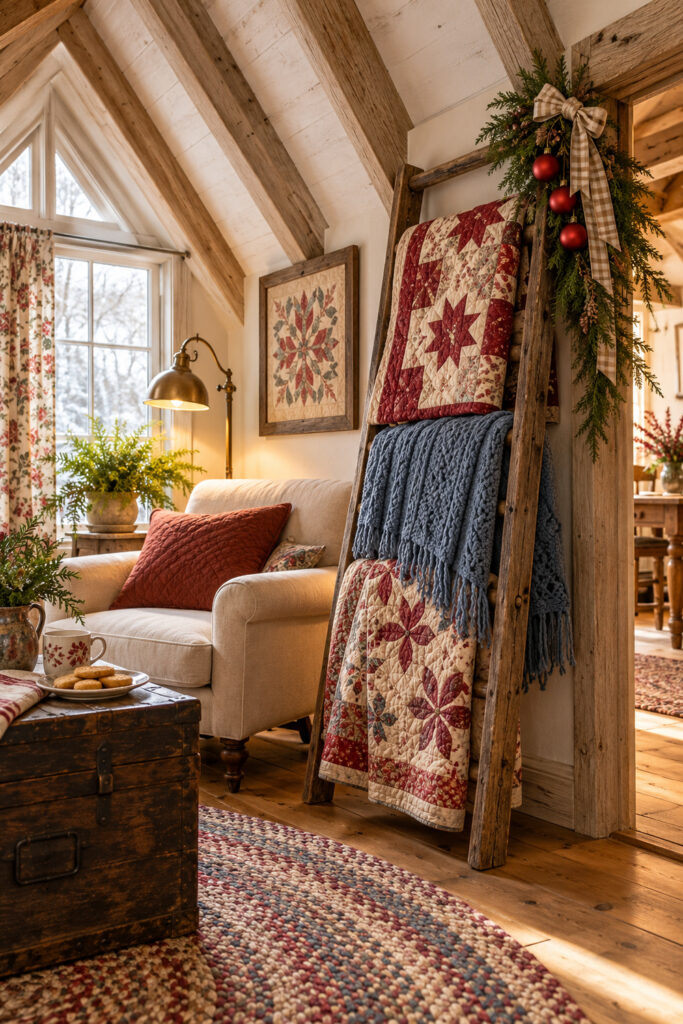
Leave a strip of the wooden rails showing on both sides of the textiles. That simple frame helps the blue throw and red patchwork read as separate layers instead of one large folded bundle.