*This post may contain affiliate links for which I earn commissions.*
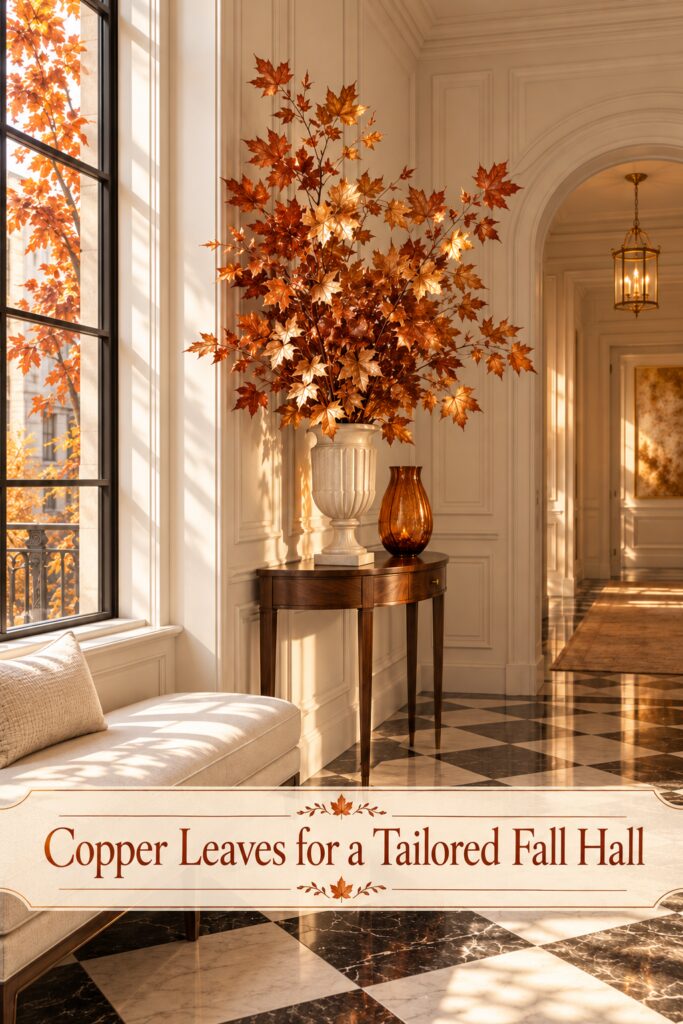
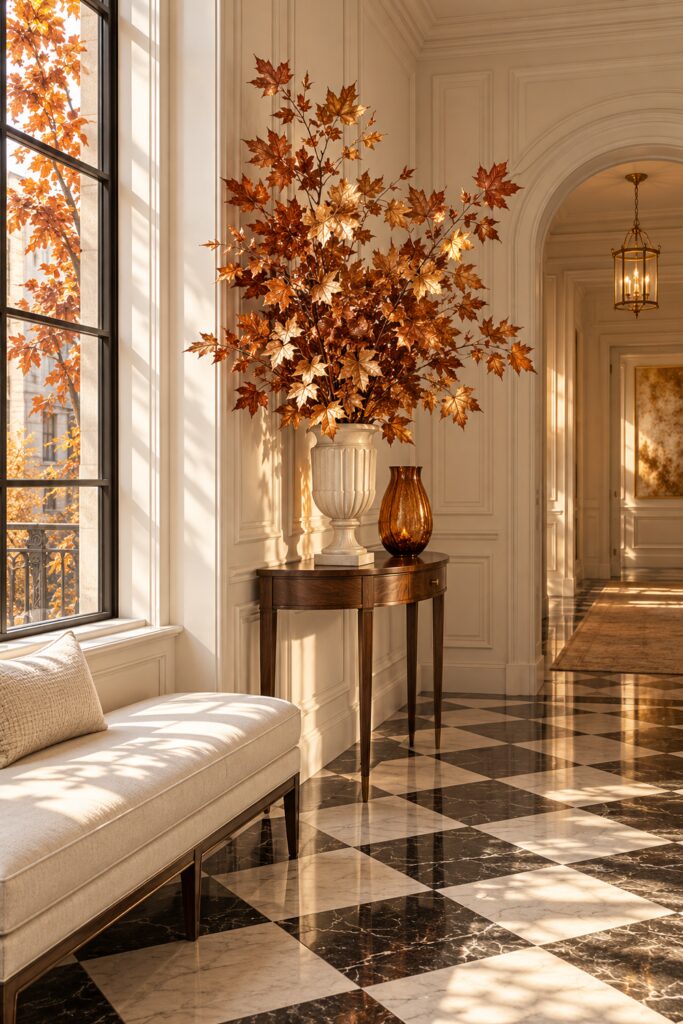
A tall ivory urn filled with copper toned maple branches gives this sunlit hallway a strong fall focal point. A narrow dark console, small amber vase, and pale upholstered bench keep the setting tailored around that generous arrangement.
The appeal comes from one substantial seasonal feature placed where the light can reveal its leaf shapes. You can adapt the idea to a modest hallway or landing by choosing the right branch height and allowing the surrounding furniture to remain simple.
This inspiration image was created with AI. Use similar pieces and practical styling to recreate the overall effect in your home.
Why a Single Leaf Arrangement Has Such Presence
The copper foliage spreads above the console in an open, branching shape. Individual leaves catch the window light, so the arrangement offers both a recognizable autumn color and detailed texture. Its height makes it visible along the length of the hall.
The ivory urn provides a pale transition between warm leaves and dark wood. A smaller amber vessel repeats the autumn tone at a lower level. The two objects have different roles: the urn creates the focal point, and the amber glass supports it without needing its own large bouquet.
Pale paneling and a checkerboard floor give the room a formal character. Those architectural details are useful context, but they are not necessary to recreate the arrangement. The transferable design is a tall leaf canopy above a restrained surface, with light and dark materials clearly separated.
Find copper maple leaf stems
Browse current Amazon options that can help you recreate this look.
Browse copper maple leaf stems on Amazon →As an Amazon Associate I earn from qualifying purchases.
Choose the Pieces by Proportion
Copper Toned Maple Branches
Look for branches with several visible leaf clusters and enough exposed stems to create space between them. A dense bush shape will feel different from the airy canopy in the image. Flexible stems let you spread the leaves rather than stacking them all at the same height.
Copper does not have to mean uniformly shiny foil. A mix of rust, bronze, and warm metallic surfaces can create a more varied effect. Keep the maple silhouette recognizable and choose a main color family before adding any contrasting leaves.
An Ivory Urn with a Defined Base
The urn has enough visual weight to support the tall branches. Look for a stable container with a neck or opening suited to the stems. A fluted or softly ridged surface can add texture without introducing another decorative pattern.
The arrangement should not become top heavy. A vessel that is too light or narrow may need a secure internal support designed for floral work. If you use fresh branches, select a watertight insert and protect the furniture beneath it from drips and condensation.
A Narrow Walnut Toned Console
The console’s shallow depth makes it useful in a hallway, where furniture can quickly reduce the passage. A dark wood finish gives the ivory urn a clear outline and relates to the darker squares in the floor.
Use an existing shallow table if its height and footprint suit the space. The exact wood species is less important than the contrast. Avoid placing a wide cabinet in a narrow route simply to reproduce the image; the leafy silhouette can work on a smaller surface.
A Small Amber Glass Vase
Amber glass gives the arrangement a low supporting shape with a related warm color. Its transparency contrasts with the solid urn and the opaque leaves. The image uses it as a separate object, so it can remain empty if that looks balanced on your console.
Choose a vase that is noticeably smaller than the urn. Similar sized vessels would compete and could turn the display into a pair of arrangements. A rounded amber shape also softens the straight furniture edges without adding another tall element.
Pale Upholstery and a Quiet Background
The bench beneath the window provides a soft, horizontal counterpoint to the upright branches. If a seat already fits your hallway, a cream cushion or neutral throw can connect it visually to the urn. Keep any fabric arranged neatly and away from the main walking route.
You do not need to add a bench where there is no suitable space. A pale wall or existing window trim can perform the same color balancing role. The useful principle is to surround the copper leaves with enough quiet material that their shape remains the main feature.
Shape the Branches Before Final Placement
Lay your stems on a work surface and identify which ones have the most attractive forks. Reserve those for the outer edges of the arrangement. Shorter, fuller stems can fill the middle, while a taller branch establishes the upper point.
Place the central stems first, then add branches outward in slightly different directions. Avoid forming a perfectly round ball of foliage. The image’s branches create an irregular canopy, with some leaves reaching farther sideways and others standing above the main cluster.
Rotate the urn as you work, checking that the stems are supported and that no single branch pulls the vessel off balance. Adjust the leaves individually where possible. A few faces can catch the light directly while others show their edges, giving the copper color more depth.
When the arrangement is on the console, inspect it from both ends of the hallway. A branch that looks attractive from the front may extend into the passage when viewed from the side. Pull it back or turn it upward so the decoration remains comfortable to walk past.
Use the Window Light Thoughtfully
The sunlight in the image makes the copper foliage particularly noticeable. At home, place the arrangement where ordinary daylight reaches some of the leaves. It does not need to sit directly against the glass; a little separation can help show the branch silhouette.
Check the surface at different times of day before finalizing the arrangement. Strong glare can make bright metallic leaves appear washed out, while a dark corner may hide the smaller shapes. Slightly rotating the urn is often enough to improve how the light falls across the canopy.
In the evening, an existing wall or ceiling light can illuminate the foliage without adding another object to the console. Keep the main surface restrained. A new lamp squeezed beside the urn may reduce the clear separation between the tall canopy and its smaller amber companion.
Adapt the Scale to Your Hallway
For a short console, use fewer branches but retain a taller central line and spreading outer stems. Choose a smaller urn with a stable base and reduce the amber vase accordingly. The relationship between the objects should remain visible even as the whole arrangement becomes more compact.
If the hallway ceiling is lower, let the canopy widen modestly instead of pushing stems upward. Leave a comfortable visual gap beneath nearby light fixtures and door trim. The branches should feel integrated into the architecture, with their reach determined by the room rather than by the inspiration’s proportions.
Shop Similar Pieces
Look for Copper Maple Leaf Stems
Compare branch length and the spacing between leaves. Flexible, separately adjustable branches are useful for an airy arrangement. Check whether the stems need trimming and choose tools suited to any internal wire before shortening them.
Shop Similar Ivory Urns
Look for a proportion that feels grounded under a tall canopy. Measure the opening and overall footprint, then compare those dimensions with your console. A fluted urn can provide the formal detail without requiring an ornate container.
Add a Small Amber Vessel
Choose amber glass that repeats the copper warmth without matching it exactly. A simple curved shape gives the lower part of the display its own texture. Keep it small enough that the leaf arrangement remains the reason the console catches your eye.
Final Styling Tip
Before adding more fall decorations, adjust the branches until their outline feels balanced. One expressive canopy and a quiet amber companion can give the hallway all the seasonal detail it needs.