*This post may contain affiliate links for which I earn commissions.*
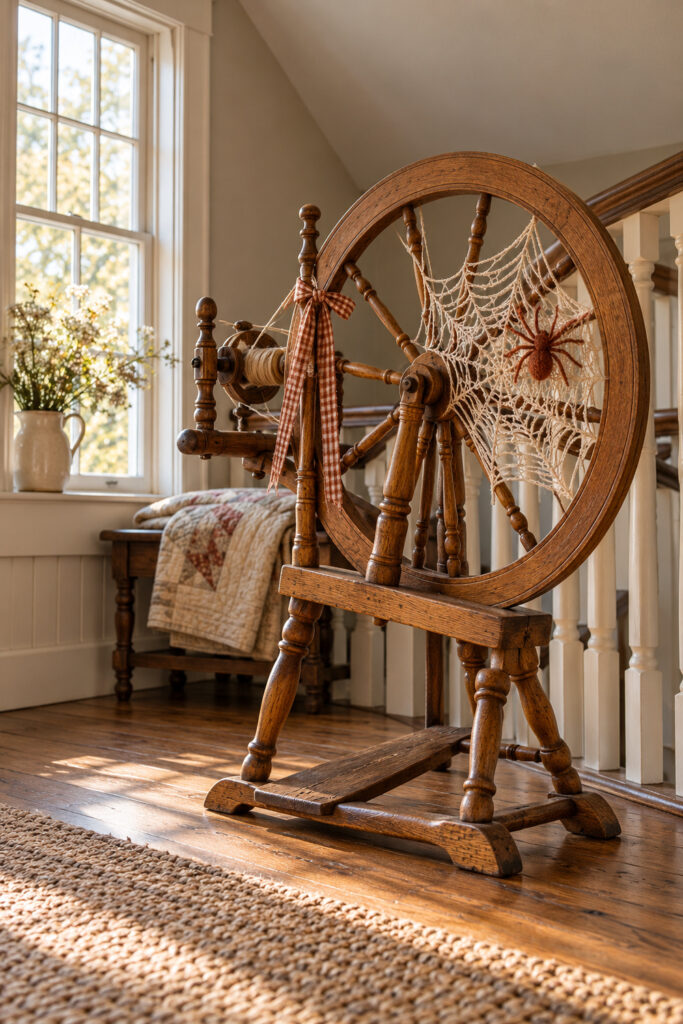
A spinning wheel already has the shape for a Halloween web. In this inspiration, ivory lace stretches across the wooden rim, a rust-colored yarn spider sits to one side, and a long gingham bow brings the colors together. The worn wood stays visible, which is a large part of the appeal.
You can borrow that combination even if you don’t own an antique wheel. Start with a circular wooden piece, keep the web light and open, and let the surrounding room look like a room you actually use.
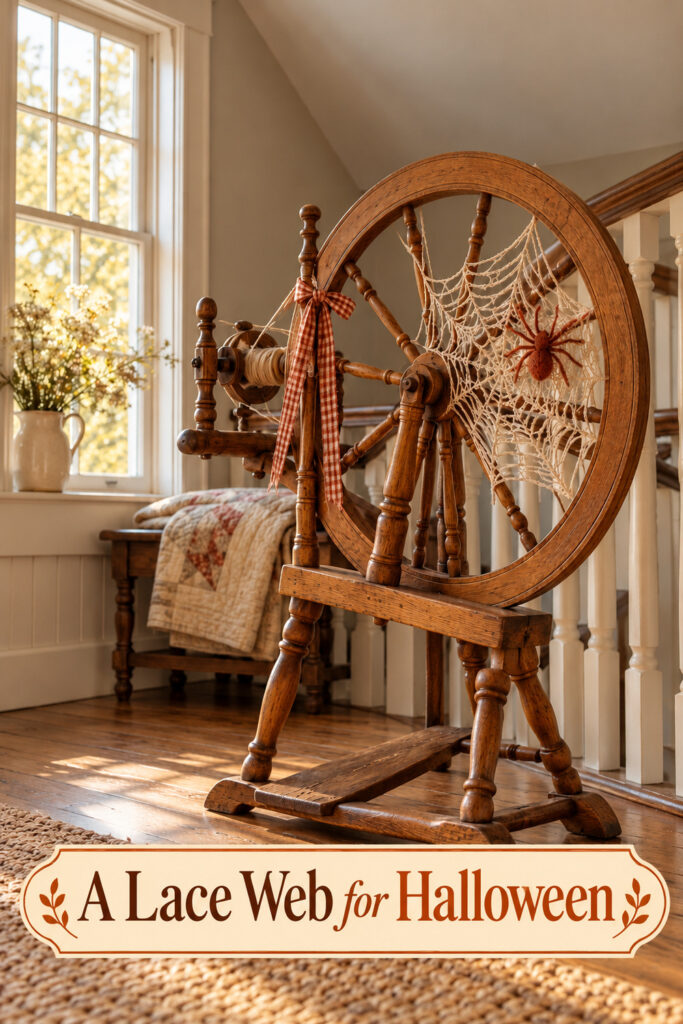
This inspiration image was created with AI and offers decorating ideas using similar pieces.
What Makes This Lace Web Look Work
The pale web is easy to see against the darker spokes and the space behind them. Its uneven strands soften the wheel’s sturdy construction without hiding the circular outline. A solid fabric panel would produce a different effect, covering the parts that make the old tool interesting.
Rust is used sparingly. The spider and checked ribbon add enough autumn color to identify the seasonal arrangement, while ivory ties the web to the nearby quilt, painted trim, and pitcher. That limited palette lets the wood grain remain a feature instead of becoming background clutter.
Daylight also matters here. Light entering from the left catches individual strands and the edges of the turned supports. If you recreate this in a dim corner, a delicate web can disappear. Give it a pale background or gentle nearby light before adding more decorations to compensate.
Key Pieces for the Spinning Wheel Display
A Wooden Wheel or Circular Frame
An existing decorative spinning wheel is the closest starting point, but it should be stable and suitable for temporary decoration. Check the surface before attaching anything. Old finishes can be delicate, and adhesive that seems harmless on newer wood may leave a mark.
For a smaller version, use a wooden embroidery hoop on a tabletop stand or a freestanding circular frame. Keep enough open space within the circle to show the lace. You are borrowing the wheel’s round shape and warm material, so you don’t need to imitate the treadle and spindle with unrelated pieces.
Find wooden display hoops
Browse current Amazon options that can help you recreate this look.
Browse wooden display hoops on Amazon →As an Amazon Associate I earn from qualifying purchases.
An Open Ivory Web
Look for a lace web, crocheted web decoration, or an open crochet motif with a clear center and radiating sections. A densely patterned doily can work, although it will read more as lace than as a spiderweb. Spread it against the frame before deciding whether the pattern is clear enough.
Use soft ties through suitable openings in a decorative frame. On an antique, avoid stretching the textile hard against fragile spokes or winding thread around moving parts. The goal is a lightly supported web, with attachment points hidden behind the rim where that can be done without damaging the piece.
A Rust Textile Spider
The spider in the inspiration has a soft, yarn-like surface and long legs that spread across the web. A small fabric or yarn spider gives a similar contrast. Keep its body large enough to recognize, but leave several visible spaces between its legs so the lace pattern isn’t swallowed up.
A flat felt spider is a useful substitute when the web cannot support much weight. Choose a muted orange or rust rather than a very shiny finish if you want the same textile feeling. Place it off center, where it looks connected to the web rather than balanced on the wheel’s hub.
Gingham Ribbon with Long Tails
The checked bow echoes the spider’s color and adds one strong vertical line. Tie it loosely at first and check the tails from the front. They should hang beside the web rather than cut across its most interesting section.
A cotton gingham strip will drape softly. Wired ribbon holds fuller loops, but check that the wire ends are tucked away from the wood and fabric. If your frame is small, shorten the tails before reducing the bow to a tiny knot. The relaxed ribbon is part of what makes this Halloween idea feel at home with ordinary furnishings.
A Quilt and a Simple Pitcher
The nearby quilt supports the handmade theme without adding another Halloween motif. Use a folded quilt on a bench or a small textile on a neighboring chair if that furniture already belongs in the space. Choose faded red, cream, or brown details to connect it to the ribbon.
The pale pitcher and fine stems near the window add height away from the wheel. They are supporting pieces, so keep their shapes quieter than the web. A plain crock from another room can do the same job. There is no need to build a second elaborate arrangement beside the first.
How to Arrange It at Home
Begin with the position of the wooden piece. The inspiration places it near a staircase, but a real staircase and landing must remain clear. Use a roomy corner beside a wall, with the entire base supported on level flooring and the moving mechanism kept out of everyday contact.
Look through the circle before adding the web. A busy bookcase or strongly patterned curtain behind it can make the lace hard to read. Move the piece a little to one side or simplify the immediate background. This is usually more effective than doubling the amount of lace.
Attach the web, then add the spider. Step back to the distance from which someone will first see the display. If the legs blend into the spokes, shift the spider toward a lighter section of the web. Small changes here have more effect than adding several extra spiders.
Tie on the bow last so you can place its tails around the finished web. Leave a little space between the ribbon and the spindle. If the tails twist around projecting parts, shorten them or move the bow to a safer attachment point on a substitute frame.
Keep the floor around the base simple. The woven rug in the image gives the wood another texture to sit against, but a rug is optional. If you use one, make sure the base stays level and that edges don’t curl into the walking route. The display should look settled rather than perched.
For a shelf-sized arrangement, reduce everything together. A small hoop, one lace motif, one fabric spider, and a short gingham bow preserve the important relationships. Setting that version near a folded quilt can suggest the larger scene without taking over a corner of your home.
Shop Similar Pieces
Look for Wooden Display Hoops
Choose a circle with enough depth or a suitable stand to stay upright. Inspect the joining point and support before hanging any textile from it. A decorative hoop is a substitute for the shape, not a working spinning wheel.
Shop Similar Lace Webs and Textile Spiders
Compare the open spaces in the lace with the size of your frame. Choose the spider after that decision so its legs fit within the web and remain distinct from the wooden supports.
Add Rust Gingham Ribbon
Match the ribbon to the spider rather than every red detail in a quilt. Slightly different shades can work together when the cream checks and ivory web keep the overall palette connected.
Final Styling Tip
Keep one clear stretch of lace visible around the spider. That open area is what lets the Halloween idea register before the eye starts enjoying the old wood, checks, and quilted layers.