*This post may contain affiliate links for which I earn commissions.*
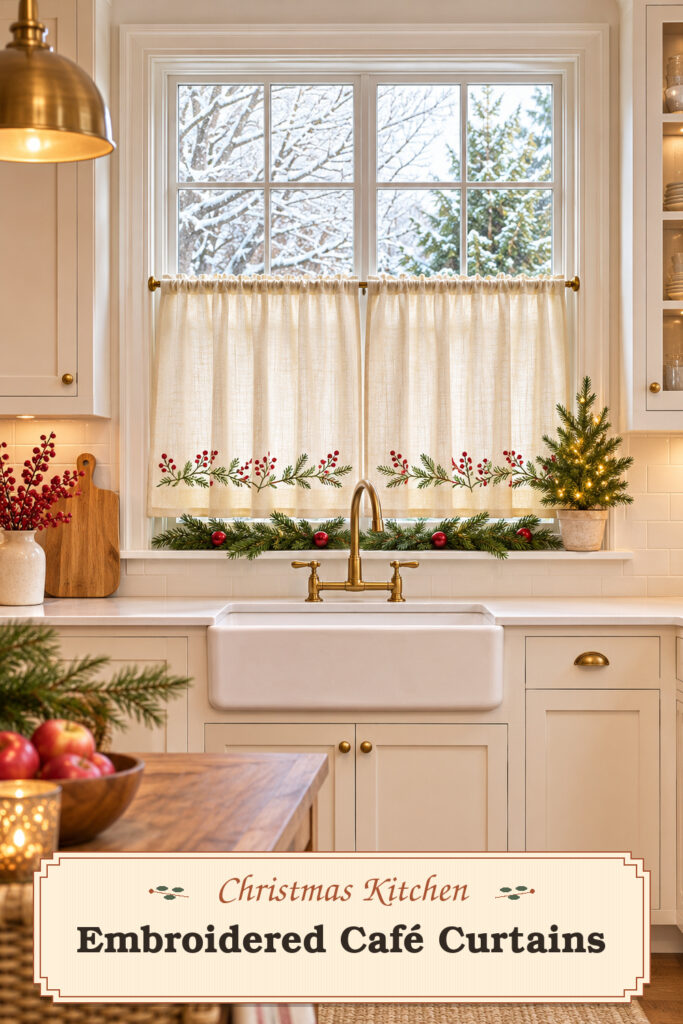
Tiny embroidered berries make this kitchen window feel ready for Christmas. The ivory curtains cover the lower half of the glass, leaving daylight free to come through the top. A narrow fir swag carries the same greens and reds down to the sill. The sink and work surface stay clear, so the window can look dressed while the kitchen is still in use.
This inspiration image was created with AI.
Give the window a soft lower layer
A café curtain hangs from a rod partway down a window. Here, two panels sit on a slim brass rod, with a narrow embroidered band near the bottom. The open glass above keeps the room bright. The lower fabric gives the sink a softer backdrop and makes the thread colors easy to see from the counter.
The small berry pattern makes a link to the greenery. Dark leaves and red dots are visible against the ivory without filling the whole curtain. A narrow evergreen piece below gives the window a deeper green. The small lit tree at one side adds height. Because it sits to one side, it leaves much of the glass and curtain visible.
Warm wood and cream cabinets help the fabric feel like it belongs in the kitchen. The metal rod repeats the warm hardware without adding a heavy line across the opening. If you have white cabinets and silver hardware, you can keep the same look with a dark or brushed metal rod. The berries and fir will still carry the Christmas colors.
Choose pieces sized for your window
Two short curtain panels
Measure from the height where the rod will sit to where you want the hem to stop. Allow room above the sill or countertop so the fabric stays clear of the faucet and everyday splashes. A linen blend or a light cotton gives a similar fold. Choose a fabric you can care for easily, especially if the window is above a sink you use all day.
A small pattern along the hem
Look for repeated sprigs, berry clusters, or a narrow botanical band. A hem design is useful because the upper cloth stays quiet. Check how the motifs look when the fabric is gathered. A small repeat will show even if part of it sits inside a fold. On a wide window, choose a pattern you can see from the other side of the kitchen.
A narrow rod with room for the panels
Choose a rod suited to the width, curtain weight, and mounting surface. The hardware should leave the window latch usable. A warm metal finish can relate to the faucet or cabinet handles. If the window casing is shallow, check the available depth before buying a rod that needs brackets.
A low sill arrangement
A few fir branches and red ornaments can repeat the embroidery below the fabric. Keep the greenery low enough that you can still see the stitched border. If the sill is narrow, put the branches in a short container at one side rather than spreading them under the whole curtain. Use the little tree only if there’s a clear place for it.
Set the curtain height before adding greens
Hold a folded panel at the place where you think the rod should go. Look from the far side of the kitchen. You should be able to see clear glass above it and enough cloth below it for the pattern to show. Raise the rod a little if the bottom will hang behind the faucet. If privacy matters, also check the view from outside at night.
Install the rod according to its instructions and hang both panels. Let them settle before deciding where to part them. A narrow gap shows some of the window frame and gives the pattern a place to stop. Move a few gathers to either side until the hems look level. If the panels are too full, spread the folds out so the embroidery can still be seen.
Add the fir last. Put the fullest part near the side with the most room and leave the middle clear if you reach for the window latch often. A few little red accents will connect the evergreen to the cloth. Keep decorative pieces and lighting clear of the faucet and sink splashes, and use any lights only where the maker permits them.
Check the view with the kitchen in use. Open the window or reach for the soap pump. If a branch catches your sleeve, shorten it or turn it toward the wall. A tiny tree can go at the far end of the sill or on a dry section of counter. Once you find a place where it won’t get in the way, its lights can give the window a warm edge in the evening.
You can repeat the berry colors without adding ornaments to the sill. Try a striped tea towel near the sink or a red bowl on the counter. Look for one color that appears in both the embroidery and the room. The design will be easier to see if it doesn’t have to compete with a full row of holiday dishes.
If your window has two narrow sections, measure the curtains across both before you choose a rod. The seam where the panels meet can line up with the center frame. That will make the little gap look intentional and keep both sides of the embroidery visible from the kitchen.
Shop similar pieces for a Christmas kitchen window
Look for washable embroidered café panels
Check the length against your rod height and the width against how full you want the folds. Light embroidery with a few strong colors is easier to match to greenery. Plain café curtains with a narrow stitched trim can give a similar look if the exact berry pattern is hard to find.
Choose a rod with a quiet profile
A small finial or simple end cap leaves more room for the fabric. Look for a finish that works with the trim rather than trying to match every other metal in the room. Follow the hardware directions so the panels stay level.
Find a short flexible fir swag
Look for a base you can curve across the sill without bunching it up. Short tips leave more room for the curtain above. If you already own a long garland, use a small section or fold part of it onto itself out of sight.
Try a compact tree in a simple pot
Choose a little tree that still leaves light coming through the pane. A plain cream or dark green pot will blend with the kitchen. Add two or three red ornaments if the berries need a color repeat beyond the cloth.
Final Styling Tip
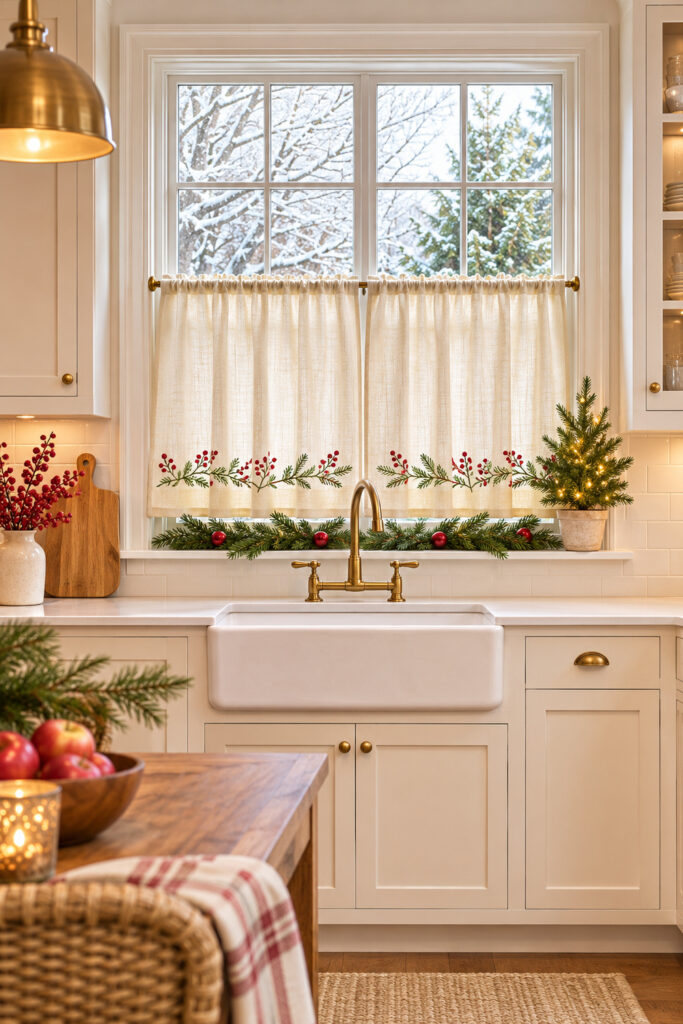
Look at the window from where you usually walk into the kitchen. If you can still see the clear glass, the stitched hem, and a narrow line of green below, each layer has enough space to show.