*This post may contain affiliate links for which I earn commissions.*
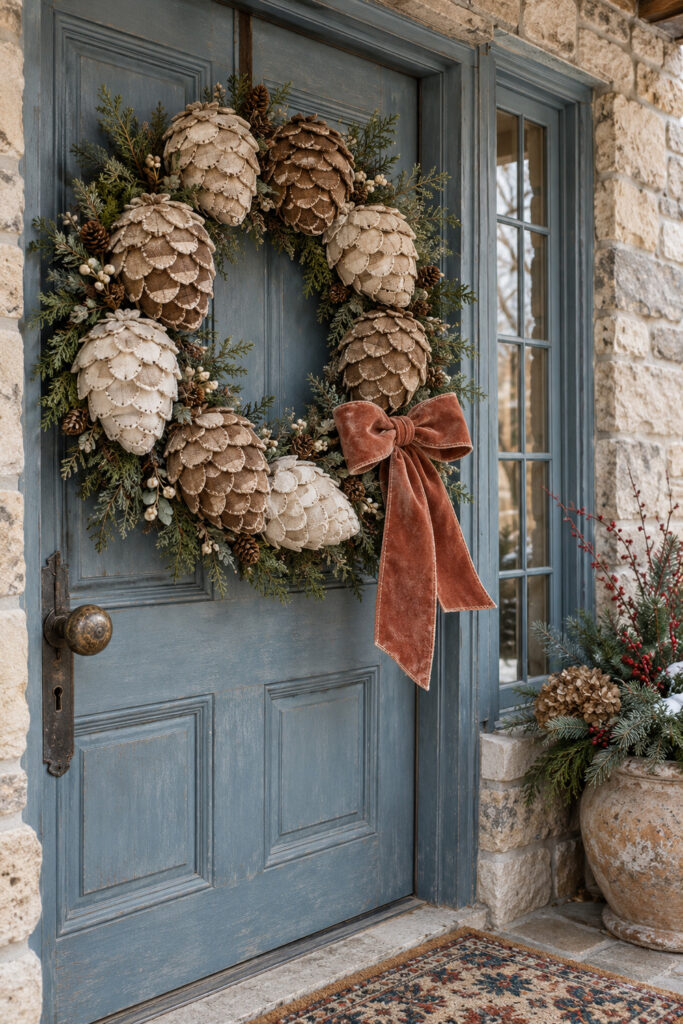
A ring of oversized fabric pinecones gives this Christmas door wreath a clear handmade subject. Oatmeal and tawny scales overlap around the cones, with visible stitched edges adding texture. A terracotta velvet bow sits toward the lower right, and a modest layer of greenery fills the spaces between the larger shapes.
The faded blue door provides a cool background for those warm materials. You can borrow that contrast on a sheltered porch or an interior door using a similar textile wreath, natural-looking greenery, and one soft bow. The pinecone shapes should do most of the work; the surrounding porch can stay fairly simple.
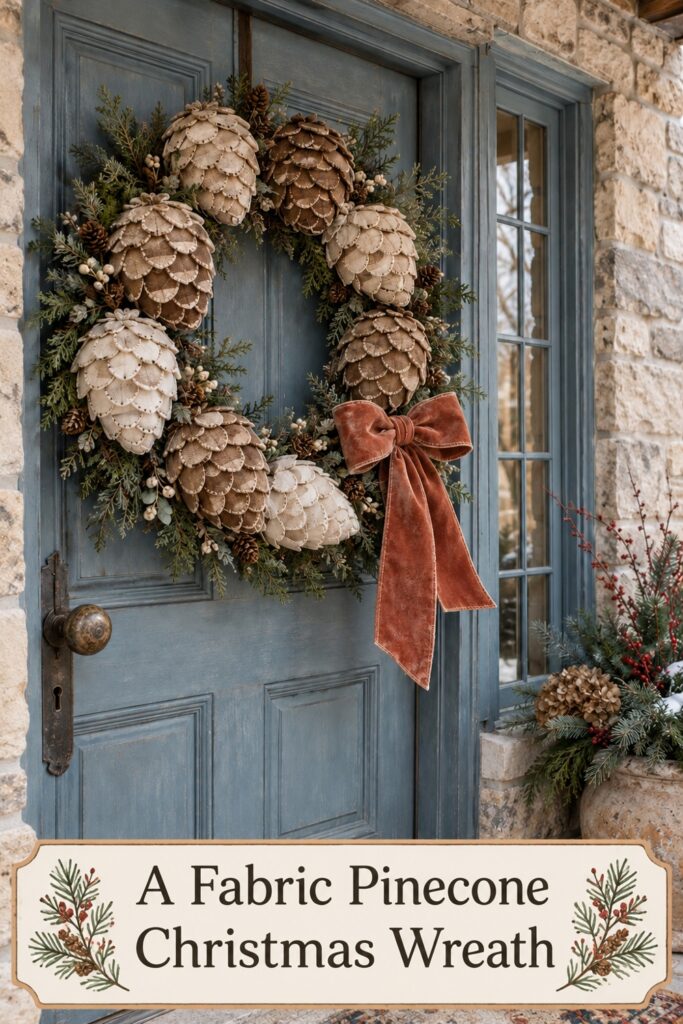
The inspiration image was created with AI. It suggests an overall arrangement with similar pieces rather than a wreath made from verified purchasable components.
What Gives the Wreath Its Cottage Character
The fabric scales are large enough to be noticed from the approach to the door. That makes the wreath read as pinecones before the smaller stitches become visible. The cones alternate lighter and darker tones, which keeps the ring from looking like one solid block of material. A substitute can use simpler construction if it preserves that layered outline.
The greenery acts as a connecting layer. It fills the gaps and adds fine texture behind the broad scales, but the fabric cones remain exposed. This is a useful arrangement to aim for. If branches cover too much of the subject, trim back or reposition them so each cone’s taper and overlapping layers are easy to distinguish.
The bow is deliberately offset rather than sitting at the very top or bottom. Its warm color echoes the tawny scales while its smoother surface contrasts with the coarse fabric. The long tails provide a downward line inside the lower portion of the wreath. You can keep that balance with a simpler bow, as long as it doesn’t hide several cones.
Key Pieces for a Fabric Pinecone Wreath
Dimensional Pinecone Decorations
Look for fabric pinecone ornaments, felt pinecones, or other layered textile versions. Compare their size with the intended wreath base. Small ornaments may need to be grouped more closely, while larger pieces can be spaced around the ring with visible greenery between them. An exact match to the inspiration’s unusually large stitched cones may be difficult to find.
I did try to find large, layered-fabric pinecones for this look but couldn’t find any. However, I found a video tutorial showing that making these is a pretty simple project requiring just an egg foam shape, fabric squares, some pins, and some glue.
I’d start by cutting the egg foam shape in half or it might be too bulky in the wreath and then layer the fabric squares similar to the steps in the video below.
You could use a mix of cream and brown fabric squares either in a mix of prints or a range of solid shades. These are easy to buy pre-cut which could simplify the project.
A mixed group of real and textile pinecones can suggest a related effect if you keep the textile ones prominent. That changes the surface texture, so treat it as an adaptation rather than a duplicate.
Use the larger, softer shapes where they will be easiest to see. Smaller natural cones can sit in the gaps without becoming a separate decorating theme.
Oatmeal and Tawny Fabric Texture
The muted fabric colors are especially effective against blue. Oatmeal gives the ring lighter areas, while warm brown defines individual cones. If your door is cream, use a little more brown for contrast. If it’s dark, pale fabric may help the wreath stand apart. Choose the balance around your actual background instead of following the reference color for color.
Find Cream and Brown Fabric Squares
Browse current Amazon options that can help you recreate this look.
Browse Fabric Craft Squares on Amazon →As an Amazon Associate I earn from qualifying purchases.
For a component approach, felt or textured woven fabric can provide a similar tactile surface, but making layered cones requires its own construction plan. Don’t assume the image reveals a tested method. If you prefer to buy the decorative shapes, prioritize a readable scale pattern and secure construction rather than searching indefinitely for identical embroidery on every layer.
A Greenery Base with an Open Center
Choose a wreath base that leaves enough room for the pinecones without closing the middle completely. The open center allows the blue door to remain part of the arrangement. A very dense base can make the finished wreath feel heavy. Lay the cones around the ring before fastening them so you can see how much background remains visible.
Use greenery suitable for the intended location. The inspiration sits on a sheltered cottage porch, but textile decorations still need protection from wet weather. An interior door or a dry enclosed porch may be easier to manage. If you use the wreath outside, choose components described for that use and bring vulnerable fabric indoors when conditions call for it.
Terracotta Velvet Ribbon
The bow adds color without introducing a new motif. Look for a muted orange-brown rather than a bright orange if you want the quieter mood shown here. Ribbon with some body can hold rounded loops, while softer ribbon produces a looser shape. Both can suit this idea. Make a sample bow before deciding how large it needs to be.
Keep the visible tails clear of the handle and lock. The photograph leaves the door hardware below the wreath, which helps the display feel practical. Your door may have different proportions, so adjust the bow position accordingly. A shorter tail is better than a ribbon that catches when the door opens or brushes against people entering the house.
Balance the Ring Before Hanging It
Arrange the largest cones at intervals around the base, then fill the remaining areas with smaller shapes and greenery. Avoid putting all the pale cones on one side. Alternating light and dark helps the circle feel balanced even when the individual sizes differ. Turn the cones so their tapered ends follow the ring rather than pointing in every direction.
Leave the bow area slightly quieter. You don’t need to cover a large detailed pinecone with ribbon if you plan the space first. Try the bow at the lower right, then step back and assess the whole ring. If that side becomes too heavy, use a smaller bow or place a lighter cone nearby to keep the arrangement visually settled.
Use a suitable wreath hanger or fixing for the door and the finished weight. Check that it won’t damage the surface or interfere with closing. Avoid assuming that a decorative ribbon loop alone will support a large layered wreath. Hidden hardware can handle the practical job while the bow remains a visible finishing detail.
Style the Door and Porch Around the Texture
A faded blue door is a lovely partner for warm natural fabrics, but you can preserve the relationship on other backgrounds. Gray-blue, pale cream, and muted wood can all provide a quiet setting. If the door has strong panels or glass, position the wreath so the main cones don’t merge into the busiest part of the surface.
Shop Similar Pieces for the Door Display
Look for Fabric Pinecone Ornaments
Compare dimensions, weight, hanging attachments, and whether the scale layers are clearly defined. A close-up alone can hide how small an ornament really is. Check the product measurements against a paper wreath outline. Several modest pieces can work if they’re grouped intentionally, but they won’t create the same oversized look as a few substantial cones.
Shop Similar Greenery Wreath Bases
Choose a base with a secure structure and enough room to attach the decorative shapes. Check its intended environment. A wreath meant for indoor use can still be a lovely option on an interior door. Suitability matters more than copying the porch setting when the main subject is made from absorbent textile materials.
Look for Terracotta Ribbon
Match the ribbon to the warm brown in the wreath rather than choosing it separately. A muted ribbon can connect cream and tawny cones, while a very saturated one may become the first thing you see. The bow should finish the ring, with the overlapping fabric scales keeping their place as the distinctive feature.
Final Styling Tip
Check the wreath from the approach to the entrance. If you can recognize the individual pinecones before noticing the ribbon, you’ve kept the handmade subject clear enough to carry the door display.