*This post may contain affiliate links for which I earn commissions.*
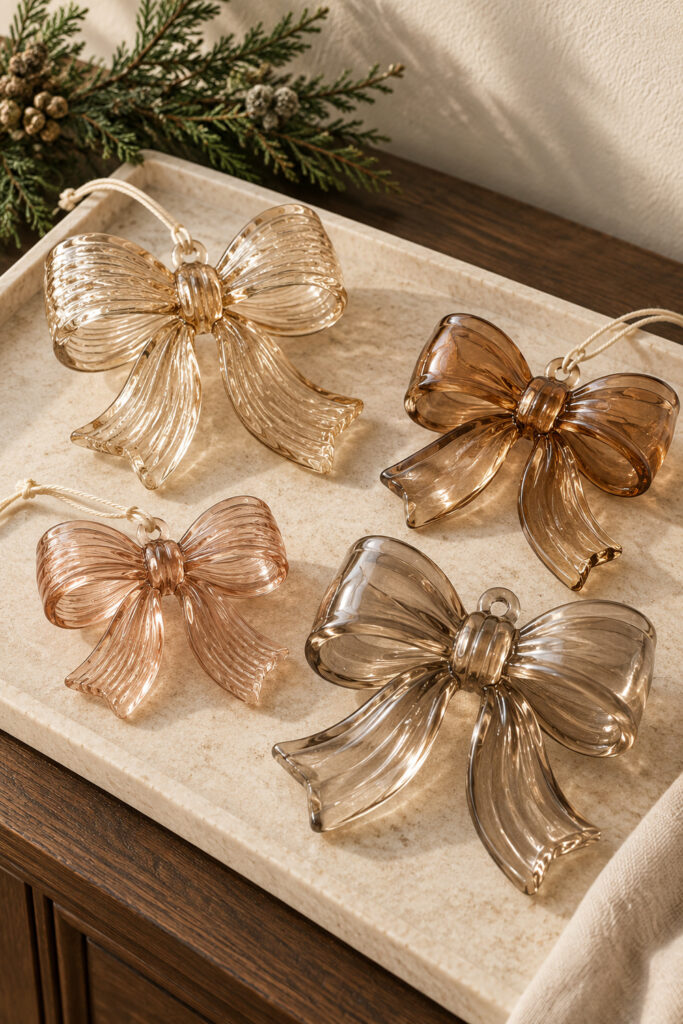
Four glass bows rest on a pale tray in this Christmas inspiration, with their loops and curved tails doing all the decorative work. Champagne, blush, caramel, and smoky tones feel related without looking identical. A little evergreen at the back gives the display a seasonal setting while leaving the ornament shapes easy to see.
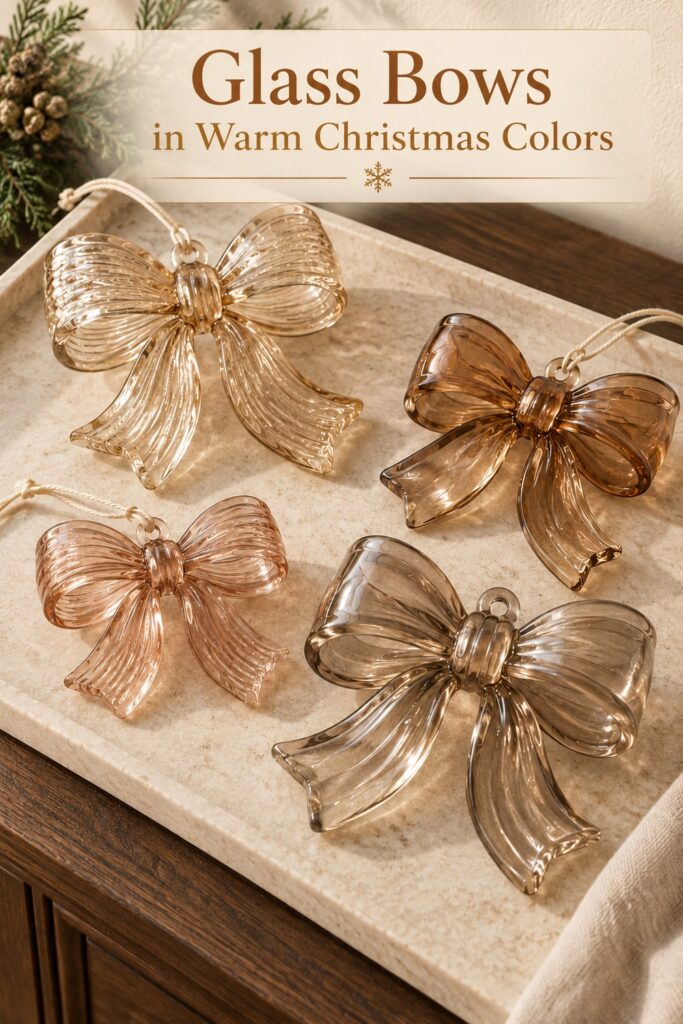
The inspiration image was created with AI and shows a decorative concept rather than verified products or a real collection.
What Makes the Glass Bow Display Work
A bow is a familiar Christmas shape, but the glass changes how it behaves visually. The loops look substantial, and the tails curve away from the central knot instead of falling like ribbon. Light travels across the raised surfaces, making the same basic form look different from one ornament to the next.
The four colors remain fairly quiet. None is so strong that it makes the others seem like background pieces. The pale tray also matters: it separates the reflective bows from the dark wooden surface below and gives them a boundary. Without that base, their warm tints could blend into the wood.
Spacing lets each outline stay recognizable. The ornaments aren’t stacked in a bowl or tangled by their hanging cords. You can see the loops, knot, and tails separately, which is the distinctive part of the idea. At home, leave enough room to appreciate those details before adding anything else to the tray.
Key Pieces for a Collected Christmas Tray
Find bow shaped ornaments
Browse current Amazon options that can help you recreate this look.
Browse bow shaped ornaments on Amazon →As an Amazon Associate I earn from qualifying purchases.
Bow Shaped Ornaments
Look for ornaments with an obvious bow outline and a hanging loop that’s integrated securely. Exact sculptural glass bows may be difficult to find, so compare related shapes rather than expecting a perfect duplicate. Clear resin or acrylic versions can preserve the translucent effect, while ceramic ones offer a different but still readable interpretation.
Choose at least a little variation in size or surface. A ribbed bow can sit beside a smoother one, and a smaller blush piece can balance a larger smoky one. Avoid choosing unrelated colors just to make every ornament different. The collection works because the variation stays within a coordinated group.
A Pale Shallow Tray
The tray should be broad enough to keep the ornaments separate and shallow enough to leave their outlines visible. A deep bowl would conceal the curved tails and turn the display into a pile. Stone, stone-look ceramic, or a plain pale platter can give a similar matte background without needing to match the inspiration exactly.
Check that the surface won’t scratch the ornaments. Fragile glass may need a discreet protective pad beneath its resting points, particularly on rough natural stone. Choose a stable location and handle each ornament separately when arranging it. The tray is a visual boundary, not an invitation to carry an unsecured glass collection around the house.
Soft Hanging Cords and a Small Evergreen Accent
The pale cords connect the bows with their role as ornaments. Let them fall gently toward the back or curve beside the shapes instead of crossing over the glass faces. If your pieces have long loops, tuck the excess loosely out of sight without pulling on the attachment point.
A short evergreen stem can sit behind the tray. Keep its tips clear of the bows, especially if the foliage has stiff wire ends. You need only enough greenery to suggest Christmas. The ornament collection already provides plenty of surface detail, so additional berries, ribbons, or figurines may be unnecessary.
How to Arrange the Bows at Home
Set the tray down first and check how much of it you can see from your usual viewpoint. On a low console, you’ll see the tops of the ornaments; on a high shelf, you may see only their edges. Choose a surface where the bow shapes remain recognizable rather than trying to reproduce a photograph from an unsuitable angle.
Place the largest bow toward one back corner. Add another large piece diagonally opposite, then use the smaller ones to fill the remaining spaces. This loose diagonal arrangement gives the collection some movement. It also avoids a rigid row that might make the pieces look like stock laid out for sale.
Turn the tails slightly outward so the shapes don’t point into one dense central knot. The image’s bows feel separate because their loops and tails have their own room. If two ornaments touch, move one rather than trying to fill the gap with greenery. A little visible tray between them is helpful.
Balance the tints by looking at the group as a whole. Put the darkest bow away from the darkest background edge if its outline disappears there. A lighter piece can bridge the transition between the tray and the wood. You don’t need a strict light-dark pattern, just a clear view of each shape.
Consider the light next. Side light reveals ridges, while a strong light directly overhead can create bright spots that hide the knot detail. Shift the tray slightly and compare. If the display sits near a lamp, try turning one bow rather than changing the entire arrangement. Small rotations often make the surface easier to see.
For a smaller surface, use two or three bows instead of forcing in all four. Keep one larger and one smaller piece, and retain the pale background. You can hang the remaining ornament on a tree nearby if its attachment is suitable. That repeats the idea in the room without crowding the tray.
This is best treated as a settled tabletop display. Keep fragile ornaments out of reach of curious hands and pets, and avoid the edge of a narrow walkway. If you want the same look on a busy coffee table, use durable substitutes and check that loose cords won’t catch on sleeves or other objects.
Shop Similar Pieces
Look for Glass or Translucent Bow Ornaments
Compare actual dimensions and the shape of the tails. Some bow ornaments are almost flat, while others have enough depth to rest attractively on a tray. Check whether the maker intends them to be laid down and whether raised details could be stressed by that position.
Shop Similar Pale Display Trays
Choose a simple outline and a relatively quiet surface. Strong veining or a busy printed pattern can compete with the glass ridges. Measure the space where the tray will sit, then allow room around its edge so the display doesn’t look wedged between other objects.
Add Restrained Christmas Greenery
A single stem can be enough when the tray already holds several detailed ornaments. Repeat the greenery elsewhere in the room if you want a stronger holiday connection. That usually works better than covering the tray edges and hiding the bow silhouettes beneath foliage.
When the season ends, remove the cords from any snags before lifting the ornaments. Wrap each bow separately, supporting the loops and tails rather than pressing them against another piece. Keep the tray available for another seasonal collection; its pale background is useful precisely because it doesn’t belong to one holiday.
Final Styling Tip
Give every bow a visible outline and let the tray show between them. The glass will look more interesting when its shape has room to be understood.