*This post may contain affiliate links for which I earn commissions.*
An old pie safe, farmhouse hutch, or freestanding cupboard can become one of the most memorable Thanksgiving displays in a home. Instead of filling it with overtly themed decorations, this arrangement layers seasonal produce and natural materials among dishes, linens, baskets, pottery, and old books.
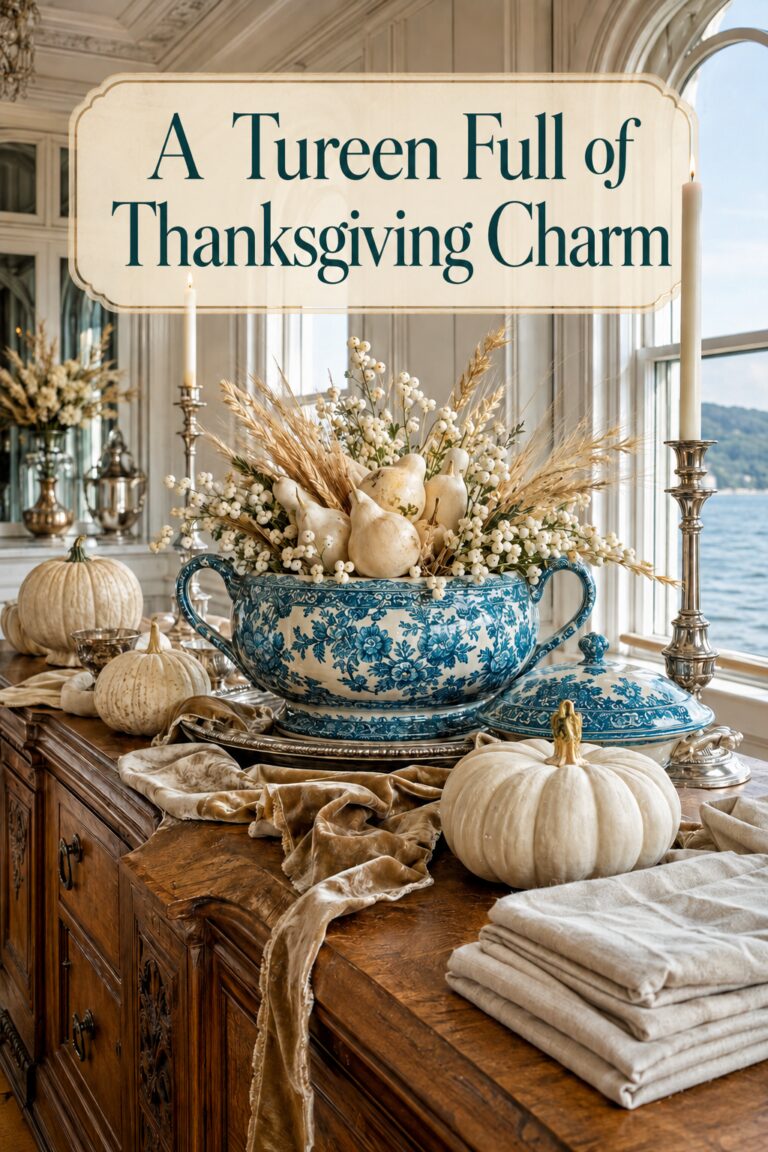
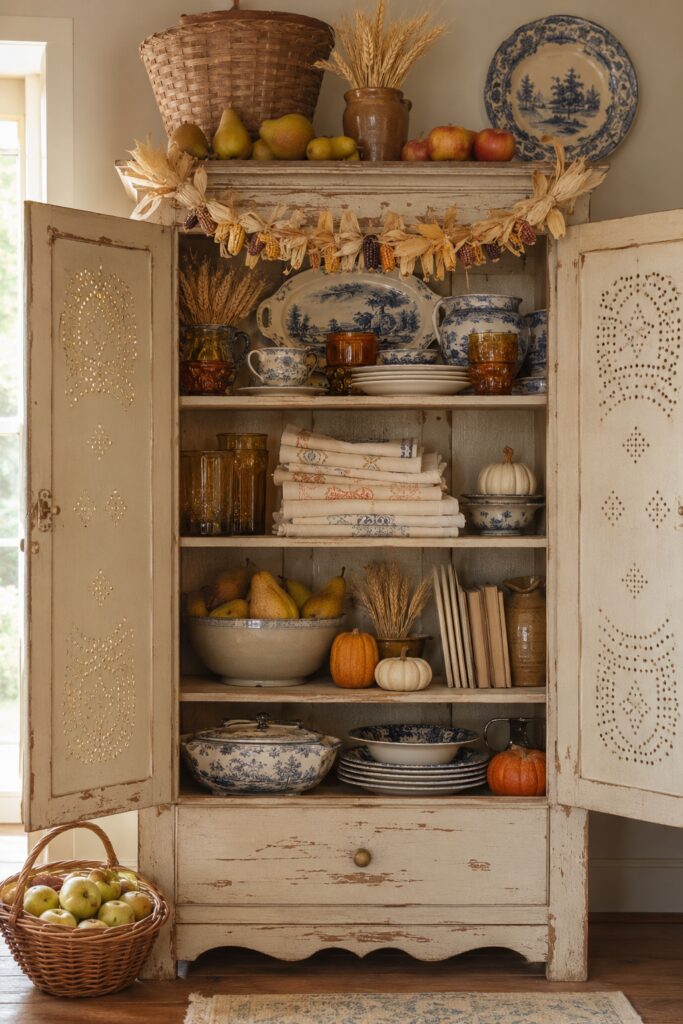
Blue-and-white transferware provides the strongest color contrast. Amber glass, wheat, pears, apples, and small pumpkins warm the palette, while the distressed cream cabinet gives everything an aged, inherited quality.
The finished display feels as though the pieces were gathered gradually and brought out for Thanksgiving, not purchased all at once for a temporary holiday arrangement.
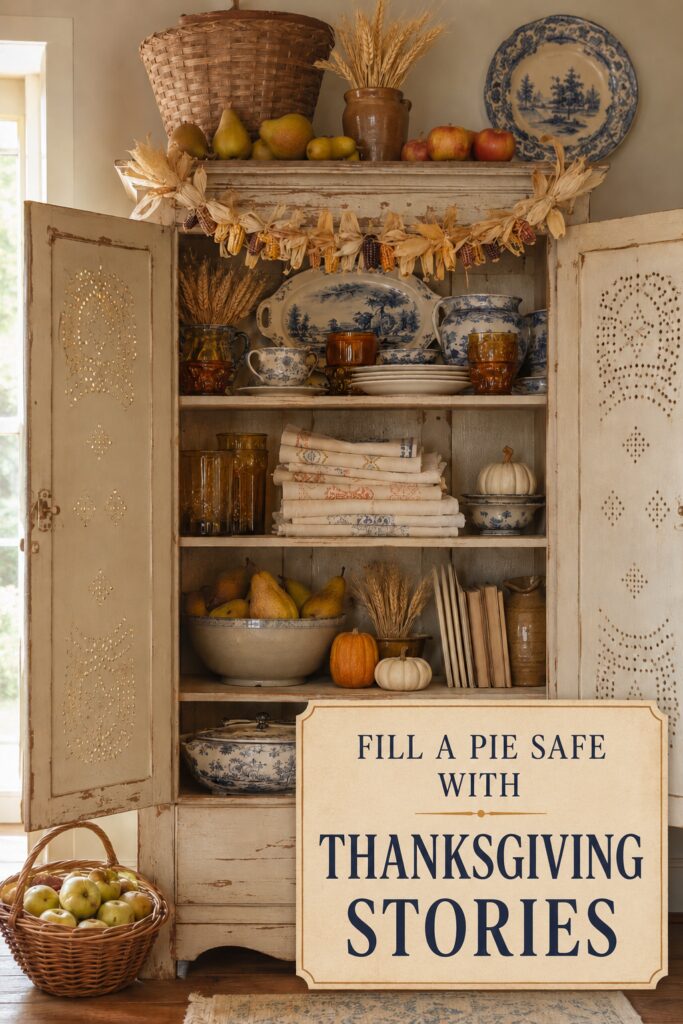
Image disclosure: This inspiration image was created with AI. It is intended to provide decorating ideas and does not depict specific products available for purchase.
Why This Thanksgiving Cabinet Feels Authentic
The arrangement works because it blends beauty with utility.
Serving platters, bowls, pitchers, glasses, and folded linens are objects one might genuinely keep in a dining-room cabinet. Wheat, fruit, pumpkins, and miniature corn introduce the harvest theme without overpowering those everyday pieces.
The palette is restrained but not colorless. Indigo patterns draw the eye into the cream cabinet, while amber glass repeats the golden shades of the wheat and fruit. Small orange pumpkins supply brighter points of color.
The cabinet is filled generously, yet each shelf includes breathing room. Tall objects are balanced by stacks of low dishes, and rounded bowls are placed near upright books or folded linens. These changes in shape keep the display visually active.
Start With a Pie Safe, Hutch, or Open Cupboard
A genuine antique pie safe is not necessary to reproduce the effect. A vintage hutch, freestanding cabinet, open bookcase, or built-in kitchen cupboard can provide a similar backdrop.
A cream, putty, pale gray, or natural wood finish will support the aged farmhouse mood. Existing wear can add character, but there is no need to artificially distress a valuable cabinet.
Open the doors when styling or photographing the display so they frame the shelves. If the doors interfere with walkways or daily use, leave them closed and style the top and nearby surfaces instead.
Before adding heavy serving pieces, confirm that the shelves and hardware are sound. Place the heaviest bowls, tureens, and stacks of plates on sturdy lower shelves.
Establish the Collection With Blue-and-White Dishes
Blue-and-white transferware is the visual thread connecting the cabinet from top to bottom.
Begin with several substantial pieces rather than many tiny accessories. A large platter can stand at the back of an upper shelf. A lidded serving bowl or tureen can anchor the bottom, while a pitcher, bowl, or stack of plates fills the middle.
The patterns do not need to match. Scenic landscapes, florals, borders, and botanical designs can sit together as long as the blue tones are reasonably compatible.
Use plate stands for upright pieces and make certain they are stable. Valuable or breakable dishes should not lean unsecured against the back of a cabinet.
If antique dishes are used for serving food, verify that they are food-safe and appropriate for their intended use. Pieces of uncertain age or condition can remain decorative.
Warm the Shelves With Amber Glass
Amber glasses provide a translucent contrast to the opaque cream and blue ceramics. When placed near a window, they catch the light and create a warm glow.
Group glasses in sets of three or four rather than spreading them evenly across every shelf. A small amber bowl, jar, or handled cup can repeat the color elsewhere.
Embossed, ribbed, or paneled glass suits the cabinet’s vintage character. A mixture of low tumblers and stemmed goblets will create a more collected display than one perfectly uniform set.
Avoid overfilling the glassware sections. The amber color is most noticeable when light can pass around and through the pieces.
Turn Folded Linens Into a Decorative Feature
A tall stack of cream linens occupies the center of the cabinet, providing a soft break between the hard surfaces of glass and pottery.
Look for tea towels, napkins, or small table linens with blue, rust, or muted orange block-print patterns. Fold them so a narrow portion of each design remains visible.
Mixing several related patterns creates the impression of an inherited linen collection. Keep the stack tidy but not perfectly compressed. Slightly varied folds will feel more natural.
Linens can also serve a practical purpose by cushioning a bowl, elevating a small object, or concealing a discreet shelf riser.
Add Wheat for Height and Harvest Texture
Small bundles of wheat appear in several areas of the display. Their upright shape fills narrow spaces that would otherwise be difficult to style.
Place wheat in brown stoneware, amber glass, or a simple ceramic cup. Cut the stems to suit each shelf rather than forcing a tall arrangement into a confined area.
One bundle can sit on top of the cabinet, while a smaller one repeats the texture inside. This helps connect the upper display with the cabinet shelves.
Natural dried wheat can shed, so keep it away from uncovered food and fragile textiles. Faux wheat is a lower-maintenance substitute if the cabinet is used frequently.
Decorate With Pears, Apples, and Small Pumpkins
The produce gives the cabinet its Thanksgiving character.
Pears work especially well because their tapered shape provides more height than round apples or pumpkins. Arrange several in a broad bowl and repeat a few along the cabinet top.
Small cream and orange pumpkins can be placed beside books, on saucers, or near serving dishes. They should look like discoveries tucked into the collection rather than a row of identical decorations.
Real produce is lovely for a short-term display, but it requires regular inspection. Use faux fruit and pumpkins if the arrangement will remain in place for several weeks.
Vary the harvest pieces by color and shape. Pear green, muted red, cream, and orange are enough to communicate the season without introducing too many competing shades.
Drape a Corn-Husk Garland Across the Top
The garland is the image’s clearest Thanksgiving-specific detail. Pale husks, raffia-like leaves, and miniature ears of multicolored corn create a natural swag across the cabinet.
A ready-made garland can achieve the effect, but this is also a practical DIY opportunity. Combine dried miniature corn with raffia, corn husks, jute twine, or faux wheat.
Allow the garland to dip gently in the center and rise toward the corners. Its ends can extend slightly beyond the cabinet opening to soften the straight architectural lines.
Keep dried materials away from open flames, hot lights, cooking surfaces, and excessive moisture.
Style the Cabinet Top as a Separate Layer
The top includes a large woven basket, fruit, brown pottery, wheat, and an upright blue-and-white plate.
Begin with the basket because it provides the greatest height and visual weight. Offset it slightly rather than centering it. Place a wheat-filled vessel nearby, then use fruit to create a low line across the front.
An upright platter or decorative plate at the opposite end can balance the basket without copying its shape.
This arrangement should feel less crowded than the shelves below. Leaving visible space around the tallest objects helps their silhouettes stand out.
Include Books and Humble Pottery
A short row of neutral books introduces straight vertical lines among the rounded bowls and fruit. Turn overly colorful covers inward if they interrupt the palette.
Brown crocks, small pitchers, and simple pottery keep the polished transferware from making the cabinet feel formal. They also repeat the earth tones found in wheat, baskets, and amber glass.
The contrast between refined dishes and humble household pieces is essential. It makes the display feel personal, useful, and assembled over time.
Shop Similar Pieces
Look for Blue-and-White Transferware
Mix serving platters, pitchers, bowls, and lidded dishes in related indigo patterns.
Add Vintage-Style Amber Glassware
Choose embossed goblets or tumblers that glow warmly near a window.
Shop Block-Printed Kitchen Linens
Look for cream cotton textiles with blue, rust, or muted orange designs.
Add a Corn-Husk Harvest Garland
Choose a natural-looking garland or assemble one from miniature corn, husks, and twine.
Look for Natural Dried Wheat
Use several small bundles instead of one oversized arrangement.
Shop Harvest Bowl Fillers
Combine realistic pears with small cream and orange pumpkins for varied color and shape.
Final Styling Tip
Treat each shelf as a small still life, then repeat one blue piece, one warm brown or amber detail, and one harvest element elsewhere in the cabinet. Those recurring notes will make a varied collection feel connected.