*This post may contain affiliate links for which I earn commissions.*
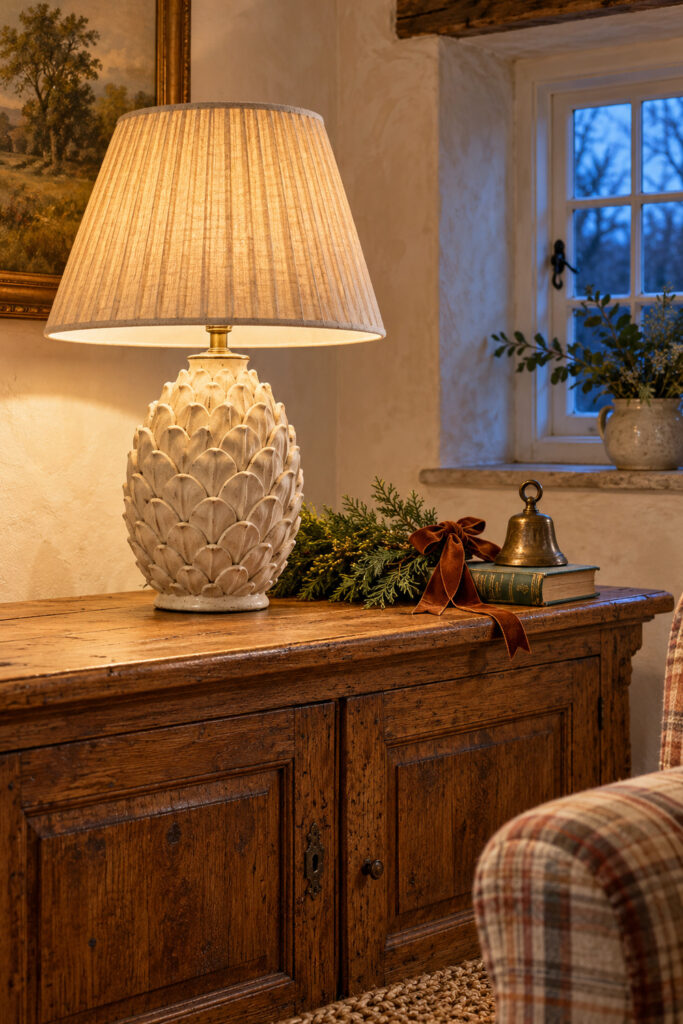
A sculpted ivory lamp is the main feature of this Christmas cabinet arrangement. Its overlapping pinecone scales remain visible beneath a pleated shade, while a short length of greenery, cinnamon velvet ribbon, and a brass bell sit beside it. The pieces are simple enough to see individually.
That is a useful starting point for a cabinet or sideboard you already own. Let one substantial lamp carry the height and light, then arrange a small group of seasonal textures around its base. You can keep the furniture and change just the accents.
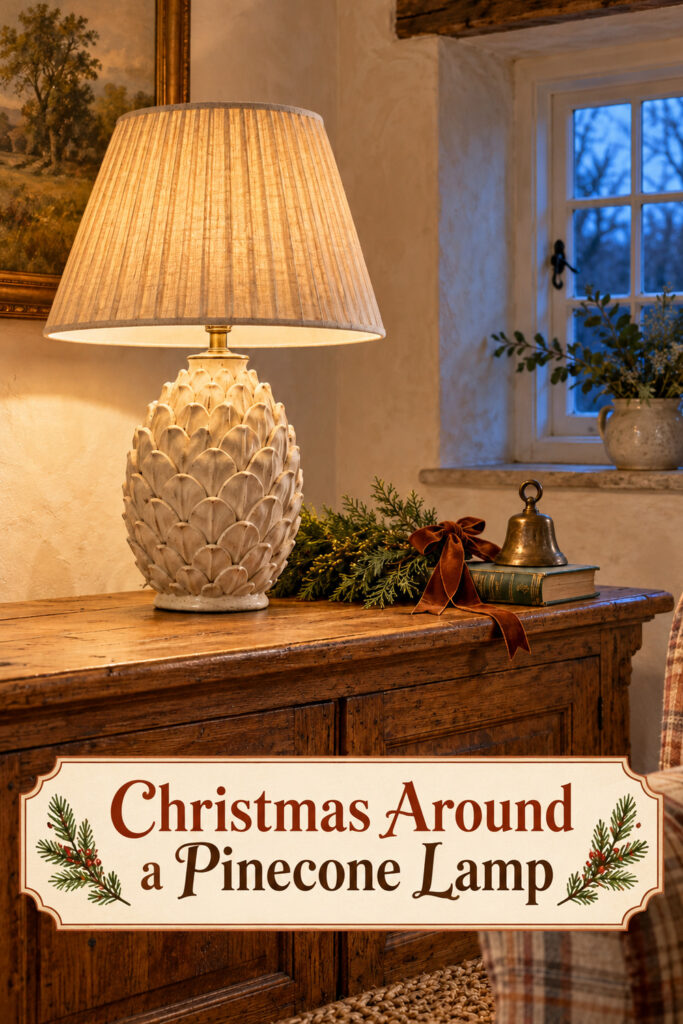
This Christmas styling image was created with AI and offers inspiration using similar pieces.
What Makes the Lamp Arrangement Work
The lamp combines two related textures. The ceramic base has overlapping sculpted scales, while the shade has narrow vertical pleats. Both catch the warm light, but their different directions keep the lamp interesting without needing a strong printed pattern.
Ivory stands out against the aged oak cabinet and darker window beyond. The greenery stretches sideways rather than rising into another tall bouquet, so the lamp remains the clear anchor. A velvet bow adds a soft warm color between the fine evergreen tips and the hard brass bell.
The light outside the window is cool, making the interior glow more noticeable. Your arrangement can still work in a bright room. Pay attention to how the base looks when the lamp is off as well as on, because its shape is an important part of this idea throughout the day.
Key Pieces for the Christmas Cabinet
A Textured Ivory Table Lamp
An exact pinecone shape may be difficult to match, so look for an ivory ceramic lamp with overlapping leaf details or another clearly sculpted surface. The useful relationship is a pale, substantial base against warm wood. A plain narrow lamp would supply light but less of the focal texture.
Compare the lamp’s footprint with your cabinet depth and leave room for its cord to run safely behind the furniture. Use a complete lamp intended for normal household use. The inspiration is a styling reference, not a reason to modify a base or improvise electrical parts.
Find textured ivory table lamps
Browse current Amazon options that can help you recreate this look.
Browse textured ivory table lamps on Amazon →As an Amazon Associate I earn from qualifying purchases.
A Pleated Linen-Look Shade
The shade in the image is broad enough to balance the textured base. A linen-look surface keeps the light soft and the pleats visible. If you’re using a lamp you already own, check the fitting and manufacturer guidance before considering a different shade.
A very small shade can make a rounded base look heavy. An oversized one can crowd the wall art and nearby window. Check the overall silhouette from the doorway, and follow the lamp’s bulb and shade requirements rather than choosing only by appearance.
Cedar-Style Greenery
The greenery lies low across the cabinet, with fine tips reaching toward the bell. Use a short swag or a few faux cedar stems that can be arranged into a loose horizontal line. The stems should provide texture without forming a second mound as tall as the base.
Keep all foliage away from the bulb, shade opening, switches, and electrical connections. Arrange it beside the lamp rather than winding it around the socket or cord. Check the manufacturer’s clearances and leave enough open cabinet surface to adjust the lamp without disturbing the display.
Cinnamon Velvet Ribbon
The bow sits close to the right-hand grouping and sends a tail over the cabinet edge. Its rich brown-orange color relates to the wood, yet the velvet gives it a softer surface. A muted rust or caramel ribbon can achieve a similar effect.
Tie the bow around a separate section of the greenery or secure it to its own discreet support. Avoid using the electrical cord as an attachment point. Let the tail drape where it won’t catch on drawers, handles, or someone passing the cabinet.
A Brass Bell and a Closed Book
The brass bell supplies a compact reflective shape beside the matte ribbon and fine stems. The book underneath raises it slightly, making the smaller object visible without introducing another stand. Use a stable book with a cover you don’t mind displaying.
Choose a bell with enough visual weight to register beside the lamp. Several tiny ornaments can create a scattered effect here. If you have a different brass object, try it first, but keep the grouping simple so the sculpted base remains the first detail you notice.
A Warm Wood Cabinet
The cabinet’s worn surface supplies a broad, darker foundation. Your furniture can be newer or painted; you can bring some warmth back through a wood tray or a tan textile placed away from the lamp’s electrical parts. Keep any added layer flat and stable.
The cabinet top also needs space around the objects. Measure the useful depth rather than filling the whole surface with greenery. A narrow cupboard may need a smaller lamp and a short branch instead of a full swag. Scale the grouping to the furniture you use every day.
How to Arrange the Lamp and Seasonal Accents
Place the lamp first and confirm that it works comfortably in that spot. You should be able to reach the switch, access the plug, and open the cabinet without touching the shade. Route the cord neatly without trapping it under heavy furniture or stretching it across a walking route.
Position the greenery beside the base, with its fuller section nearer the lamp and its finer tips extending toward the smaller grouping. Leave part of the cabinet top uncovered between the objects. That visible wood keeps the arrangement from becoming one indistinct mass.
Set the book and bell at the end of that horizontal line. Adjust their distance until they feel connected to the greenery but don’t press against the lamp. If the cabinet is short, omit the book rather than squeezing the pieces together. The bell can sit directly on a suitable protective pad.
Add the bow after those positions are settled. Look at the tail from the front and side, especially if a drawer is below it. A draped ribbon should move freely without getting pulled into a drawer. Trim it to suit the furniture rather than copying the image’s length.
Turn the lamp on and check for harsh reflections. A shiny bell placed directly in the strongest light can distract from the ceramic texture. Move it a little farther along the cabinet or rotate it until the reflection becomes a small accent. Keep the lamp’s approved bulb and brightness limits in mind.
Finally, review the surrounding wall and window. The inspiration includes framed art and a pale jug with stems, but these are quieter background details. Use what’s already in your room and remove only what competes directly with the shade or pinecone outline. The seasonal grouping should feel settled in an existing home.
Shop Similar Pieces
Look for Sculpted Ivory Ceramic Lamps
Prioritize a visible textured base, a suitable footprint, and a complete electrical assembly. A leaf-patterned alternative can provide the same material contrast without claiming to be the exact object in the image.
Shop Similar Cedar Swags and Velvet Ribbon
Choose flexible greenery that will sit low, then add ribbon in a warm muted shade. Check how the two materials look against your cabinet before increasing the size of the grouping.
Add a Brass Bell
Look for one substantial bell or reuse a small brass object with a similar presence. Its role is to finish the lower arrangement, so keep its height comfortably below the lamp shade.
Final Styling Tip
View the cabinet with the lamp turned off before calling it finished. If the pale base, dark greenery, and velvet bow still separate clearly, the arrangement will have something to offer in daylight as well as after dark.