*This post may contain affiliate links for which I earn commissions.*
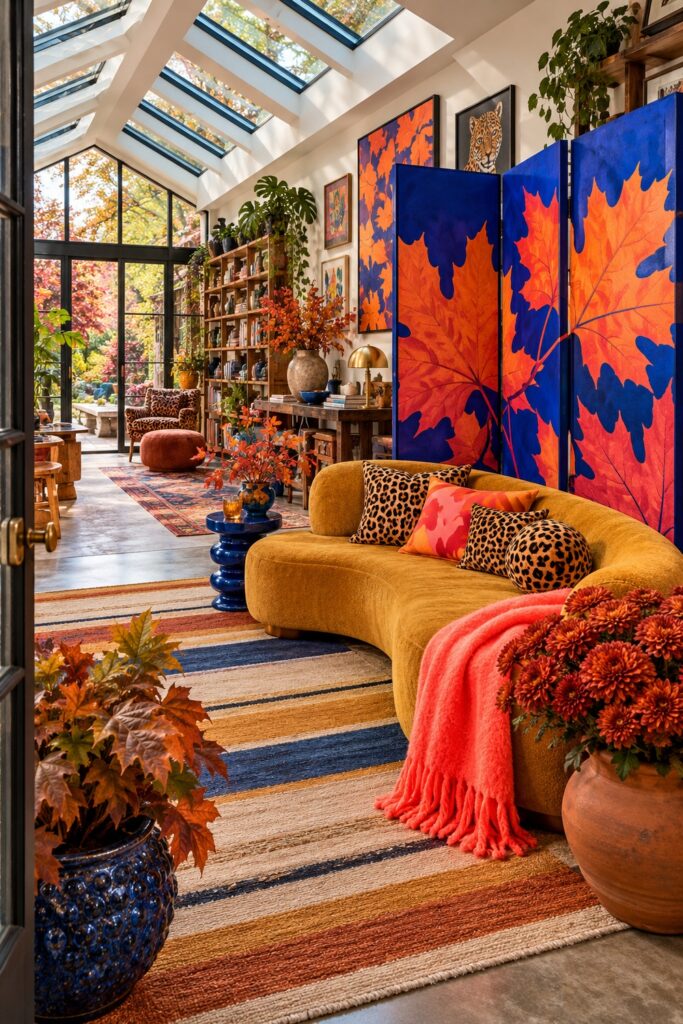
A folding screen becomes the main fall decoration in this studio. Huge orange leaves spread across blue panels behind an ochre bench, while leopard cushions and a coral throw bring the pattern closer to the seating. The leaf shapes make the season clear even though the colors are far from a traditional brown-and-rust arrangement.
You can borrow this idea for a sitting corner, craft room, or spare-room studio. One decorated screen gives you a large seasonal surface without needing to fill every shelf with small accessories.
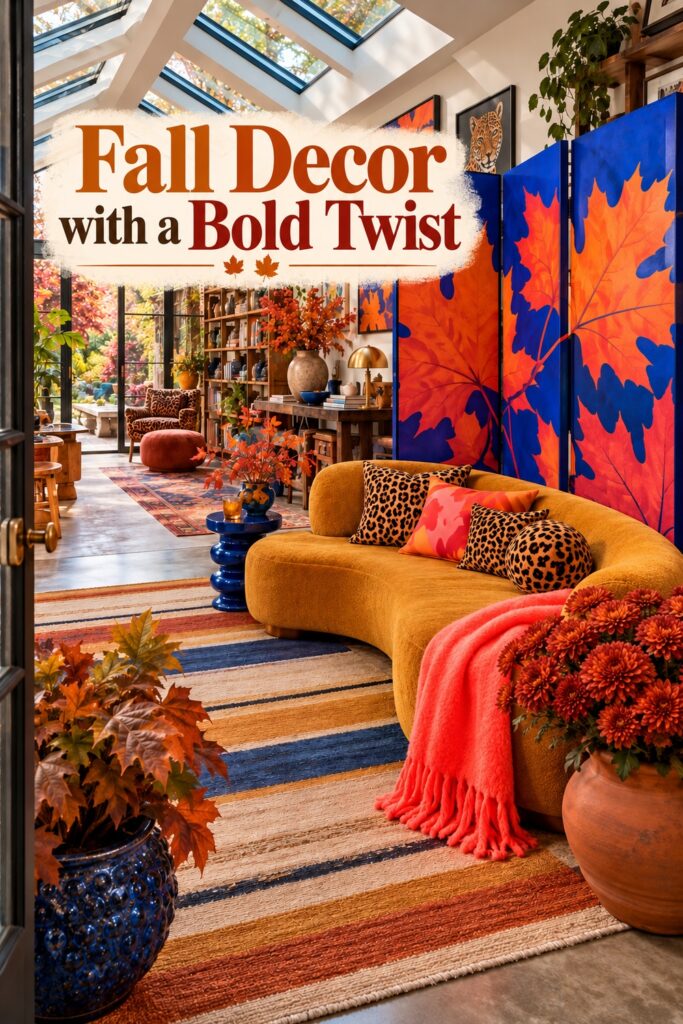
The inspiration image was created with AI and shows an imagined decorating concept rather than specific products available to purchase.
What Makes This Fall Studio Work
The screen stands behind the bench at an angle, giving the leaf panels a broad area to show. Blue is a strong background for the orange silhouettes. Their pointed edges remain visible even where the room contains books, plants, and other objects. The large scale keeps the main idea from getting lost.
Ochre upholstery connects the seating to the autumn palette while providing a softer shape in front of the upright panels. Leopard cushions pick up the dark and tan notes, and the coral throw introduces another warm surface. The layers are distinct because they use different sizes of pattern and different materials.
The striped rug carries several of the room’s colors along the floor. Its horizontal bands are much smaller than the leaves, so they add movement without repeating the same motif. Chrysanthemums supply a recognizable fall detail at a lower height beside the bench.
Diffuse light from the roof and windows keeps the blue panels from looking heavy. In a room with less daylight, you can preserve the idea by using fewer panels or a lighter blue. The useful relationship is a clear leaf silhouette against a contrasting surface.
Find Folding Screens
Browse current Amazon options that can help you recreate this look.
Browse Folding Screens on Amazon →As an Amazon Associate I earn from qualifying purchases.
Key Pieces to Recreate the Look
A Folding Screen
A freestanding screen gives the large leaves a place to live. Look at its overall height and panel width before thinking about color. It should sit comfortably behind your seating without blocking a window, vent, or route through the room.
Use a screen that stands securely in its recommended open position. Folding it nearly flat can make some designs unstable.
Oversized Leaf Decorations
Large leaf-shaped panels, cutouts, or a printed fabric treatment could suggest the image’s graphic design. Broad maple-like shapes are easier to recognize from a distance than a collection of small leaves. Keep the edges clear against the blue background.
If you’re adapting an existing screen, choose an attachment method appropriate to its material. A removable fabric panel can be useful when you want to change the display after fall. Test any adhesive on a hidden area and follow its instructions before applying it across a visible surface.
Ochre Seating
The curved bench adds a comfortable foreground layer. You can use a straight bench, a small sofa, or an upholstered chair instead. The warm yellow tone matters more than reproducing the exact shape, particularly in a smaller room.
An ochre throw or seat cushion can introduce the color if your furniture is neutral. Make sure loose textiles don’t interfere with sitting. A decorated bench that still feels easy to use will be more enjoyable than one you have to clear every time.
Leopard Cushions
The cushions carry a medium-scale pattern between the giant leaves and the rug’s narrow stripes. Choose a print with a tan background if you want it to connect with the ochre seating. A stark white background would create a sharper contrast and change the effect.
Two or three cushions may be enough, depending on the bench. Leave part of the upholstery visible so the warm solid color can do its job. If the cushions cover the whole seat, you lose the quiet surface that separates the patterns.
A Coral Throw
The coral textile spills over the front edge of the seating and repeats the warm colors in the leaf panels. A soft throw gives the screen’s crisp shapes something different beside them. Fold it loosely over one arm or corner rather than stretching it across the entire bench.
Choose a washable material if the seat gets regular use. The throw’s texture can be simple because its color is already strong. You don’t need tassels, a busy weave, and another print to make it noticeable.
Chrysanthemums and a Striped Rug
Rust-colored flowers add a smaller natural form alongside the oversized graphic leaves. A low arrangement in a terracotta-style container is close to the inspiration, but you can use a pot you own. With real plants, protect the floor and furniture from moisture.
The rug helps connect the seating area to the longer room. If you already have a plain rug, keep it and repeat a stripe in a cushion or small textile instead.
How to Style It at Home
Choose the screen’s position before bringing in smaller accessories. Stand it behind or beside the seating, then open the panels to the angle recommended for stability. Sit down and check that it doesn’t feel as though it’s looming over the bench. A little separation between the two pieces also makes the screen easier to adjust.
Plan the leaves as one broad arrangement across the panels. Let a few shapes extend close to the edges and leave some blue showing between them. If each panel contains an identical centered leaf, the screen will feel more like a repeated diagram. Varying the position gives the group the sweeping effect seen in the inspiration.
Introduce the ochre surface next. If you’re using a throw to change the seating color, keep that layer fairly tidy and use the coral piece as the softer loose layer. Too many draped textiles can hide the furniture’s outline and make a compact corner look crowded.
Set the leopard cushions toward opposite ends, or pair one patterned cushion with one plain coral cushion. Look at them from the room’s entrance. Their scale should be visible from there without rivaling the leaves behind them. A tiny spotted print may read as a dark patch rather than a pattern.
Place the flowers on the side where there’s room to walk around the seat. The image has a wide studio aisle, but a smaller home corner may need the pot on a low stand or side table. Keep it away from the folding joints so adjusting the screen won’t knock the container.
Finally, consider the shelves and wall art around the area. You can leave those as they are, but remove a few temporary accessories if the screen struggles to stand out. The point of using one large seasonal feature is that it can carry much of the decorating by itself.
Shop Similar Pieces
Look for Folding Screens and Large Leaf Panels
Compare the screen’s open footprint, surface material, and stability. For the leaves, focus on broad recognizable shapes and colors that show against your chosen background. An exact copy of the imagined panel design isn’t required.
Shop Similar Leopard Cushions and Coral Throws
Check cushion-cover sizes against inserts you already own and choose a throw that fits the way you use the seat. Warm tan, black, and coral will connect these pieces to the larger backdrop.
Add Fall Flowers or a Striped Accent Rug
Look for a flower arrangement proportionate to the seating and a rug that leaves doors clear. These details can support the corner, but you can omit either one if the screen and textiles already give you enough pattern.
Final Styling Tip
Keep a strip of blue visible around the orange leaves. That little border is what makes their shapes readable. Add fewer leaves if necessary rather than covering the whole screen with an uninterrupted warm-colored layer.