*This post may contain affiliate links for which I earn commissions.*
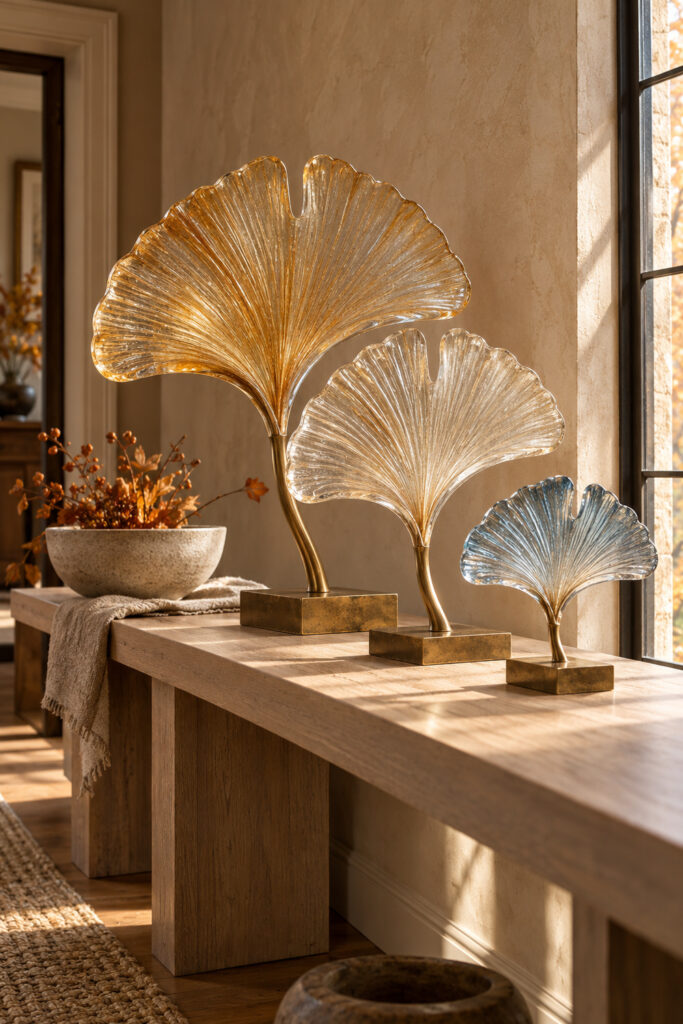
The fan shape of a ginkgo leaf does most of the decorating on this autumn console. Three glass inspired sculptures step down from honey amber to pale champagne and smoky blue, each held above a small rectangular metal base. Their radiating ridges catch the light without needing a pile of seasonal accessories around them.
A pale wood console and warm plaster wall give the collection a quiet setting. The idea is easy to adapt if you focus on the broad leaf shapes, the change in height, and the useful patches of empty tabletop between the bases.
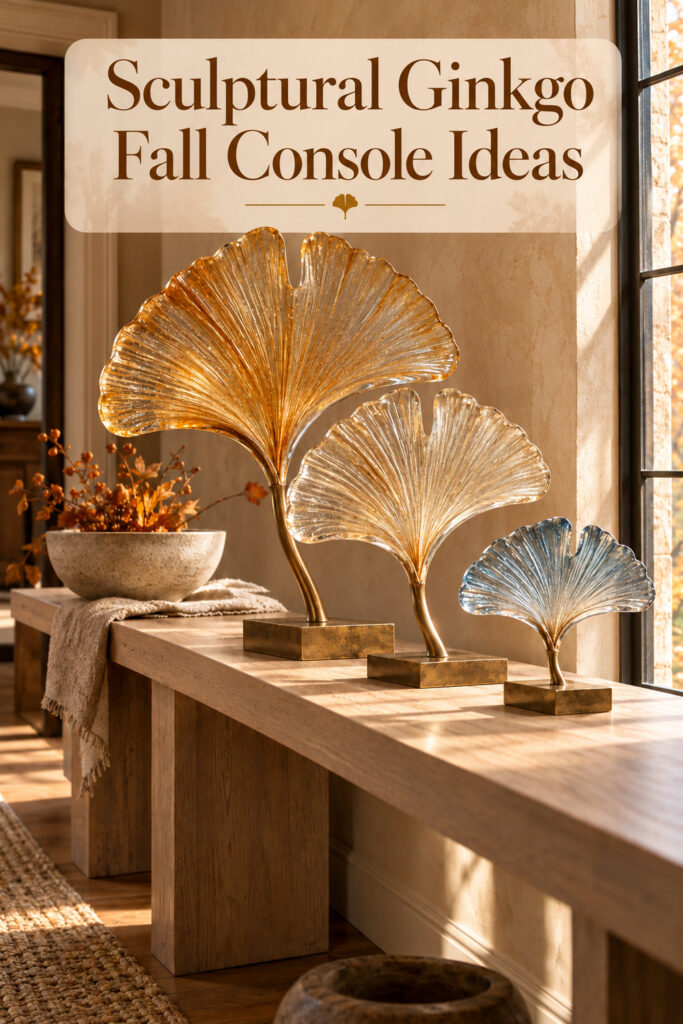
The inspiration image was created with AI.
Why the Ginkgo Fans Stand Out
The largest fan anchors the left side, while the middle and smallest pieces carry your eye toward the window. They form a descending line rather than a symmetrical trio. That gradual change suits the long console and keeps the repeated leaf shape from feeling like a row of identical signs.
Find Ginkgo Leaf Sculptures
Browse current Amazon options that can help you recreate this look.
Browse Ginkgo Leaf Sculptures on Amazon →As an Amazon Associate I earn from qualifying purchases.
Each leaf has a small central notch and fine lines spreading outward. Those details make the subject recognizable, even in the palest sculpture. The slightly curved stems lift the fans above their bases, so the whole display has an open lower section rather than a solid wall of objects.
The smoky blue leaf is a useful surprise. Most of the scene stays within honey, cream, and oak, but that cooler piece gives the eye another place to settle. Because it is also the smallest sculpture, its different color doesn’t take over the warm autumn palette.
Key Pieces for an Autumn Console
Fan Shaped Leaf Sculptures
Look for ginkgo leaves or similar fan shaped botanical sculptures with a clear outline. A visible notch, radiating surface detail, and a stem will suggest the subject more reliably than color alone. The exact imaginary glass forms aren’t a requirement for borrowing this arrangement.
Metal or resin pieces can work as substitutes if their silhouettes are strong. If you mix materials, keep the overall shapes related and use a quieter color range. Too many unrelated finishes would make the collection feel like several separate ideas competing for the same tabletop.
Stable Bases in a Warm Metal Finish
The rectangular bases give each sculpture a defined footprint. They also repeat a horizontal line beneath the curved leaves, which helps the group feel settled on the console. Check that a decorative piece has a stable base rather than assuming a narrow stem will support a broad top.
A warm brass tone connects nicely to amber and champagne. You don’t need perfectly matching metal finishes, especially if you are combining older pieces. Keep them close enough in warmth that the bases read as a family, and let the leaf shapes provide the larger variation.
A Pale Wood Surface
The console’s pale oak finish keeps the amber fans from merging into a similarly dark background. A cream painted table or a simple light shelf could offer the same separation. Use the furniture you have if the sculpture edges remain visible against it.
Think about depth as well as width. A wide fan can look balanced from the front while its base sits too close to a narrow table edge. Leave enough surface in front and behind each base that the display feels secure when viewed from the side.
A Low Bowl and Neutral Textile
The small bowl of autumn stems at the left sits beneath the height of the fans. It provides another texture without interrupting their outlines. Keep a supporting arrangement low and open if you want it to play the same role in your version.
The folded textile softens one corner of the wood. Let a little fabric show, but avoid draping it under tall sculpture bases where uneven folds could affect stability. A flat cloth beside the group gives you the texture without making the supports less reliable.
Arranging the Leaves in Your Hallway
Begin with the tallest piece near one end of the console, leaving some tabletop beyond it. Add the medium piece toward the middle and the smallest closer to the opposite end. That establishes the descending rhythm before you consider bowls, fabric, or other supporting objects.
Turn the fans just enough to show their depth. In the inspiration, the leaves aren’t all perfectly parallel to the wall, and the slight changes help the ridges catch different amounts of light. Don’t rotate them so far that the broad fan shapes disappear when you enter the hallway.
Check the gaps at the widest part of each leaf. Bases can look comfortably spaced while the tops overlap into one busy outline. Move the sculptures a little at a time until each notch and outer edge reads clearly from the main approach to the console.
Use the wall as part of the arrangement. A warm plain background gives the glass ridges room to show, while a highly patterned wall may call for fewer pieces. If there is already a large picture above your console, choose whether it or the sculptures will be the main feature before adding more decor.
The nearby window creates strong side light in the image. In your home, compare the group in morning and afternoon light before choosing its permanent position. A pale sculpture that disappears at one time of day may need a slightly darker backing or a small change in angle.
Keep circulation space in mind, especially in a narrow passage. Broad sculptures should stay within the furniture footprint, and nobody should have to brush past a leaf tip to reach a doorway. A shorter arrangement on a deeper surface is a better adaptation than trying to fit the full trio into a tight corridor.
If you own only one suitable sculpture, give it a clear place near a low bowl instead of adding unrelated tall objects to make a set. The contrast in height can still feel intentional. Repeating its warm color in the bowl’s contents will connect the two without pretending they match.
Notice where the curved metal stems meet the fans. Keeping those joins visible helps the display read as sculpture rather than loose leaves propped against a wall. Don’t tuck the low bowl directly beneath that junction or let supporting branches cross it. The base, stem, and fan make a complete shape, and seeing all three parts gives even a small version of the arrangement a more considered appearance.
Shop Similar Pieces
Shop Similar Ginkgo Leaf Sculptures
Evaluate the shape, support, and finish together. A well defined fan on a simple base will do more for this idea than an elaborate botanical object with an unclear outline. Check the dimensions rather than judging scale from a styled listing photograph.
Look for Low Ceramic Bowls
A plain bowl is useful for the supporting autumn stems. Choose a low profile so the stems can remain beneath the fans. An existing kitchen or decorative bowl may already offer the right proportion, provided it is stable and suited to the intended use.
Add a Soft Neutral Textile
A small woven cloth can soften the console corner without covering its wood grain. Let it occupy one quiet area and keep the sculpture bases on the level tabletop. Texture is helpful here because the main objects already supply plenty of shine.
Final Styling Tip
Move the smallest blue leaf until it has a clear patch of wall behind it. That little cooler accent works best when its whole fan shape is visible, giving the warmer pieces a companion rather than another overlapping reflection.