*This post may contain affiliate links for which I earn commissions.*
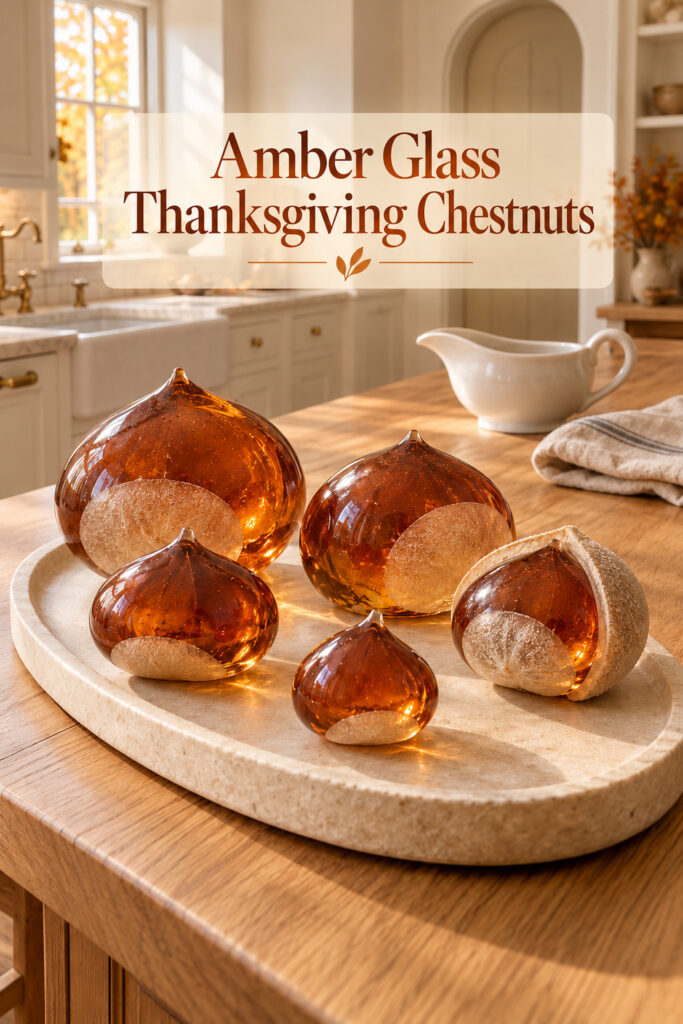
Five amber chestnut shapes gathered on a pale oval tray make this Thanksgiving island feel decorated without turning it into a second dining table. The rounded glass, pointed tops, and light textured patches give the little collection a recognizable subject. One partly enclosed shape adds variation without breaking the group.
I would borrow the tray and the change in scale first. Those are the details that make the arrangement usable in an ordinary kitchen, whether your own version features similar decorative nuts or another small amber collection with a rounded profile.
The inspiration image was created with AI.
Why This Small Collection Holds Together
The chestnuts vary in size, but their warm color and pale patches connect them. The two larger shapes sit farther back, with smaller ones toward the front. You can see the pointed tops and enough of each curved side to understand the collection at a glance.
Find Oval Stone Look Trays
Browse current Amazon options that can help you recreate this look.
Browse Oval Stone Look Trays on Amazon →As an Amazon Associate I earn from qualifying purchases.
The tray provides a lighter background beneath the glass. On bare oak, some of the amber edges would blend into the wood, especially in dimmer light. The pale stone makes those edges clearer and gives the group a defined place on an otherwise useful work surface.
There is also a practical distinction between the display and the serving pieces behind it. The gravy boat and folded linen remain separate. That bit of open countertop keeps the decorative chestnuts from looking like ingredients waiting to be used, which is helpful when the subject resembles food.
Key Pieces to Recreate the Idea
Chestnut Inspired Decorative Objects
The broad rounded body and small point are the useful features to look for. A contrasting pale area reinforces the chestnut appearance. Exact sculptural glass matches may be difficult to find, so treat this image as a guide to shape and arrangement rather than a shopping photograph.
If suitable glass chestnuts aren’t available, consider decorative nut forms with a warm finish. The material will change the effect, but a coordinated group can preserve the subject. Avoid mixing several unrelated nut shapes if you want the display to remain clearly about chestnuts.
An Oval Pale Tray
Choose a tray with enough room for the largest piece and visible gaps between the others. The oval outline softens the rectangular island and keeps the group from feeling like a rigid grid. A low rim also makes it easier to appreciate the shapes from a seated position.
Stone, stone look, or plain cream ceramic can all provide the pale base. Check the weight before choosing an oversized tray, particularly if you expect to move it when preparing food. A display that takes two people to shift is unlikely to remain convenient on a working island.
Warm Glass in Several Sizes
Amber is the connecting color here, but it isn’t perfectly uniform. Some sections look more honey colored where the light passes through them, while thicker areas read as deeper brown. That variation is part of the appeal and doesn’t require adding more colors around the tray.
When combining existing pieces, place them together in the intended light before deciding they match. Two objects that look similar in a cupboard may behave quite differently in front of a window. Aim for related warmth rather than identical color in every reflection.
Simple Linen and Serving Pieces
The folded neutral linen and plain gravy boat support the Thanksgiving setting without taking over the display. If you use something similar, set it beside the tray rather than draping fabric through the sculptures. The glass forms need clear outlines to keep their chestnut identity.
Keep any real serving vessel ready for its intended job. During a meal, you can move the decorative tray elsewhere and let the island return to food service. The arrangement should suit the way you use your kitchen, even if that means displaying it only between gatherings.
Styling the Tray on Your Island
Begin with the largest chestnut toward the back of the tray, then place another large shape slightly to one side. Add the smallest pieces nearer the front. Turn their pale patches in different directions so the group feels collected rather than lined up for inspection.
Leave visible tray between the objects. When every shape touches the next, you lose the curved sides that make the display interesting. A little separation also gives you room to lift one item safely without bumping the others, which matters when the objects are glass.
Choose one end of the island rather than the center of your main preparation area. Check where bowls, cutting boards, and grocery bags usually land. A pretty arrangement becomes a nuisance quickly if you have to move five delicate objects every time you start dinner.
Use the tray as one movable unit, but don’t assume the sculptures will stay put while it is carried. For a heavy or slippery collection, remove the individual pieces before moving the base. You can take a quick arrangement photo for yourself if you want to put everything back in the same places.
Look at the display during the time you expect to enjoy it. The inspiration uses strong daylight to show the honey colored glass, but your evening kitchen lighting may make the pieces appear darker. A pale backing and uncluttered surroundings help their shapes remain visible after sunset.
If the island is narrow, reduce the number of chestnuts before choosing a smaller tray. Three well spaced pieces can retain the size variation without taking over the countertop. Keep one larger form and two smaller ones rather than shrinking every object to the same scale.
Don’t add real nuts or loose food around the decorative pieces merely to fill space. The empty pale tray is part of the design. Keeping food and decor separate also avoids suggesting that an unknown decorative object is food safe or suitable for direct contact with serving items.
The partly enclosed chestnut adds a second texture within the collection. If you use a similar variation, put it where the lighter shell edge is visible rather than turning it toward the back wall. That pale crescent explains the form and keeps the group from becoming five nearly identical amber lumps. One variation is enough; the other pieces provide the visual repetition that makes the unusual one feel connected.
Shop Similar Pieces
Shop Similar Oval Display Trays
Prioritize a low profile and a usable footprint. Measure the clear island space before choosing the tray, then allow room for hands and serving dishes around it. The photograph’s proportions are inspiration rather than a measurement guide for your kitchen.
Look for Decorative Nut Sculptures
Search by subject first, then evaluate the material and size. A listing photo alone may not show whether an object has a stable base. Read the description carefully and choose pieces intended for tabletop display rather than adapting hanging ornaments with rounded bottoms.
Add Neutral Table Linens
One folded oatmeal or ivory cloth can connect the tray to the surrounding kitchen. Reuse a napkin or small towel you already like if its texture is suitable. You don’t need a whole new set of linens to repeat that soft neutral note.
Final Styling Tip
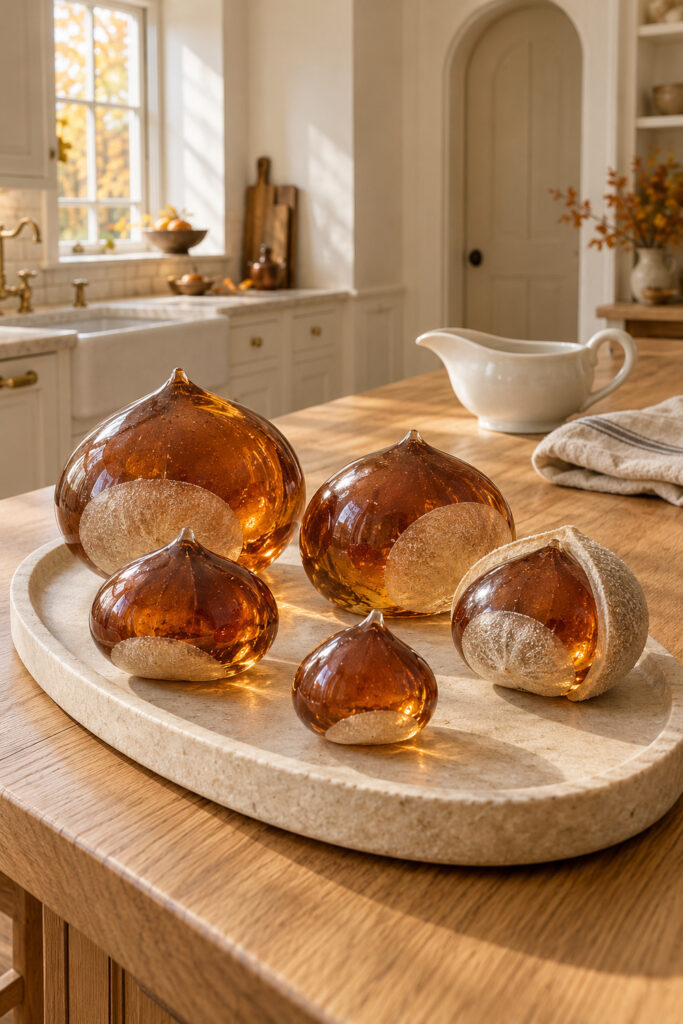
Keep the front edge of the tray visible. That pale border frames the amber shapes and makes the whole arrangement feel intentional, even when the island around it is busy with the ordinary work of Thanksgiving.