*This post may contain affiliate links for which I earn commissions.*
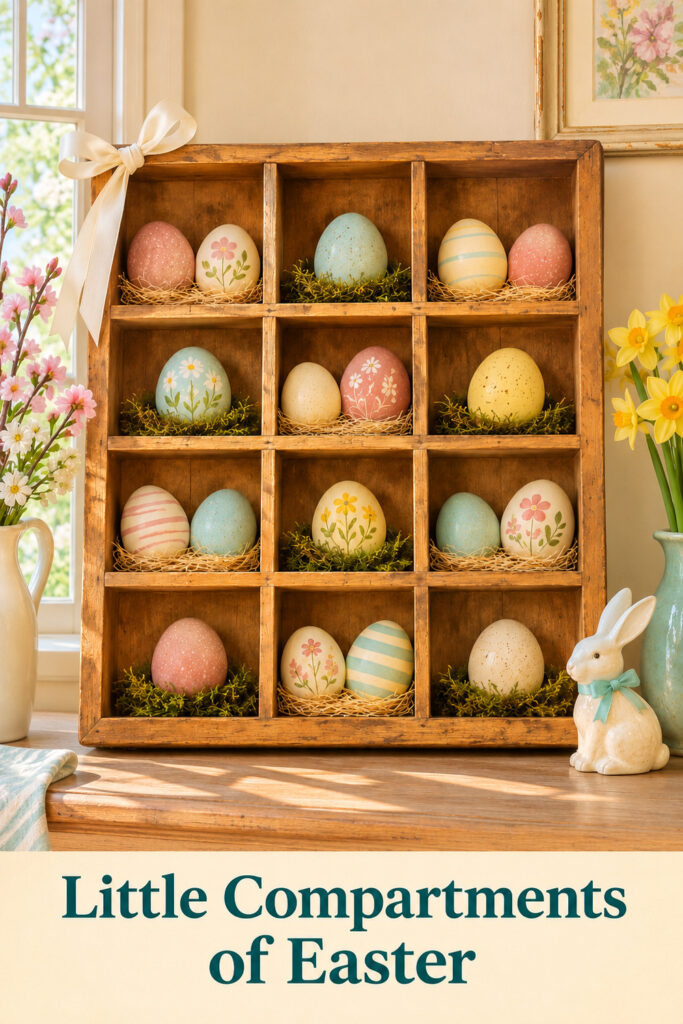
A divided wooden tray gives these Easter eggs their own small display spaces. Speckles, stripes, and painted flowers vary from compartment to compartment, while dusty rose, aqua, and cream keep the collection connected. A ceramic bunny and a pale bow finish the scene.
This inspiration borrows the organized appearance of a printer’s tray, but the compartments are deep enough to hold decorative eggs. That distinction matters when you look for something similar. An old shallow type drawer may have the right character without the capacity shown in the image.
This image was created with AI as decorating inspiration.
What Makes the Compartment Display Work
The wooden dividers create a clear structure around the softer egg shapes. Instead of gathering every ornament into one bowl, the arrangement lets you notice individual patterns. Small groups of one or two eggs also produce changes in spacing without disturbing the overall grid.
The colors move through the display rather than staying in separate rows. Aqua appears at several heights, pink is spread around the tray, and pale yellow creates lighter pauses. That distribution keeps the collection from feeling like a chart sorted by color.
Nest-like material supports the visual story at the base of each compartment. It also adds a fine texture against the smoother eggs. The dividers remain visible, so the filler doesn’t turn the tray into one large mass of moss.
Find Divided wooden display trays
Browse current Amazon options that can help you recreate this look.
Browse Divided wooden display trays on Amazon →As an Amazon Associate I earn from qualifying purchases.
Key Pieces for an Easter Egg Collection
A Deep Divided Display Tray
Look for usable depth and compartment dimensions before focusing on an aged finish. The eggs need enough room to sit securely behind the front edge. A deeper reproduction display shelf may be a better practical match than an actual antique printer’s tray. The image is an idea to interpret, not proof that a particular vintage object will fit.
Lightweight Decorative Eggs
Choose ornaments that work with the tray’s capacity. Hollow or lightweight pieces reduce the load compared with heavy ceramic eggs. Check their actual height and width, including raised details. An egg that fits upright may not fit at an angle beside another one.
Related Patterns
Fine speckles, simple stripes, and small floral motifs provide enough variation for a collection. Keep a shared color palette so the pattern changes look intentional. You can include plain eggs as quiet spaces between the more decorated pieces.
Small Nest-Like Bases
A little decorative straw or faux moss can keep the lower part of each compartment from looking bare. The eggs still need stable support. Don’t depend on a loose tuft of filler to stop a round ornament from rolling off a shallow shelf.
One Supporting Easter Figure
The ceramic bunny beside the tray reinforces the occasion without occupying a compartment. Its pale finish connects with the lighter eggs. A different small rabbit figure could work, but keep it secondary so it doesn’t become a second collection competing for attention.
A Simple Ribbon Accent
The bow softens a corner of the wooden structure. Choose a placement that leaves the compartments visible and doesn’t interfere with the tray’s support. A smaller bow may suit a compact display better than the longer tails shown here.
Sort the Collection Before Filling the Tray
Set out the eggs where you can compare their sizes and patterns. Remove any that won’t fit the intended compartments comfortably. This first check is more useful than trying to squeeze a favorite ornament into a space that is plainly too shallow.
Place the tray in a secure position before adding the collection. Follow the support or mounting requirements of the actual piece. If it stands on furniture, use an appropriate stable arrangement and any needed restraint rather than assuming a casual lean is enough.
Begin with the larger eggs in separate parts of the grid. Then distribute the smaller ones between them. Leave some compartments with a single egg so the collection has a rhythm. Filling every opening with the same number can make the display feel more crowded than it needs to be.
Turn patterned eggs so their main details face the room. A floral motif can disappear if it points toward a divider. Check the view from the normal approach, not just while standing directly in front of the tray.
Add small amounts of filler around the bases once the spacing works. Keep material clear of the front edges and avoid a tangle of loose strands across the eggs. You want to see the little compartments, not wonder where they went.
Fit the Arrangement to Your Dining Room
A sideboard offers a useful background for this kind of collection. Check the full tray footprint, the space needed behind it for support, and the height of any nearby artwork. A piece that appears shallow from the front can need more room once its stand is included.
Keep taller flowers to the sides rather than directly in front of the compartments. The inspiration uses flowers as a frame, but you can omit them on a narrow surface. The egg patterns provide enough seasonal detail on their own.
If you have a smaller divided shelf, reduce the egg count and use fewer pattern families. Keep the same idea of distributing colors through the grid. A compact collection can still feel complete when each opening has a clear purpose.
You don’t need an aged wood finish to borrow the arrangement. Painted cream would make a softer version, while darker wood would emphasize the pale eggs. Choose a finish that gives the ornaments enough contrast without introducing another strong pattern.
Store the decorative eggs separately from edible food and handle fragile finishes according to their care instructions. If you plan to reuse the display, label the storage compartments or take a reference photo. That can spare you a surprisingly long conversation with a pile of nearly identical pastel eggs next spring.
Shop Similar Pieces
Look for Deep Compartment Display Shelves
Check internal cubby dimensions and the intended orientation. A tray designed to lie flat may need a different support than one designed to stand or hang. Confirm that the depth suits your ornaments before choosing by appearance alone.
Shop Similar Decorative Easter Eggs
Compare size, weight, and surface finish across the set. A mixture of restrained patterns can be more useful than many unrelated designs. Check whether hanging loops can be tucked away if the ornaments will sit upright.
Add Small Decorative Nest Material
Choose a manageable texture that can be contained within each opening. Faux moss and fine decorative straw create different effects, so use whichever suits the eggs and wood finish. Keep the amount low enough to show the dividers.
Look for a Small Ceramic Bunny
Choose a stable figure that remains lower than most of the tray. Its job is to finish the surrounding surface, not obscure the egg collection. A quiet cream glaze can connect several pastel colors without adding another one.
Final Styling Tip
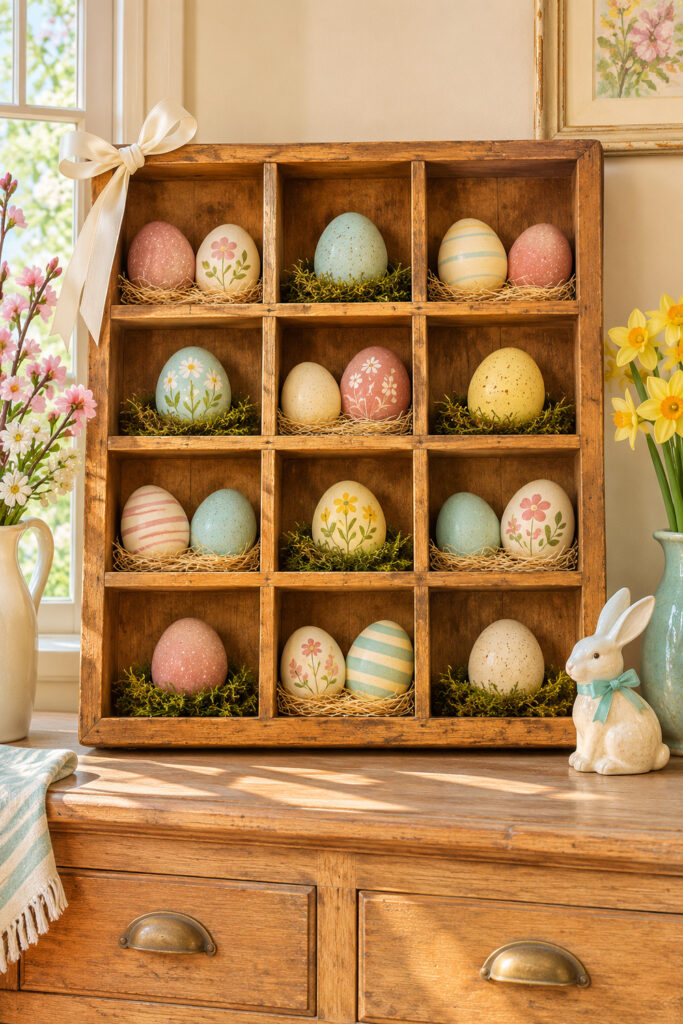
Look for a repeated color in several parts of the grid. If one corner holds all the pink or aqua, move a few eggs before adding more. Better distribution can make the collection feel fuller without increasing its size.