*This post may contain affiliate links for which I earn commissions.*
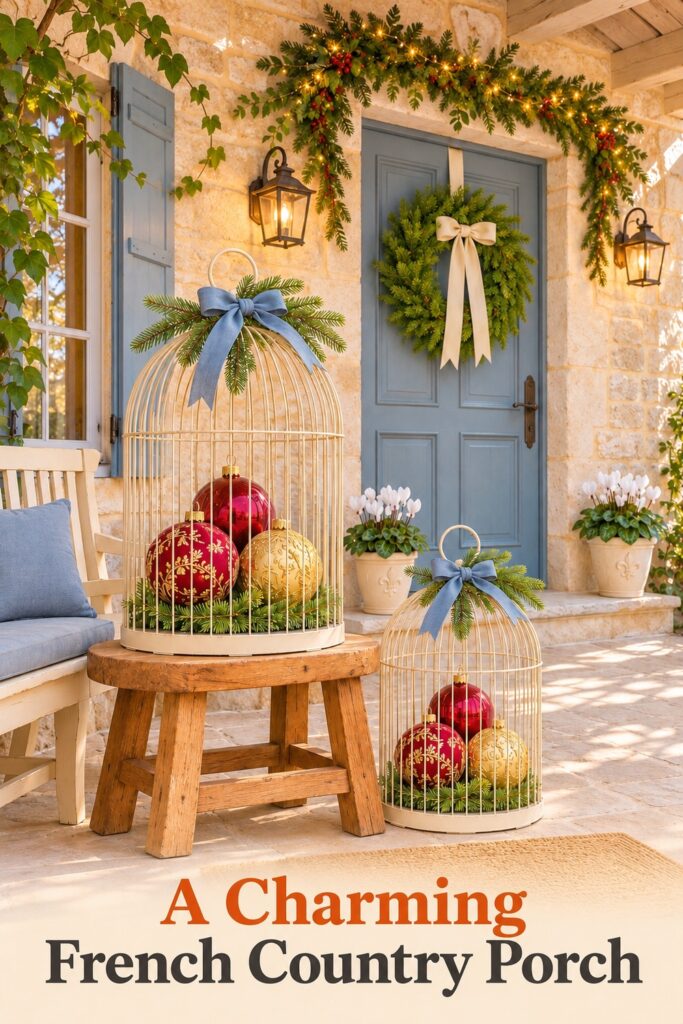
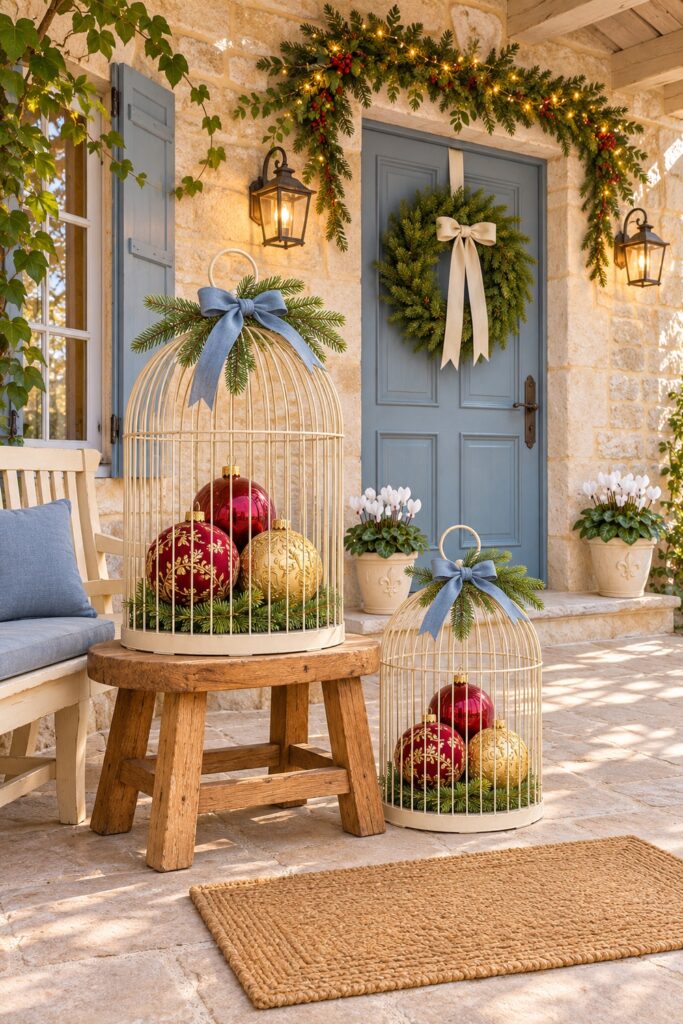
Two cream wire birdcages hold oversized red and gold ornaments beside a blue front door. Fir tips fill their bases, and soft blue bows sit beneath the rounded handles. The taller cage rests on a broad oak stool, while the smaller one sits nearby at floor level, creating a layered Christmas welcome with a clear path to the door.
The inspiration image was created with AI. The cages are decorative objects, and the arrangement is a visual plan rather than a tested outdoor installation. Check the dimensions, access openings, stability, and exposure guidance for the actual pieces you use.
Give the Birdcages a Clear Christmas Role
The wire outlines frame the ornaments without hiding them. Each cage contains a small group of large baubles, so the red and gold remain easy to see through the bars. Their cream finish stands apart from the limestone wall and blue door, adding a soft country shape to the porch.
Choose cages sold for decorative display and inspect how they open. The ornaments need to fit through the available door or removable section, even if they would fit inside the finished cage. Compare the interior dimensions as well as the outside height before buying a group of large baubles.
Build the Ornament Group from the Base
The baubles rest near the bottom on a shallow layer of fir. Their caps point upward, and their round forms remain distinct. Start with the largest ornament toward the back, then place the others slightly forward. Keep them low enough that the cage can close without pressing against their surfaces.
Use ornaments suited to this placement and your household. Lightweight shatter-resistant options may be practical near an entrance, but check the actual material rather than relying on appearance. A small concealed support may be needed to stop round pieces rolling; it should not prevent the cage from resting flat.
Keep the Wire Outline Visible
The empty space above the baubles is part of the effect. Filling the whole cage with greenery would hide its shape and make the ornaments less visible. A few fir tips at the bottom and a small spray near the top are enough to connect the interior to the bow.
Turn each cage to show a clean front view, keeping its opening accessible for later adjustments. If the bars are closely spaced, choose fewer ornaments with clear color contrast. A fuller cage does not always look more generous when its contents become one indistinct mass behind the wire.
Use Two Heights with Stable Supports
The larger cage sits on a low stool with a wide top and four visible legs. The smaller cage remains on the porch floor. This gives the pair a rising outline while keeping the taller piece within reach for arranging. Their bases are fully supported rather than perched on narrow rims.
Check the stool and floor surface with the empty cages first. The support needs to suit the full weight and the conditions of the porch. A lightweight cage can still tip in a breeze, so follow the maker’s placement guidance and bring the display inside if conditions make it unstable.
Position the Pair Beyond the Door Route
The cages occupy a side area beside the bench, leaving the landing and handle clear. At home, open the door fully before selecting their final position. Include the space needed to stand at the lock, carry parcels, and walk past another person using the entrance.
If the landing is small, one cage may suit it better than two. You can keep the layered effect by placing a compact flower pot behind the single cage or using the existing wall wreath above it. Preserve the clear route even when that changes the number of objects shown.
Repeat Blue and Cream Around the Porch
Soft blue bows connect the cages to the door and bench cushion. Cream ribbon on the wreath repeats the cage finish at eye level. These color links give the whole entrance a coordinated look without requiring matching wire decorations on every surface.
Choose ribbon with enough body to hold a simple bow, and check whether it is suitable for the porch exposure. Keep the tails short enough to remain within the cage outline. A bow that brushes the ground will lose its neat shape and can make the display look unfinished.
Let the Door Wreath Stay Simple
The fir wreath carries one generous cream bow. Its open center and broad green outline provide a calm background above the detailed cages. A busy collection of miniature ornaments on the wreath would add another small-scale pattern beside the wire bars and decorated baubles.
Use a hanger and wreath size suited to the door. Check that the handle, lock, and closing edge remain accessible. The generated image shows an overall relationship, so measure your actual door before choosing a wreath by its apparent size beside the cages.
Add Flowers as the Low Background Layer
White cyclamen in cream pots soften the stone landing behind the cages. Their pale flowers belong with the wire finish, while the greenery connects them to the wreath. Choose plants or faux stems appropriate for your local conditions and household rather than assuming a pictured plant will thrive on any porch.
Keep pots on steady surfaces and use suitable protection wherever moisture might mark a finish. The flowers should fill the background gap, not extend into the walking route. A smaller pair can create the same repetition if the entrance has less room around the door.
Arrange the Porch in Five Passes
- Open the door and map the usable side area. Check the landing, support stool, and available cage openings before gathering the ornaments.
- Place the empty cages at two heights with their bases fully supported. Test the view from the path and confirm that the door and bench remain usable.
- Add a shallow fir layer and a few large ornaments to each cage. Keep the shapes visible, prevent rolling, and close the access sections properly.
- Finish the tops with small fir sprays and blue bows. Repeat cream in the door wreath and place the flower pots behind the main group where space permits.
- Turn on appropriate porch lighting for evening use and check the route again. Use only lighting intended for the conditions, keeping connections and cables out of the walking area.
Choose the Pieces That Set the Proportions
Compare three main items before adding details: decorative cages with usable openings, a stable low support for the larger piece, and ornaments sized for the interiors. The blue ribbon, fir, and flowers can follow those decisions. Measure each stage so the charming little scene stays achievable on your own landing.
Check the Pair from Both Sides
An entrance display is seen on the way out as well as on the way in. Look from the bench and from inside the open door to check whether the cage openings or ornament backs need a small adjustment. Keep those access points working even if another angle looks slightly tidier.
After the season, remove the ornaments before moving the cages. Store the bows where their loops will not be crushed, and follow the care guidance for the wire finish. Separating the pieces also makes it easier to choose a different ribbon color next year without rebuilding the whole porch arrangement.
Final Styling Tip
View the cages from the path rather than only from beside them. You should see the wire shapes, a few distinct ornaments, and the bows above. If the contents seem crowded, remove one bauble and turn the remaining pieces slightly. The clear red-and-gold grouping will carry the welcome.