*This post may contain affiliate links for which I earn commissions.*
An oversized patchwork cracker runs along the center of this Christmas table, with smaller versions waiting at the place settings. Red, teal, pink, and ivory fabric squares make the familiar gathered shape feel like a small quilt. Cream bows tie the ends, and a scalloped runner gives the whole arrangement a softer edge.
This is a textile-led table rather than a display built around shiny ornaments. White dishes, woven chargers, and a striped pitcher provide supporting layers. You can recreate the relationship between those pieces with decorative fabric crackers or similar wrapped shapes, keeping the proportions suited to the table you actually use.
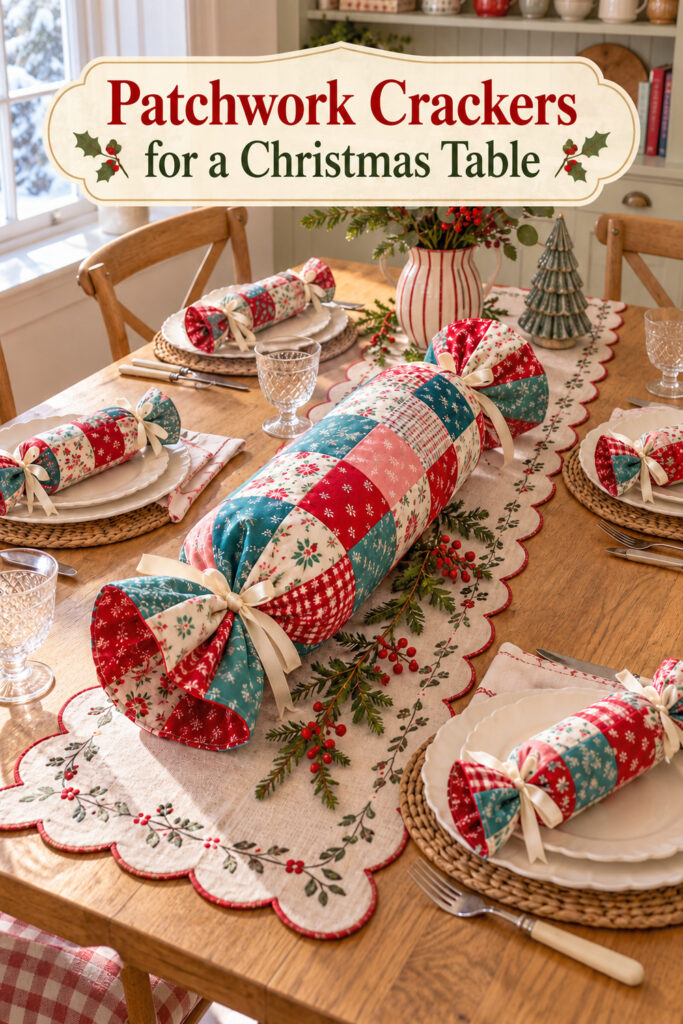
The inspiration image was created with AI and shows a styling concept rather than a photographed set of real products.
Why the Patchwork Crackers Hold the Table Together
The same shape appears at two scales. The large center piece introduces the idea, and the smaller crackers repeat it where guests sit. That connection makes the place settings feel part of the display. You don’t need every plate, glass, and napkin to match when one distinctive motif already links the table.
Find Quilting Fabric Bundles
Browse current Amazon options that can help you recreate this look.
Browse Quilting Fabric Bundles on Amazon →As an Amazon Associate I earn from qualifying purchases.
Patchwork also allows several colors to share the same object. The red and teal create contrast, pink softens the transition, and ivory leaves small quiet areas between darker prints. The individual patterns are relatively small compared with the cracker shape. That balance lets you see the overall silhouette before noticing the fabric details.
The natural materials keep the combination from feeling too sweet. Wood and woven chargers add warm plain surfaces around the printed fabric, while white plates separate the crackers from the table. If your own dishes are patterned, simplify another layer rather than stacking equally busy designs underneath the patchwork.
Key Pieces for a Fabric Christmas Table
Decorative Fabric Crackers
Look for a gathered cylinder with clearly defined tied ends. A reusable fabric cracker or a decorative textile interpretation can supply the shape, though the exact oversized patchwork version may not exist as a retail piece. Decide whether yours is intended as an ornament, a favor holder, or a functioning cracker before choosing it.
The inspiration doesn’t establish that any of these objects contain snapping strips or gifts. You can use the form purely as decoration. If adding small favors, choose a construction designed to open conveniently, keep food in appropriate separate packaging, and account for the ages of the guests. Appearance alone won’t tell you how a finished item is meant to be used.
Coordinated Patchwork Fabric
Choose a small set of related colors and allow the prints to vary. Tiny florals, checks, and simple seasonal marks can sit together if their scale is similar. A few plain patches can give the eye a pause. The aim is a connected fabric surface, not a competition between every square.
If actual patchwork is more work than you want, a suitable patchwork-print fabric offers a visual substitute. It won’t have the same seams, but it can retain the color rhythm and gathered shape. A pair of coordinating fabrics can also work. This is a styling idea, so you can choose how much sewing belongs in your version.
Cream Ribbon Ties
Cream bows give the gathered ends a clear finish without adding another strong color. They also connect to the plates and runner. Use ties with enough body to hold a readable bow. Very thin ribbon can vanish into busy fabric, while stiff oversized loops can compete with the cracker’s shape.
Check the ribbon tails at the place settings. They should remain on the plate or folded napkin area rather than trail into glasses or cutlery. For a favor that guests will open, use an ordinary adjustable bow. A decorative knot that has to be cut apart can make a simple table detail surprisingly inconvenient.
A Scalloped Fabric Runner
The pale runner frames the large cracker, with red edging echoing the fabric. Its curved border adds softness against the straight table edges. A plain cream runner can serve the same purpose if you already own one. The patchwork is detailed enough that elaborate embroidery underneath is optional.
Lay the runner out before arranging the place settings. Check the width that remains for plates and glasses on both sides. If the table is narrow, a smaller center cracker or a short central cloth may be more practical. Preserve room for eating rather than treating the inspiration’s proportions as a fixed plan.
White Plates and Woven Chargers
White dishes provide a clear resting place for the small crackers. The woven chargers add another texture, but their relatively quiet color keeps them secondary. Use your existing plates and assess whether a charger adds anything useful. On a compact table, the extra diameter may take up space better left for guests.
A Modest Pitcher Arrangement
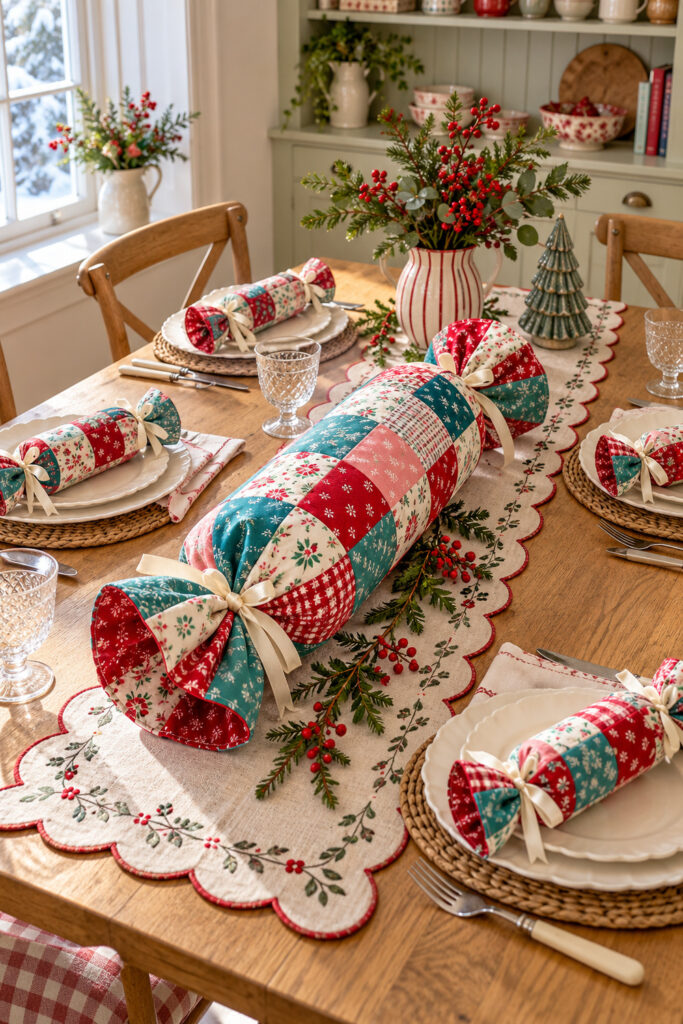
The striped pitcher and evergreen stems add height near the far end of the runner. Red berry accents repeat the fabric color without requiring another patchwork object. Keep the arrangement low or narrow enough for people to see one another. A few stems in an existing jug can be sufficient.
The small ceramic tree is an optional supporting piece. Test the table with only the pitcher and textile decorations before adding it. If serving dishes have nowhere to land, remove an ornament rather than squeezing the meal around the display. The table should still feel ready for people.
Set the Table from the Place Settings Inward
Put out plates, glasses, and cutlery first. This establishes the space guests actually need. Then place the small crackers across the plates and check that the ends don’t reach into neighboring settings. A decorative object can look small on its own and much larger once every place has one.
Add the runner and center piece within the remaining area. The image’s oversized cracker is the main statement, but you can reduce its scale or omit it if the table is short. Matching small crackers at each seat already create repetition. Another option is to display the large piece on a sideboard and carry only its fabric colors onto the dining table.
Consider when food will arrive. If you serve family style, make a clear plan for moving the central decoration before setting down hot dishes. Keep fabric away from candles and other heat sources. Battery-operated lights elsewhere in the room can provide seasonal atmosphere without putting a flame beside ribbon and textiles.
Check the arrangement while seated. You should be able to see the person opposite and reach the items you need without moving bows or branches repeatedly. Shift the pitcher if it interrupts conversation. A photograph can tolerate an inconvenient centerpiece; a gathering is much nicer when the display makes room for everyone.
Shop Similar Pieces for a Patchwork Table
Look for Reusable Fabric Crackers
Compare opening methods, dimensions, and whether the item is decorative or intended to hold favors. A coordinated fabric set can suggest the look even without pieced squares. Check the actual fabric care instructions before planning to reuse it around food.
Shop Similar Quilting Fabric and Cream Ribbon
For a separate sewing project, choose a small coordinated fabric group and ribbon suited to gathered ends. Focus on the palette and print scale. The inspiration is a guide to the appearance, not a tested construction pattern for the large centerpiece.
Add a Plain Runner or Existing White Dishes
Start with pieces already in your cupboard. A quiet runner and familiar plates allow the fabric shapes to stand out. New chargers or extra ornaments are optional once the repeated cracker motif is clearly established.
Final Styling Tip
Set one complete place before decorating the center. If the small cracker, plate, and glass fit comfortably together, use that spacing to decide how large the centerpiece can sensibly be.