*This post may contain affiliate links for which I earn commissions.*
Gold and silver ornaments hang inside the high transom above these French doors. A full evergreen garland follows the fixed upper frame, with champagne bows at the ends. The doors below remain clear, so the decoration feels like part of the architecture rather than a curtain across the passage.
This is a Christmas idea for an overlooked strip of space. A transom is the separate window above a door, and its height can frame a small hanging display beautifully. Borrow the short strands and repeated metal finishes, then adjust the number and length to your own fixed window area and safe supports.
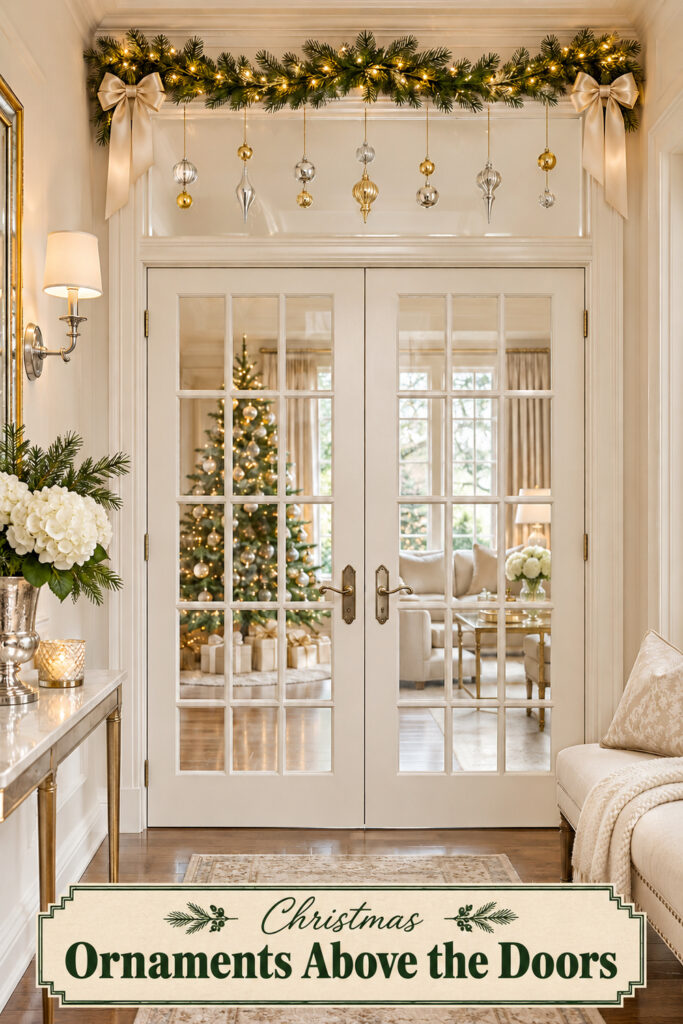
This image was generated with AI as decorating inspiration. Similar lightweight decorations can recreate the effect where suitable supports and access are available.
Keep the Display inside the Upper Window
The ornaments stop above the main door frame. That boundary makes the arrangement look tailored and leaves the door handles, hinges and glass panels free. The garland sits above the strands rather than weaving through every ornament.
Use the fixed window area as your guide. Decide where the lowest ornament can safely finish, allowing a clear gap above anything that opens. Don’t assume a transom is fixed just because it looks that way. Check whether yours tilts or swings for ventilation before planning any decoration around its frame.
Work Out Safe Access and Support First
High decorations need a safe way to install and remove them. Use appropriate access equipment and get help when the height or location makes the work awkward. Reaching from a chair or leaning across an open doorway isn’t a sensible way to hang delicate ornaments.
Choose supports suited to the frame material and the full decorated weight. Adhesive products can behave differently on painted wood, glass and older finishes, so follow their directions and check compatibility. Use separate supports for a heavy garland rather than asking the ornament cords to carry it.
Lightweight, shatter-resistant ornaments are a practical choice above a route people use. Check the hanging caps and loops before lifting anything into place. A decorative cap that pulls free easily isn’t a secure attachment point.
Consider how you’ll reach the display at the end of the season as well. Keep the fixing method simple enough to inspect and undo without pulling branches or cords across the glass. The attractive result should come from a manageable installation, not from hiding a complicated collection of knots above the frame.
Choose a Small Family of Ornament Shapes
Round baubles and longer finial shapes give the strands variety. The gold and silver colors repeat across the width, while the clear gaps keep the ornaments from merging into one heavy band.
Choose a related scale for your own grouping. A very large bauble beside several tiny ones can make a short strand look unbalanced. Try laying the ornaments on a table in the order you plan to hang them, with string between them to suggest the spacing.
Use a small number of shapes and let the finishes vary. Smooth, ribbed and gently faceted surfaces can catch light differently without introducing more colors. Champagne ribbon above them provides a softer link between the warm gold and cool silver.
Keep the actual ornaments’ weight in mind. Two small pieces may be more suitable for a strand than three heavier ones. The photograph supplies a visual direction, not a requirement to put the same number on every cord. Make the arrangement fit the supports and the available upper-window height.
Make the Strands before Hanging Them
Prepare the cords at table height so you can check knots and spacing closely. Use material suitable for supporting the ornaments and follow the attachment guidance for the pieces you choose. Decorative ribbon can finish a join without being the only thing holding a heavy object.
Set the lowest ornament first and work upward. Keep each attachment secure so the pieces won’t slide together when lifted. Test the strand over a soft surface before taking it to the window.
Vary the lengths modestly. In the inspiration, the lower edges move gently up and down while remaining within the transom. A deep drop in the middle would change the whole effect and could put an ornament too close to the moving door.
Hang the center strand, then work outward, checking the view from the hall. Adjust the gaps before adding the garland’s final layers. Leave enough space that neighboring pieces won’t touch if air movement shifts a cord. A delicate glimmer is appealing; a row of ornaments knocking against each other is rather less restful.
Use the Garland to Frame, Not Hide
The evergreen runs across the top and turns down slightly at the ends. Warm lights make the branch texture visible against the cream trim. Two champagne bows mark the outer points without covering the hanging ornaments.
Shape the garland on its own supports first. Keep branches clear of door openings, wall lights and any window hardware. If the upper frame is narrow, use a lighter swag rather than forcing a thick garland into the space.
Choose lights suitable for indoor use and route their leads according to the manufacturer’s directions. Keep wires away from hinges and moving panels. Make switches or battery compartments accessible without tugging the hanging strands.
The bow tails should sit at the ends of the upper display. Trim them if they reach into the door area or overlap the longest ornaments. A shorter, fuller bow can look more considered than a long ribbon that competes with every vertical line below it.
Let the Hallway Stay Quiet Below
The pale runner, upholstered seat and low console provide a calm base. A silver light and a pale flower arrangement repeat the metal and cream colors. The decorated room beyond the glass gives the scene depth without needing another large display in the hall.
Use the furnishings already present in your own entrance or corridor. A single cushion or a small metal tray can connect the palette below the ornaments. Don’t narrow the passage with extra furniture just to reproduce the photograph.
If the room beyond the doors is already decorated, let it do some of the work. The high ornament band can act as a frame for that view. Keep the glass reasonably clear and avoid adding another hanging layer across the main panels.
Choose Comparable Pieces with the Installation in Mind
The support plan comes first. Select ornament sizes and cord lengths after you know what the frame and safe access will allow.
Look for Lightweight Metallic Ornaments
Choose secure hanging points and a related range of sizes. Shatter-resistant pieces are useful above a frequently used doorway.
Shop Similar Champagne Hanging Cord
Check that it is suitable for the actual load. A fine, simple appearance will let the ornament shapes remain the feature.
Look for Flexible Evergreen Garland
Choose a manageable weight and enough bend to follow the fixed frame. The strands should stay visible below it.
Open the Doors as a Final Test
Check the full movement of both doors and any opening transom. Look for cords, ribbon tails or branches that shift into the opening. Then view the display from both sides of the glass and adjust any reflection that hides a main shape.
Final Styling Tip
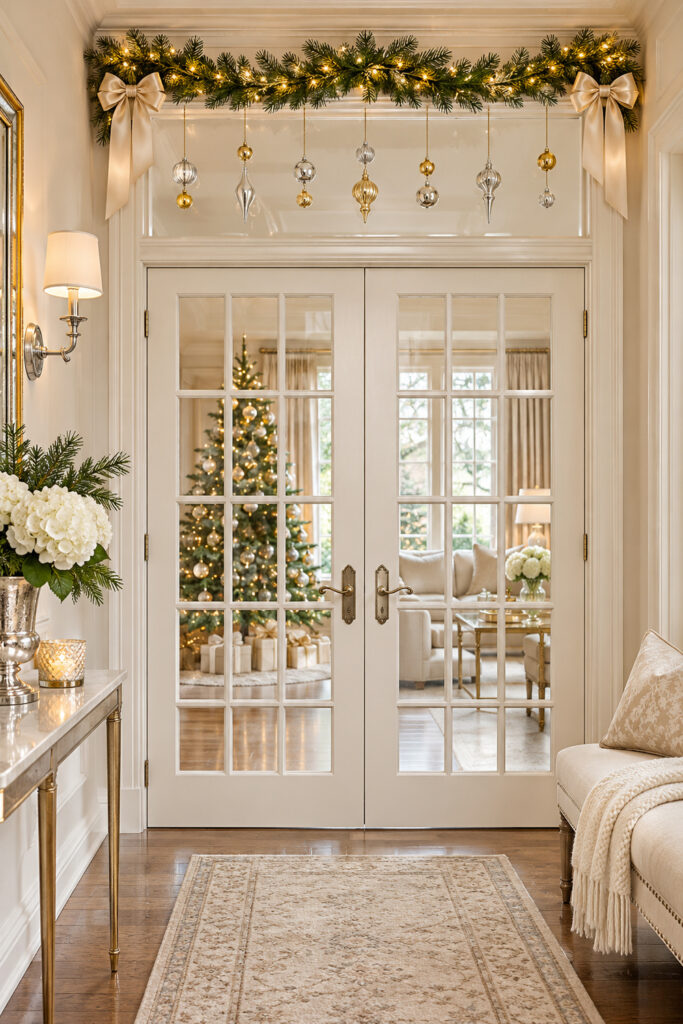
Keep a clear line between the lowest ornaments and the top of the moving doors. That small interval is what makes the decoration look carefully fitted to the window.