*This post may contain affiliate links for which I earn commissions.*
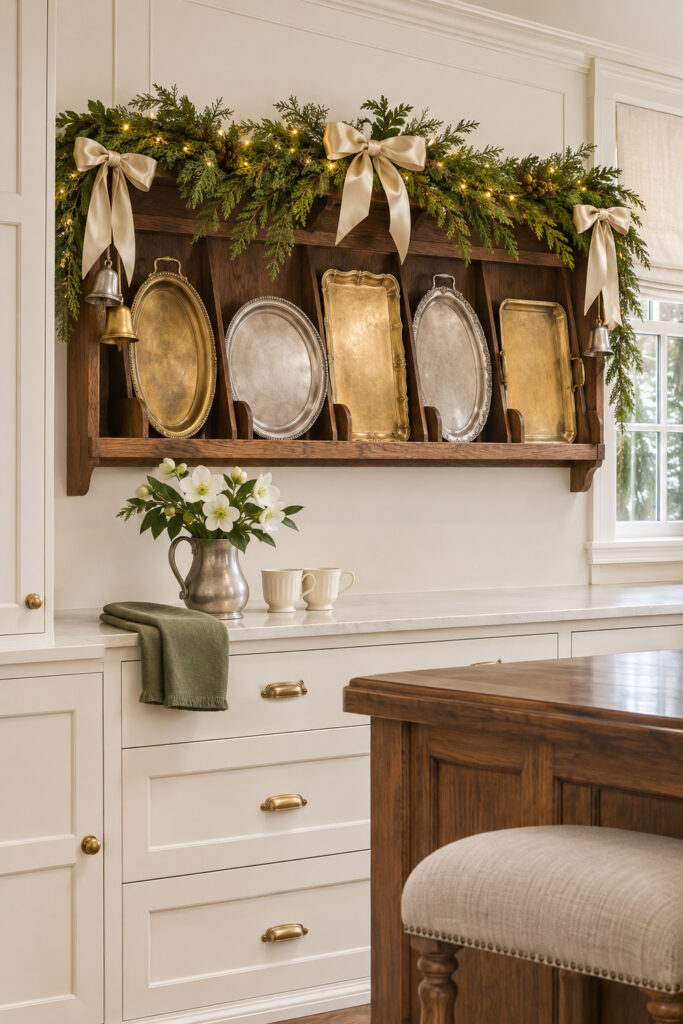
Five metal trays turn a kitchen rack into a Christmas display with a useful purpose after the holiday. Warm brass alternates with silver, and the shapes change from oval to rectangular without breaking the rhythm. Evergreen, bells and champagne bows dress the top while leaving the trays easy to see.
The appeal comes from giving ordinary serving pieces a clear place to stand. You can use a smaller group, a simpler rack or trays you already own. Keep the supports secure, repeat both finishes and let the Christmas layer frame the collection rather than bury it. The counter below can remain ready for daily use.
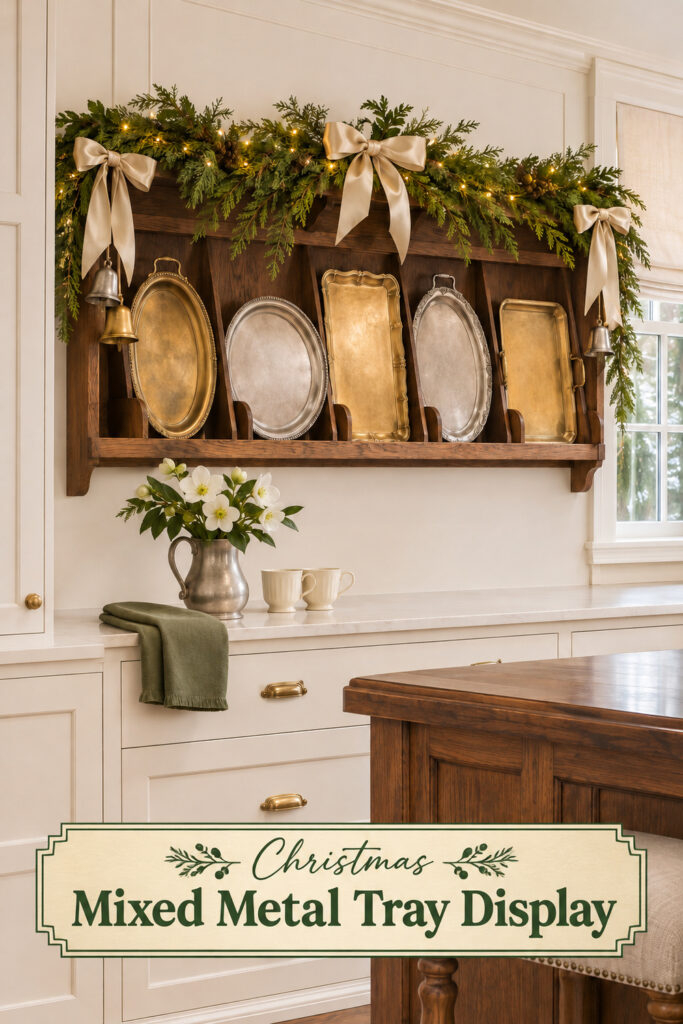
This image was generated with AI as decorating inspiration. Similar serving pieces and suitable storage can recreate the overall effect.
Let the Tray Shapes Set the Rhythm
The rack holds the trays upright in a single row. A tall brass rectangle near the middle gives the group a little height, while rounder silver pieces separate the warmer metal surfaces. There is enough overlap to make a collection, but each main outline remains readable.
Start by laying your trays on a table and looking at their shapes together. Alternate a warm finish with a cooler one where possible. Then check height and width, not just color. A wide round tray beside a narrow rectangle can create variety without adding more objects to an already full rack.
Check the Rack Before Filling It
Serving trays can weigh much more than decorative plates. Use a rack and wall fixings rated for the actual load, with slots deep enough for the tray edges. Don’t assume that a shelf made for lightweight plates will safely hold a row of large metal trays.
Look at the front retaining rail. It should keep the pieces from sliding forward without covering so much that their shapes disappear. Each tray needs a stable resting point, rather than leaning on the one beside it as its only support.
Place the heaviest pieces according to the rack maker’s guidance. If the rack has separate compartments, respect their widths. For a valuable tray, consider whether metal edges rubbing on wood or neighboring pieces could mark the finish.
Keep the arrangement away from the cooker, rising steam and an area where you’ll lift heavy pans. A display above a quiet counter is easier to maintain than one squeezed into the main cooking route. You should be able to remove a tray without reaching over hot equipment.
Choose Finishes That Look Comfortable Together
The brass in the inspiration has a softly aged surface. The silver pieces also have gentle texture rather than a perfect mirror finish. That shared softness helps the two colors feel related.
You can combine different levels of shine, but avoid judging every piece in isolation. Put the trays together under your kitchen lighting. A very bright chrome tray may need a paler silver companion or a little more space from a heavily aged brass piece.
Choose care methods for the actual metal and finish. A brass-colored coating isn’t necessarily solid brass, and a silver-colored tray may be plated or stainless steel. Aggressive polishing can damage some surfaces. Follow the maker’s guidance instead of trying to force every piece into the same appearance.
Decorative trays can join the collection even if they aren’t suitable for food contact. Just keep their role clear and serve food on appropriate pieces. The rack makes them useful as decoration, but it doesn’t change what a tray was made to hold.
Give the Garland Its Own Supports
A full evergreen sweep runs across the rack’s upper edge. Small lights make the branches visible against the dark wood, and three champagne bows provide a calm repeated accent. Bells hang near the ends, outside the tray faces.
Attach the greenery with a method suited to the rack and its finish. Keep its weight separate from fragile tray handles or decorative rims. The supports should remain secure when you take a tray out.
Shape the branches before adding bows. Let the foliage spread across the top and fall modestly at the ends, then trim or tuck anything that reaches into the counter work area. The display should frame the rack, not turn it into an overgrown hiding place.
Use lights appropriate for the location and route the cord away from handles, steam and sharp edges. Keep switches accessible. If your kitchen has limited power nearby, a suitable battery strand may be simpler, with its compartment in a dry reachable position. Leave ventilation and electrical equipment unobstructed.
Keep the Counter Below Calm
A pewter-colored jug of white flowers, two cream cups and a folded green towel repeat the rack’s colors without creating another collection. The pale counter gives those few pieces enough definition.
Use a low flower arrangement if the counter is shallow. A large spreading bouquet could block the trays or catch your arm when you reach for a cup. If you use fresh flowers, protect the counter and keep water away from the rack and lights.
The towel introduces a soft green surface below the evergreen. Fold it neatly where it won’t be dragged into food preparation, or hang it on its regular rail. It can provide the same color connection from a more practical place.
Don’t fill the counter with extra metallic objects just because the trays are overhead. One jug is enough to repeat the cooler finish. Leave the rest of the area clear for whatever this part of your kitchen normally needs to do. A display feels more settled when it makes room for the room’s actual work.
Build a Smaller Collection Gradually
Three trays can create the same rhythm: warm, cool and warm, or the reverse. Choose a rack sized for those pieces instead of buying fillers for empty slots. Space around a small group can be attractive.
If you have only silver trays, bring brass in through the bells or a nearby handle. If your collection is mostly brass, a pewter jug and one silver ornament can supply the cooler note. Keep the whole arrangement readable before worrying about equal amounts of each finish.
A suitable freestanding tray holder on a sideboard can replace wall storage. Check its load and stability, and place it where children or passing sleeves won’t knock the pieces forward. The seasonal greenery can sit behind it on separate supports.
Shop for Storage Before More Trays
The rack’s capacity and your existing pieces should guide the shopping. Adding a secure holder may be more useful than adding another metal finish.
Look for a Deep Tray or Platter Rack
Confirm its load rating and wall installation requirements. Check the width of the slots against the pieces you plan to display.
Shop Similar Brass and Silver Serving Trays
Choose shapes that make a clear group and surfaces you can care for appropriately. Check food-contact suitability if you intend to serve from them.
Look for Champagne Ribbon and Small Bells
Keep them light enough for the planned supports. The pale ribbon should show against the dark rack without hiding its upper edge.
Remove and Replace One Tray as a Test
Take out a piece you expect to use, then put it back. Watch for snagged foliage, shifting neighbors and lights caught in handles. Adjust the display until ordinary use leaves the supports and decorations undisturbed.
Final Styling Tip
Leave a little wood visible between the metal outlines. Those dark gaps let the different tray shapes show instead of turning the rack into one continuous reflective surface.