*This post may contain affiliate links for which I earn commissions.*
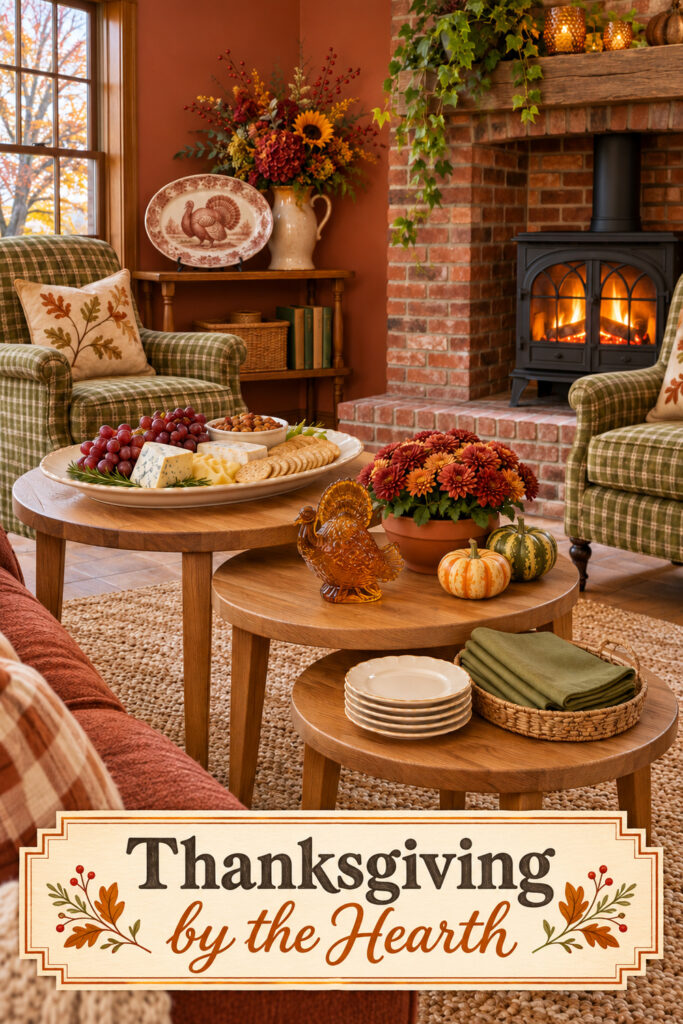
Three little tables make this Thanksgiving gathering feel ready for company. One holds the cheese and crackers, another carries flowers and an amber turkey, and the lowest keeps plates and napkins within reach. Behind them, checked chairs and a brick hearth give the arrangement a comfortable place to belong.
The useful idea is the separation. You can enjoy a generous harvest display without trying to squeeze every serving piece onto the same coffee table. The different heights also let the turkey and chrysanthemums remain visible beside the larger platter. It feels like a room arranged for people to sit down and stay awhile.
This image was created with AI as decorating inspiration. You can use similar furniture and seasonal accents to recreate its effect.
Let each table take one job
The largest surface holds the appetizer platter, where its width is useful. The middle table has the seasonal arrangement, while the lowest becomes a little plate station. That division makes the grouping easy to understand at a glance.
Place your empty serving platter first, then set the plates where a seated guest can reach them. Add decorations after those practical pieces are settled. If the tables overlap, leave enough of each top exposed to use it properly; a narrow crescent of tabletop is a poor place for a stack of dishes.
Find wood nesting tables
Browse current Amazon options that can help you recreate this look.
Browse wood nesting tables on Amazon →As an Amazon Associate I earn from qualifying purchases.
You can overlap furniture visually without letting it wobble or catch against the next piece. Check that every leg rests firmly on the floor and that guests can reach the food without leaning across the flowerpot. The arrangement should feel generous, with no balancing act required.
Start with tables that work together
The oak surfaces repeat the warm mantel and small shelf behind the chairs. Their rounded edges soften the grouping, especially beside the straight lines of the brickwork. A similar wood tone would help separate tables look related even if they weren’t sold as a set.
Look for sturdy pieces with tops large enough for their assigned uses. The lowest table still needs to hold plates securely; the tallest should support a loaded platter without feeling top-heavy. Measure your intended dishes before choosing furniture, rather than discovering afterward that the serving tray hangs over the edge.
For an existing mixed set, repeat one small material across the surfaces. Cream plates and a cream platter can connect a dark table with a lighter one. Keep the larger furniture finishes as they are unless they truly clash with the room.
The rug adds texture under the tables, but it should lie flat. Test the furniture after placing it on the rug because thick pile can make a small table less steady. Avoid positioning a leg half on and half off the edge.
Build a harvest grouping beside the food
Rust chrysanthemums, small pumpkins, and the amber turkey give the middle table its Thanksgiving character. Their colors sit comfortably beside the cheese platter and autumn view without making the food look like part of a centerpiece.
Keep the flowers compact enough to reveal the turkey. A low pot makes that easier, while the mound of blooms gives the arrangement fullness. Choose a container with a protected base and contain any watering mess away from food and furniture.
The pumpkins vary slightly in size and color. Group them together rather than spacing one beside every object. That gives the eye a small harvest cluster to notice, with clear wood around it. A single larger pumpkin could do the same job on a narrower surface.
Place the turkey toward the front of the decorative table, where its outline stays readable. It needn’t be glass to work. A ceramic or carved version could provide the same holiday cue, while an amber vessel elsewhere could echo the warm color.
Make the serving pieces easy to use
A broad oval platter gives the appetizers a clear boundary. Cheese, grapes, crackers, and a small bowl sit together, with the rim still visible around them. That visible edge helps the serving arrangement look contained instead of spilling across the furniture.
Choose dishes meant for serving food, and add the appropriate utensils for what you offer. Keep fragrant flowers and decorative greenery away from anything people will eat. Treat the photograph as a decorating reference, then arrange your actual menu according to its serving and storage needs.
The small plates form a tidy stack on the lowest table. Put napkins beside them in a shallow basket, folded so guests can lift one without disturbing the rest. Keep the stack modest and replenish it from another room if you’re hosting a larger group.
Before guests arrive, try collecting a plate, napkin, and appetizer yourself. If the sequence sends you back and forth between awkward corners, switch the positions. The neatest arrangement is more useful when it also makes sense in motion.
Connect the tables to the seating
The checked chairs and rust-colored sofa turn the serving group into a conversation area. Olive napkins repeat the chair color, and the sofa picks up the chrysanthemums. Those connections are quiet, but they help the room feel considered.
Use one textile color to link the tables with your own seating. A folded napkin, cushion, or throw can repeat a tone without matching the entire room. If your upholstery is plain, a small check adds the farmhouse feeling shown here.
The turkey platter on the background shelf reinforces the holiday without adding more tabletop clutter. Use a sound plate stand and a stable shelf, and leave the main food surfaces clear. A second seasonal detail farther back makes the decorating feel spread through the room.
Keep furniture and textiles at the clearances required by your stove or fireplace. The image suggests a fireside gathering, but the actual appliance instructions determine where tables, chairs, flowers, and blankets can safely sit.
Adjust the grouping for your home
Two tables can preserve the same idea. Put food on the larger one and combine a small decorative grouping with plates on the second, leaving a clear pickup area. Move extra napkins to a nearby shelf.
If you already use an ottoman, place a firm serving tray on it and add one small side table for the harvest display. Test the tray carefully; a deeply padded surface may be better used for feet while food stays on a stable table.
Without a fireplace, the arrangement can sit between a sofa and two chairs near a window. Keep the warm wood, harvest flowers, and turkey detail. Those elements carry the Thanksgiving mood without requiring brickwork.
Pick the pieces worth seeking out
Choose useful serving furniture first, followed by one unmistakable holiday accent. Most of the remaining warmth can come from dishes and textiles you already own.
Look for wood nesting tables
Check the dimensions of every top, not just the largest one. A set is most useful here when the smaller tables remain practical after they are pulled apart.
Shop similar amber turkey accents
Look for a stable base and a size that can sit beside flowers without disappearing. A warm ceramic substitute can create a similar effect with less reflective shine.
Look for shallow napkin baskets
A low rim makes folded napkins easy to lift. Choose a basket that fits the table with room left for the plate stack.
Try the arrangement from every seat
Sit on the sofa, then in each chair, and check what is easy to reach. Turn platter handles or serving utensils toward the seating, and move flowers that block conversation. The little tables should help the gathering feel relaxed, rather than make everyone protect the decorations.
Final Styling Tip
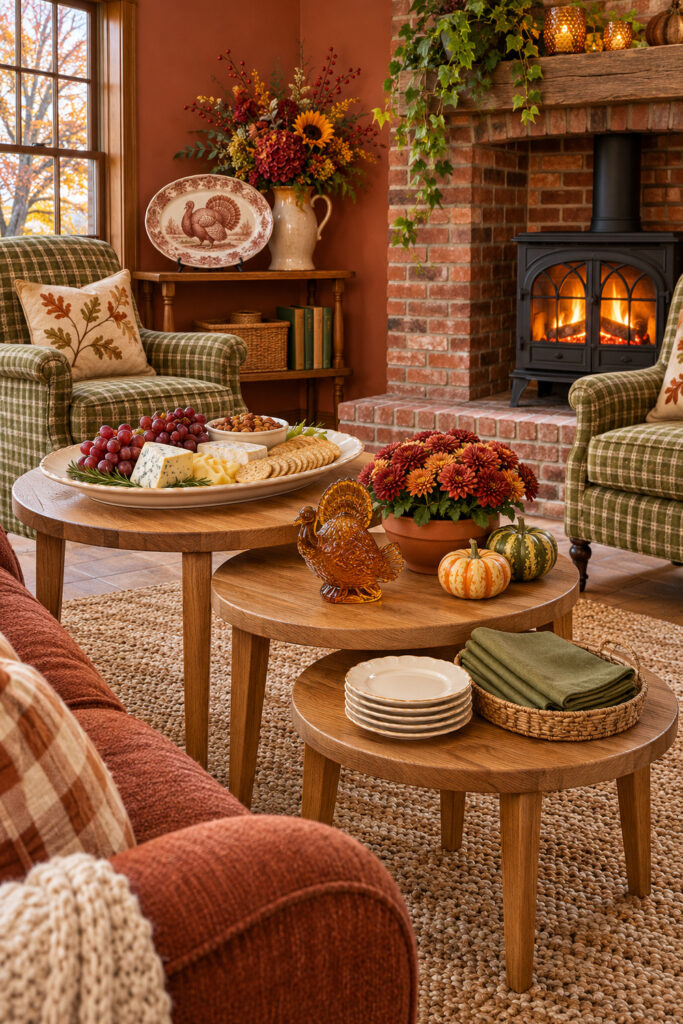
Repeat the olive of the checked chairs in the napkins. That small connection ties the serving tables to the seating without adding another decoration.