*This post may contain affiliate links for which I earn commissions.*
I have a niche in my home with three open shelves that I’d been fighting with for 20 years. Twenty years! It’s a small part of the house, but figuring out what to put there had become one of those decorating problems I kept coming back to.
We were the first owners and when we moved in everything was new and up-to-date. I loved the pair of open niches that had glass shelves on one side above a large alcove and room for a TV on the other side with a fireplace underneath.
There was a canned light at the top of each one and there were many nights after everyone had gone to bed that I would turn them on because I was fascinated with how the light filtered down through the glass shelves and touched each object on the way.
But I’m just not a good decorator on my own. One paint experiment in the master bedroom of our previous house and my husband begged me to never even pick paint colors alone – and I wholeheartedly agreed that it was a wise request.
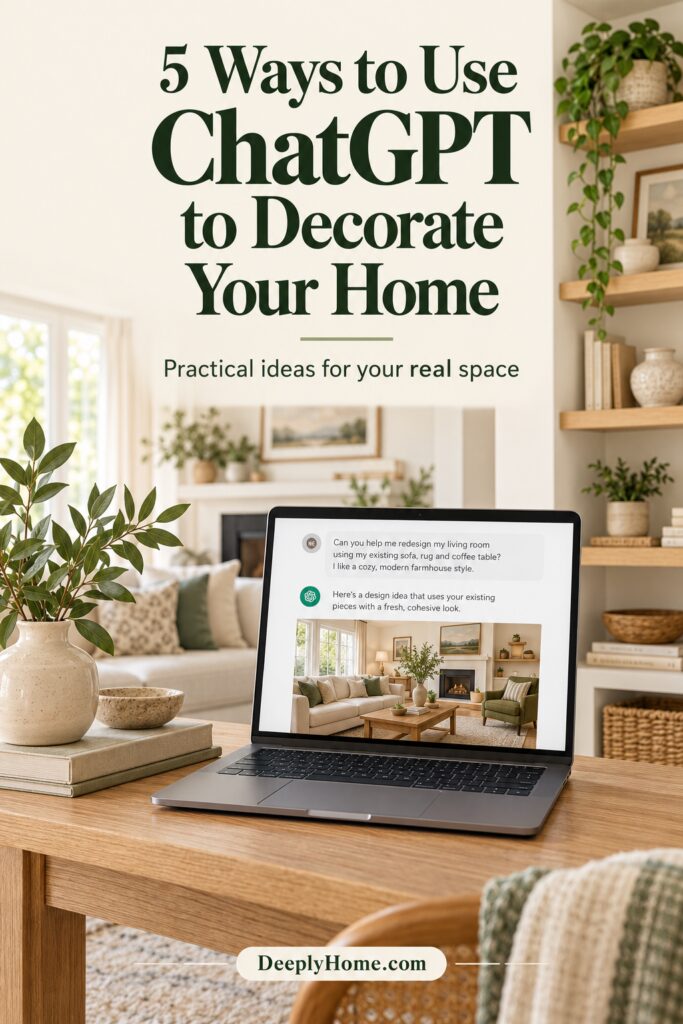
ChatGPT, however, has given me new hope and a new approach to updating many parts of my home without the need for outside help.
Using ChatGPT for that niche recently made a huge difference. I uploaded a picture of the niche, a selection of things I thought might be useful, and a description of the design style I wanted.
I then asked for ideas. Having help working through that one spot gave me a way forward after years of being stuck.
That’s what makes this such a useful tool for decorating. You can have things you like and still struggle to arrange them. Or you can know a room feels unfinished without knowing what would help.
Hiring a decorator isn’t in everyone’s budget. With ChatGPT, you can ask for help using photos of your actual home, explain what you like, and work through ideas at your own pace. You don’t need to know all the decorating terms before you begin.
Here are five ways to put it to work, including a few details that can make the suggestions much more useful.
Before You Start: Show It What You’re Working With
Start a conversation and attach a clear photo of the area you want help with. If you’re sharing more than one image, explain what each one shows. You can ask for written suggestions, an image showing a proposed change, or both.
For a room, take a photo that shows the walls, doors, and windows as clearly as possible. A second angle can help explain a corner the first photo doesn’t show. For a shelf or tabletop, include the whole area so there’s some context around the spot you’re decorating.
Add measurements when fit matters. A photo gives it something to work from, but don’t depend on a suggested image to prove that a chair will fit or a cabinet door will open. Check those details in your own room before buying or moving anything heavy.
1. Find a Better Way to Use Decor You Already Own
This is where I’d start if you have a shelf, mantel, or table that never seems quite right.
Take a picture of the space. Then photograph the pieces you’re willing to use there. Spread them out enough that each one is easy to see, and explain whether you’re open to using all of them or just a few.
That last part matters. If you show it twelve things, you may need to say that all twelve don’t have to make it into the arrangement. Sometimes leaving something out is what gives the other pieces room to be noticed.
Try asking:
The first photo shows the three open shelves in my wall niche. The other photos show decor I already own. Suggest three ways to arrange these pieces on the shelves. You don’t need to use every item. I’d like the arrangement to feel balanced without looking crowded. Describe what goes on each shelf, and start with options that don’t require buying anything.
Once one arrangement sounds promising, ask for an image of that option. Seeing a proposed layout can help you decide whether you like a tall piece on the top shelf or would rather keep the height lower.
You can also ask why it grouped certain things together. An explanation about repeating a color or varying the height gives you something to use the next time you decorate, too.
My three-shelf niche is a good example of how useful this can be. You can spend years looking at the same spot and still benefit from seeing another possibility.
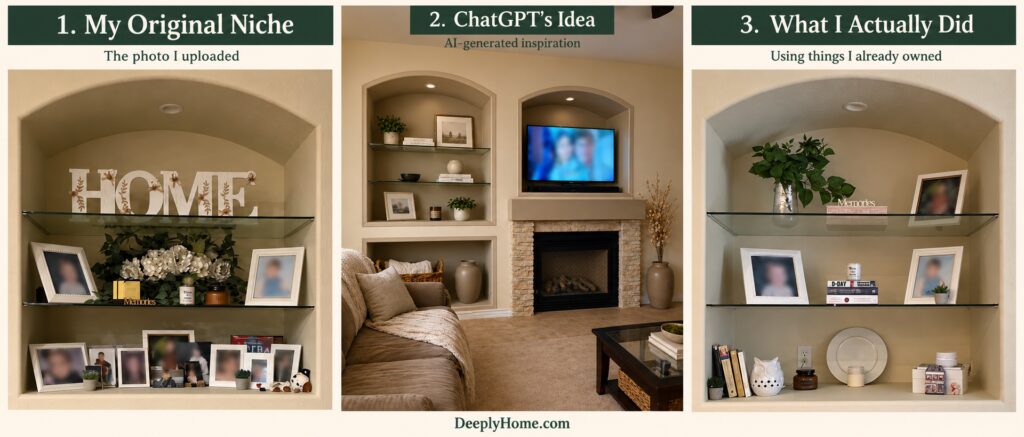
The first image is what I had done on my own. It was busy, dark, and crowded. I had stuffed the niche with family photos which I liked to see but there was no intent behind the display.
ChatGPT did change more than just my niche arrangement in the 2nd image. You can see that it added trim that wasn’t there and it also changed the color of my fireplace stone. That was actually fine. I actually liked what it did so well that matching that look is a project in my to-do list.
What I ended up doing with the idea generated by ChatGPT was what you see in the 3rd image – that’s what it looks like today. It’s more balanced, every item has a special meaning to me, and the colors suit my style.
ChatGPT and I worked back and forth on that niche. I first gave it the “before” picture. I then took everything down and put the items on my kitchen counter and took a few pictures of all the items so that I could tell ChatGPT what I had to work with and then I uploaded an image showing the empty niche.
ChatGPT told me what to put on each shelf and as I worked to match the look, I would take an image, upload it to ChatGPT and ask if I was on the right path. It didn’t take long and I really like the finished look much better than what I had.
2. Make an Awkward or Cluttered Area Easier to Use
An entry table covered in mail, a crowded bathroom counter, or a home office with nowhere to put things can be hard to decorate because the area has a job to do first.
Photograph it as it is. Then explain what happens there. Who uses it? What needs to stay close by? What keeps piling up?
Those details help you ask for storage that fits your habits. A basket on a high shelf won’t help much if you need its contents several times a day.
Try asking:
Help me organize the entry area in this photo. We leave mail, keys, shoes, and bags here every day. Suggest a place for each category using the furniture we already have where possible. Keep everyday items easy to reach. Give me a written plan before creating an image, and explain where anything removed from the visible area would go.
There’s a catch with this use, and my dad’s example brought it to my attention: a cleaned-up image won’t always tell you what to do with the things it removes.
My father wanted ideas for how to better organize his garage work table and Chat did an excellent job. What it showed him was clean, well laid out, and had a spot for everything.
But it didn’t tell him what to do with the items that had been removed from the image. It didn’t walk him through how to take image A and turn it into image B. It just showed him a pretty picture.
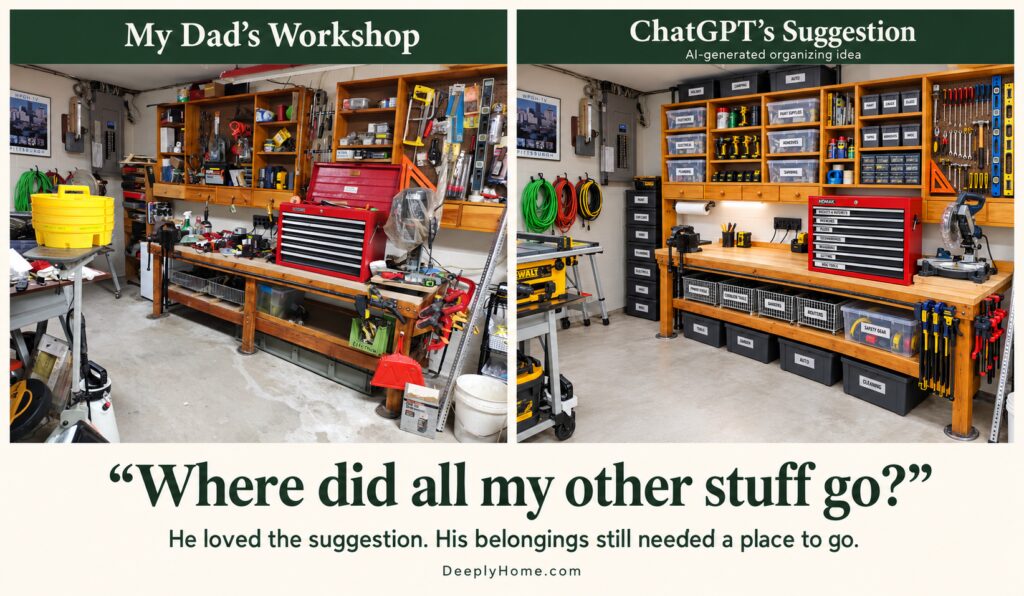
The picture may look much better, but the belongings still need a home. They haven’t politely packed themselves up and left.
Ask it to account for the visible items and flag anything it can’t identify. If it suggests moving something to a closet, tell it whether you actually have space there. You can also ask for the steps in order so you’re working through a manageable plan instead of trying to copy a finished picture all at once.
3. Get a Starting Plan for an Empty Room
An empty room can leave you with so many choices that making the first one feels difficult. Where should the furniture go? Which pieces should you choose first? How do you keep it from looking like several unrelated purchases?
Upload a picture and explain how you want to use the room. Include a style you like, colors you enjoy, and anything you’ve already decided to keep.
If you don’t know your style, describe what appeals to you in ordinary words. “Comfortable furniture, warm wood, cream, and a little blue” gives it a useful direction. So does “I like farmhouse rooms, but I don’t want signs or lots of small decorations.”
Try asking:
This empty room will be a family room for watching television and reading. I like warm wood, cream, and muted blue. Suggest two furniture layouts with clear paths through the room. Keep the walls, windows, and doors as they are. My total budget is [amount]. Explain which pieces to choose first and what can wait until later. Ask me for any measurements you need.
Comparing two layouts gives you a choice to react to. You may discover that one leaves a better walking path or makes room for a reading chair you hadn’t considered.
After choosing a direction, ask for a visual version and a short list of priorities. Treat any prices as estimates to check. The useful part is having an order for your decisions so you can build the room gradually.
4. Adapt an Inspiration Photo to Your Colors
Sometimes you like almost everything about a decorating idea except the colors. A holiday mantel might have the right mix of greenery, ribbon, and candleholders, but the red and gold won’t work with the room where you want to use it.
Upload the inspiration and explain both what you like and what you want changed. Keeping those two things separate helps preserve the details that attracted you in the first place.
Try asking:
I like the greenery, loose ribbon bows, and varied candleholder heights in this Christmas mantel photo. My room uses cream, sage green, and natural wood. Explain how to adapt the display to those colors, then create an inspiration image. Keep the loose arrangement and the mix of heights. Suggest simple substitutes for the red and gold decorations.
It can help to ask which parts of the original create the effect you like. The answer may point to the soft ribbon, the spacing, or the contrast between shiny and matte finishes. Those are details you can carry into your version even when the colors change.
Be specific about shades when you can. Pale blue and deep navy can lead to very different results. If you already own fabric or a decorative piece in the right color, add a photo of it as another reference.
5. Bring an Inspiration Look into Your Own Room
For this approach, upload two kinds of pictures: the decorating idea you like and the room where you want to use it.
Now you’re asking it to work through the differences between them. Your room may be smaller, have fewer windows, or include a sofa you plan to keep. Those differences need to guide the suggestions.
Label the images in your message so it’s clear which one is your home.
Try asking:
Image 1 is a living room I like. Image 2 is my actual living room. Help me bring the warmth, colors, and textures from the inspiration into my space. Keep my sofa, flooring, wall color, doors, and windows. Don’t make structural changes. Start with rearranging what I have, then suggest a few additions in priority order. Explain the plan and create an image using my room as the base.
Look for the elements that will make the biggest difference in your room. If the inspiration gets much of its warmth from wood, woven textures, and soft lighting, you can explore those details without replacing every piece of furniture.
Check the proposed image against your original photo. If a window disappears or the room suddenly gets wider, point it out and ask for a correction. A decorating idea becomes much more useful when it fits the home you actually have.
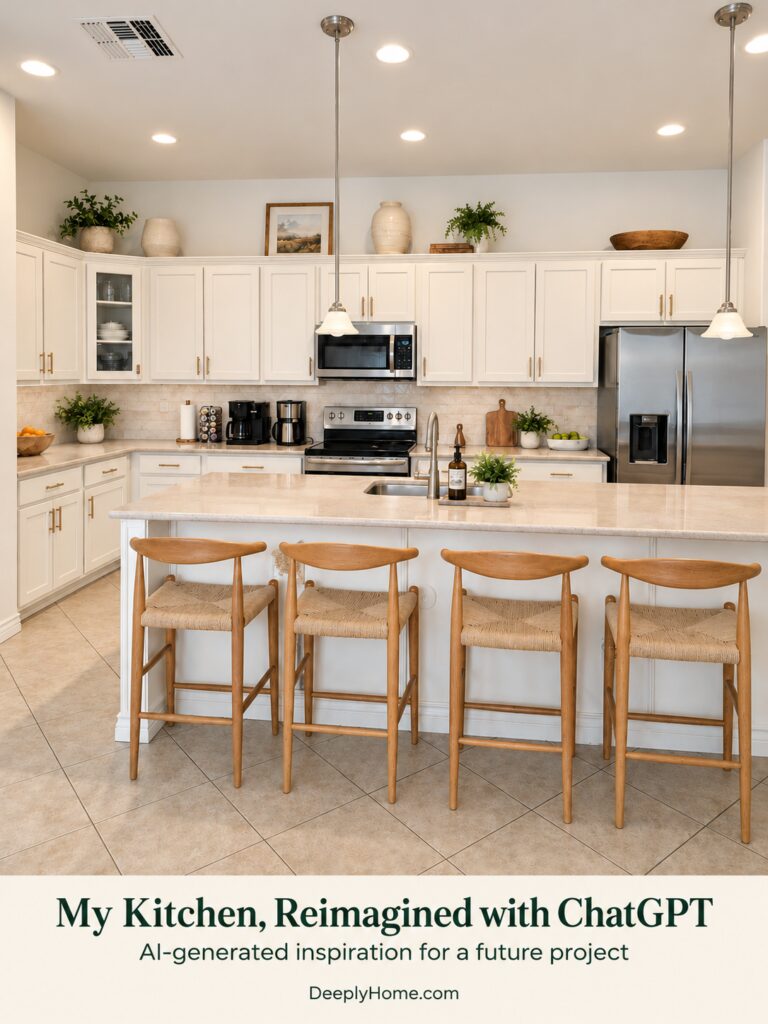
Yes, the kitchen in the image above is mine. That is my island. That is my tile floor. That’s what my sink faucet looks like. That’s even my paper towel holder on the left.
However, in real life, I don’t have drawer pulls or handles. My cabinets are dark cherry. My microwave is black while the other two appliances are correct. My backsplash is a cream, gray, and brown zigzag pattern.
ChatGPT took an image of a style I really liked and showed me what it would look like in my kitchen. I fell in love. Yes, painting the cabinets is not a fun job but we’ve done that kind of work before and we put up the first backsplash so we’d have no problem doing it again.
Asking for mockups of the rooms in your home before you make any real changes can save so much time and headache.
A Few Habits That Make the Advice More Useful
Be Clear About the Result You Want
“Help me decorate this” leaves a lot open. “Help me arrange this console so there’s room for a lamp and a bowl for keys” gives it a job to solve.
Say whether you want written ideas, a visual example, or steps you can follow. If you’re unsure where to begin, ask it to explain what it would change first and why.
Get Wordy About the Details That Matter
You don’t have to squeeze everything into a short request. Mention the furniture you’re keeping, the colors you dislike, your budget, and how the space gets used.
Include the ordinary things, too. Perhaps your dog sleeps beside the sofa, the dining table doubles as a craft table, or you need an easy place to set down groceries. A room that looks lovely but makes daily life harder needs another round of thought.
Set Some Ground Rules First
Before asking for ideas, spell out what must stay the same. You can add something like this to your request:
Keep all doors, windows, walls, and built-ins in their existing locations. Don’t block doorways or the window on the left. Don’t change the wall color or suggest structural changes. Keep the furniture I’ve identified, and ask before suggesting replacements.
These instructions give it a clearer starting point. Still check the result, especially if you’re asking for an image.
Tell It When It’s Wrong
If it mistakes a doorway for a wall or puts a large vase on a shallow shelf, say so. Add another photo or a measurement if that would help explain the problem.
“That shelf is only eight inches deep, so the basket won’t fit” gives it something concrete to correct.
Ask for Changes Until the Idea Works for You
You can like part of a suggestion and ask to change the rest. Try “Keep the furniture arrangement, but use fewer accessories” or “I like the colors, but this feels too formal. Show me a more casual version.”
Change one or two things at a time when possible. That makes it easier to keep the parts you liked while working through the rest.
Start with the Spot That Keeps Bothering You
If you’ve been moving the same vase from one end of a shelf to the other, take a photo before you move it again. Show what you have, explain what’s frustrating you, and ask for a few options.
You still get to decide what belongs in your home. But having ideas to compare, reasons behind them, and a way to ask for changes can make that decision feel much less overwhelming.
I wouldn’t suggest waiting 20 years to try it.