*This post may contain affiliate links for which I earn commissions.*
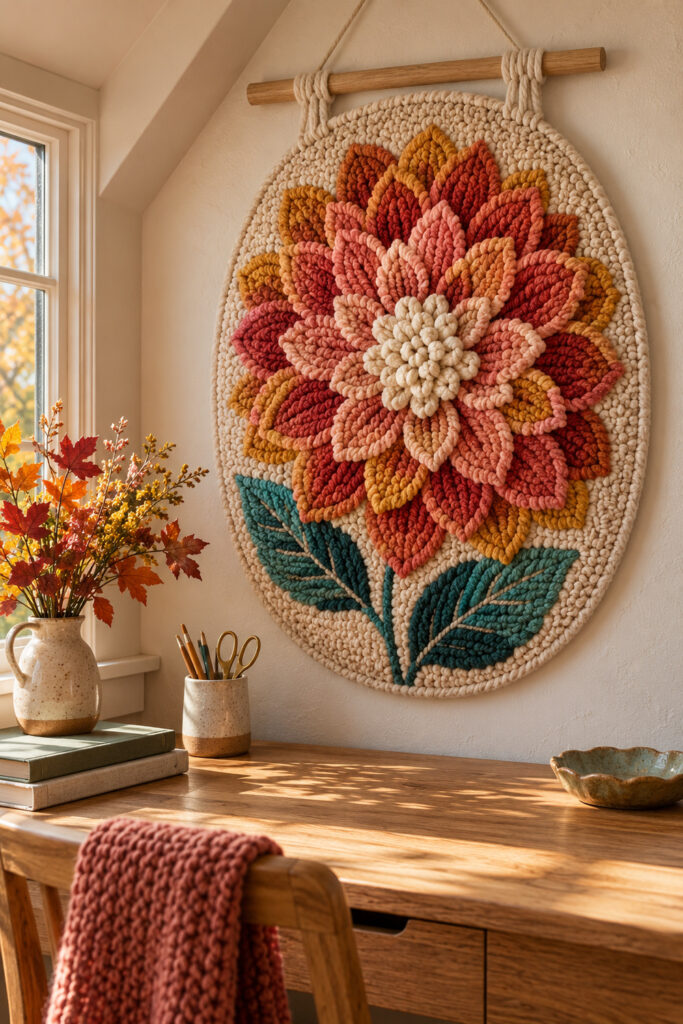
A single oversized dahlia fills this oval yarn wall hanging, with coral, rust, mustard, and blush petals arranged around a raised cream center. Two teal leaves anchor the flower against an oatmeal background. Hung above an oak desk, the textile supplies the main autumn detail while leaving the working surface open.
What stands out is the raised texture. Petal edges cast little shadows, and the thick cream border separates the flower from the wall. The image suggests punch needle and other dimensional yarn techniques, but you can borrow its decorating effect through similar textile art without treating the imagined stitches as a pattern to copy.
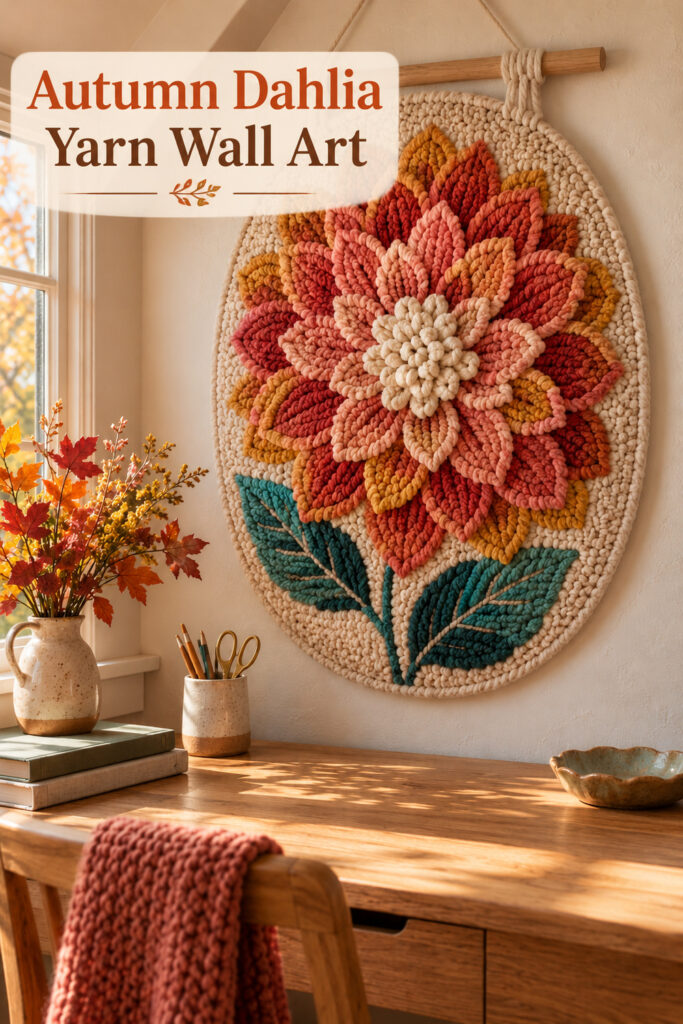
The inspiration image was created with AI and presents a decorative textile concept rather than a documented handmade piece.
How One Large Flower Holds the Workspace Together
The dahlia has plenty of detail, but only one dominant subject. That makes it easier to read than a wall full of unrelated autumn motifs. Nested petals create the movement within the oval, while the cream center gives the eye somewhere to pause. The teal leaves keep the warm colors from blending into one large orange patch.
Find Dimensional Floral Wall Hangings
Browse current Amazon options that can help you recreate this look.
Browse Dimensional Floral Wall Hangings on Amazon →As an Amazon Associate I earn from qualifying purchases.
The oatmeal border is doing useful work. It gives the outer petals breathing room and makes the oval outline easy to recognize. A piece with color right up to every edge could feel busier, especially above a desk that already holds books and tools. When choosing similar art, look at the space around the flower as well as the flower itself.
Side light adds another layer. The window makes the loops, ridges, and petal edges more visible without needing another decorative object. You can test a textile near a window before deciding where to hang it. The same piece may look almost flat under direct overhead light and much more dimensional from the side.
Key Pieces for the Dahlia Wall Art Look
A Dimensional Floral Textile
Start with a substantial floral wall hanging, preferably one with a clear central bloom and a quieter background. Punch needle, tufted, hooked, or embroidered work can suggest the texture, though their surfaces differ. The inspiration combines exaggerated forms, so choose based on the overall effect rather than expecting one technique to reproduce every ridge.
If you’re selecting a finished piece, examine the back and hanging provisions as carefully as the front. A decorative textile needs support that keeps it from sagging or twisting. For a commissioned interpretation, ask for a recognizable single dahlia, warm layered petals, and a neutral border. Those features describe the effect more usefully than a demand for an exact imaginary object.
Coral Rust and Mustard Yarn Tones
The warm palette works because it contains both light and dark notes. Blush petals bring parts of the flower forward, while rust defines deeper areas. Mustard adds a golden accent without turning the entire panel yellow. You can adapt this relationship with the colors you already enjoy, keeping enough contrast between neighboring petal groups.
Teal Leaves and Small Green Echoes
The teal leaves give the flower a clear lower edge. Their darker color also stops the cream center and oatmeal backing from making the whole piece too pale. You don’t need to scatter teal all over the room. A book cover, small dish, or existing accessory can repeat it quietly if the desk needs a connection to the art.
A Simple Wood Hanging Rod
The wooden rod and thick suspension loops make the textile look at home above the oak desk. Their uncomplicated shape suits the soft oval. A hidden hanging system could also work, but the rod is useful when you want the support to be part of the handmade appearance. It should fit the actual piece rather than forcing the textile into an unsuitable width.
Check the total height with the hanging cord included. Above a desk, a long cord can move the art lower than expected. Use mounting hardware suitable for the wall and the textile’s weight. Secure a heavy piece properly rather than relying on a tiny decorative hook because it looks unobtrusive.
Quiet Desk Accessories
A cream pottery vessel, books, and a cup for tools give the desk a working purpose without competing with the dahlia. The surfaces are mostly plain, which helps the yarn remain the interesting texture. Start with what is already useful on your desk. An existing pen cup can fill the same visual role as a specially chosen ceramic one.
The small autumn arrangement beside the window repeats warm colors in a looser form. Keep it lower than the flower’s center so the wall piece remains dominant. If your desk is narrow, choose either the arrangement or the books as the supporting display, leaving the rest of the surface free for ordinary use.
Place the Art Above a Desk You Actually Use
Begin with the chair pulled into its normal position. Hold a paper outline of the proposed wall hanging above the desk and view it both seated and standing. The art should feel connected to the work area without hanging so low that you brush it while reaching for supplies. Check nearby shelves and sloping ceilings before choosing the final size.
The oval outline is particularly helpful in a small alcove because it softens the desk’s rectangular shape. A circular piece can achieve something similar if that is what you find. Keep the flower large enough within its backing to remain recognizable. A tiny bloom surrounded by empty fabric would change the emphasis of this inspiration.
Next, clear the desktop beneath the intended position. Bring back the essentials first, then one or two supporting pieces. If every available space fills up again, the textile may feel like another item in a crowded work zone. The image works partly because the flower occupies the wall while the desk still has useful open space.
Try turning the pottery vessel or shifting the books rather than adding another autumn object. Small changes can balance the arrangement when one side of the desk has a window. The aim isn’t strict symmetry. The window already carries visual weight, and the large flower can sit comfortably a little off center if that suits the wall.
Keep the textile away from damp surfaces and follow its actual care instructions. Yarn textures vary, and a piece that appears sturdy may need gentle dusting rather than washing. Consider direct sunlight too, especially for a handmade or valuable textile. You want useful side light without assuming that every fiber will tolerate long exposure equally well.
Shop Similar Pieces for a Textile Focal Point
Look for Dimensional Floral Wall Hangings
Compare the bloom’s clarity, backing color, and hanging support. A similar floral textile can carry the idea even if its petals are less exaggerated. Prioritize the raised surface and readable silhouette over a precise match to every imagined stitch.
Shop Similar Yarn Art Components
For a separate craft or commissioned project, think in terms of yarn colors, a suitable backing, and compatible support. Technique-specific tools depend on the method you choose. The inspiration supplies a direction for color and composition, not a tested stitch diagram.
Add Simple Pottery and a Warm Textile Accent
An existing cream vessel or a rust-colored chair throw can connect the work area to the flower. Add only what fits your daily routine. A clear desk and one noticeable wall piece can feel more welcoming than a larger collection that leaves no place to work.
Final Styling Tip
Give the dahlia a plain border and some empty wall around it. The layers inside the flower already provide the detail, so the surrounding workspace can stay simple and useful.